
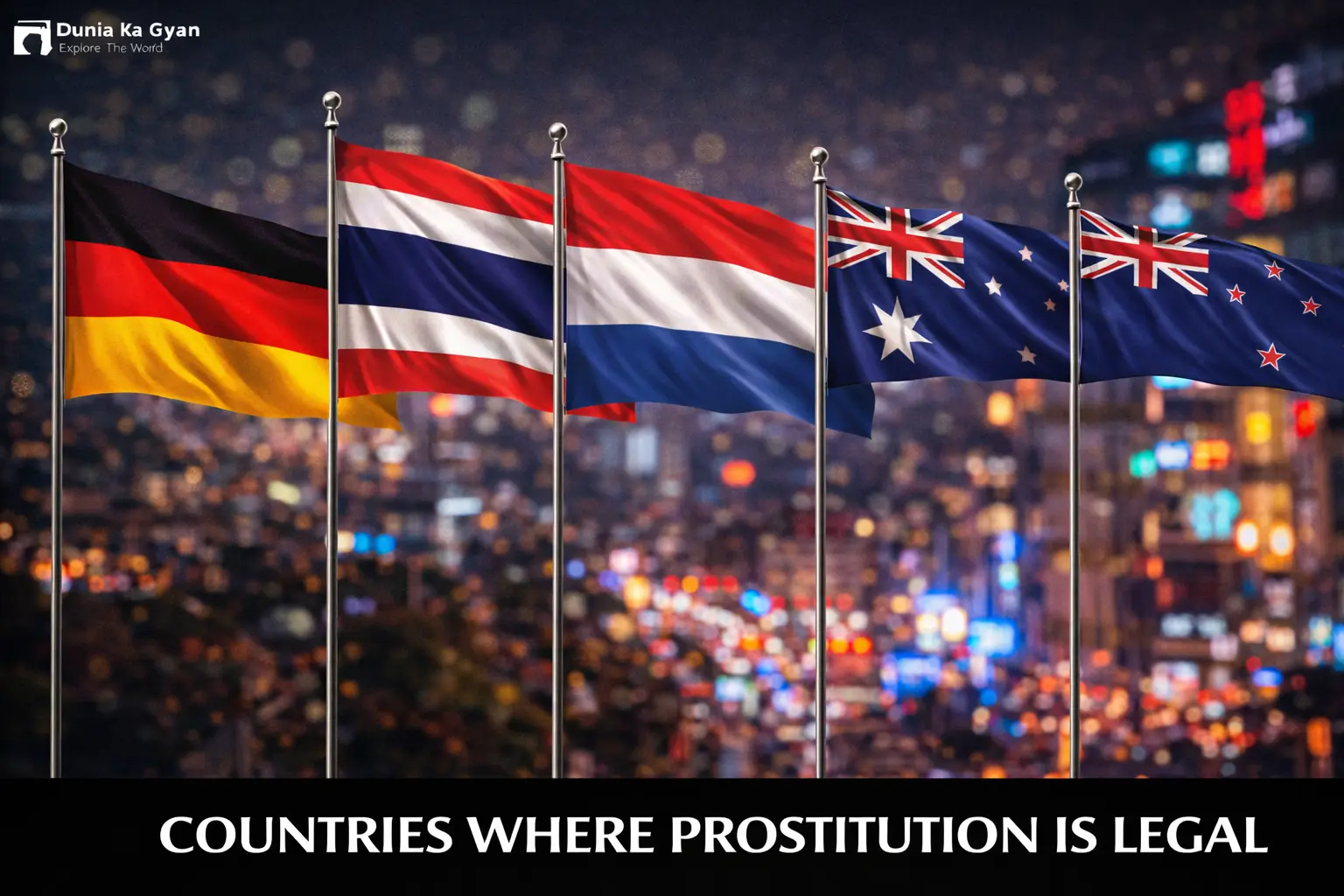
The legality of prostitution varies widely across the world. In some countries, sex work is fully legal and regulated by authorities, while in others it remains illegal or partially permitted. These differences are shaped by cultural beliefs, public health policies, legal frameworks, and social attitudes.
When prostitution is described as “legal,” it usually means governments regulate the activity through licensing, health rules, and designated working zones. Understanding these legal systems helps provide clarity about how different countries approach sex work in 2026.
| Country | Legal Status | Legal Model | Are Brothels Legal? | Key Regulations | Quick Insight |
| Netherlands | Legal | Legalization | Yes | Licensing, health & safety checks, zoning | One of the most regulated systems globally |
| Germany | Legal | Legalization | Yes | Registration, taxation, worker protections | Large, structured legal industry |
| Switzerland | Legal | Legalization | Yes | Local permits, zoning laws | Regulation handled locally |
| Austria | Legal | Legalization | Yes | Mandatory health checks, registration | Strict monitoring and safety rules |
| Greece | Legal | Legalization | Yes (restricted) | Licensing, zoning restrictions | Tightly controlled framework |
| New Zealand | Legal | Decriminalization | Yes | Worker rights, workplace safety laws | Human-rights focused system |
| Australia | Legal (varies) | Mixed by state | Yes (varies) | State-level regulation | Laws differ across states |
| Nevada (USA) | Partially Legal | Legalization (local) | Yes (licensed counties only) | Strict licensing, health checks | Only legal in some rural counties |
| Mexico | Legal | Legalization | Yes (varies) | Local zoning, city-level regulation | Enforcement varies by region |
| Brazil | Legal | Abolitionist | No (brothels illegal) | Selling legal, third-party illegal | Partial legality model |
| Colombia | Legal | Abolitionist | Limited | Zoning and public health rules | Legal in designated zones |
| Senegal | Limited Legal | Legalization | Yes (regulated) | Registration, health monitoring | One of few regulated systems in Africa |
| Bangladesh | Legal | Legalization | Yes (designated zones) | Government registration | Allowed in specific districts |
| Turkey | Legal | Legalization | Yes (state-controlled) | Strict regulation | Highly regulated structure |
Europe
1. Netherlands
The Netherlands legalized prostitution in 2000 to regulate the industry and improve worker safety. Licensed brothels operate openly, and sex workers must follow strict health and legal standards. Many cities require registration, and local authorities monitor working conditions regularly. The country is widely known for its regulated red-light districts.
2. Germany
Germany has one of the largest regulated prostitution industries in Europe. Sex workers can legally register, pay taxes, and work in licensed establishments under government oversight. The law focuses on improving transparency and protecting workers from exploitation. Recent reforms introduced stronger health and safety regulations.
3. Switzerland
Prostitution is legal throughout Switzerland, but regulation happens at the local level. Workers must register with authorities and often require municipal permits. Certain cities have designated areas where sex work is permitted. The system emphasizes public order and worker protection.
4. Austria
Austria allows prostitution under strict legal regulation. Sex workers must officially register and undergo regular medical examinations. Zoning laws determine where sex work can take place. Authorities closely monitor health, safety, and working conditions.
5. Greece
Prostitution is legal but tightly controlled in Greece. Workers must obtain official licenses and operate within government-approved locations. Street prostitution is generally restricted, and strict zoning rules apply. The law aims to regulate the industry while maintaining public order.
Oceania
1. New Zealand
New Zealand decriminalized prostitution in 2003, focusing on human rights and worker protection. Sex workers have legal workplace rights, including safety and health protections. The system emphasizes transparency and voluntary participation. It is often considered one of the most balanced legal approaches globally.
Americas
1. Nevada (United States)
Prostitution is illegal across most of the United States but permitted in certain rural counties of Nevada. Licensed brothels operate legally under strict regulations, including mandatory health checks. The system is tightly controlled by local authorities. Urban areas like Las Vegas still prohibit prostitution.
2. Mexico
Prostitution is legal at the federal level in Mexico, but regulation varies by state and city. Some regions allow licensed brothels, while others tolerate sex work informally. Zoning laws exist in certain municipalities. Enforcement and regulation differ across the country.
3. Colombia
Colombia permits prostitution and regulates it in designated zones. Local authorities often enforce health and safety requirements for workers. Certain cities have defined areas where sex work is allowed. The legal framework focuses on public health and social control.
Africa
1. Senegal
Senegal has one of the few regulated prostitution systems in Africa. Sex workers must register with authorities and undergo routine health monitoring. The system aims to manage public health risks and maintain legal oversight. Regulations are enforced in designated areas.
2. South Africa
South Africa has historically criminalized prostitution, but reforms toward decriminalization are under discussion. Some regions are considering policy changes to improve worker safety and rights. Enforcement varies across the country. Legal reform debates continue.
Asia
1. Bangladesh
Prostitution is legal in Bangladesh within designated brothel districts. Workers must register and follow local regulations to operate legally. The system focuses on controlling the industry within specific zones. Health monitoring and local oversight are common.
2. Thailand
Prostitution is technically illegal in Thailand but widely tolerated in certain regions. Enforcement varies depending on location and circumstances. Some areas operate informally under local oversight. Legal ambiguity continues to exist.
Countries with Decriminalized Systems
Some countries remove criminal penalties but do not fully regulate prostitution.
New Zealand, parts of Australia, and certain regions of Canada follow decriminalized models. These systems focus more on protecting workers than controlling the industry. Regulation may vary by region.
Countries Where Prostitution Is Illegal
Many countries still prohibit prostitution entirely. This includes most Middle Eastern nations, several African countries, and parts of Asia. Penalties can include fines or imprisonment. Cultural and religious values often influence these laws.
Common Regulations in Legal Countries
Countries where prostitution is legal often enforce:
- Minimum age requirements (usually 18+)
- Government registration or licensing
- Mandatory health checks
- Tax obligations
- Zoning laws and designated work areas
- Workplace inspections
These rules aim to ensure safety, transparency, and public health monitoring.
Impact of Legalization
Legalization is often intended to improve worker safety, reduce exploitation, and allow public health monitoring. Regulated systems can create safer working environments and reduce illegal activities. However, outcomes vary depending on enforcement and social policies. Legalization alone does not eliminate all risks.
Conclusion
The legal status of prostitution varies significantly worldwide. Some countries regulate it carefully, while others prohibit it completely. Understanding these legal differences is important for awareness, safety, and respecting local laws. Since regulations can change, checking official government sources for updated information is always recommended.
Frequently Asked Questions
Countries such as the Netherlands, Germany, Switzerland, Austria, Greece, and New Zealand allow prostitution under regulated legal frameworks.
No. It is only legal in certain counties of Nevada. In most other states, prostitution remains illegal.
Legalization includes government regulation and licensing, while decriminalization removes criminal penalties without strict regulatory control.
Some European countries regulate prostitution, while others prohibit or partially criminalize it. Laws vary by country.
In many regulated countries, sex workers must undergo regular health screenings and follow safety guidelines.
Legal status varies widely. Some countries allow regulated brothels, while others prohibit prostitution entirely.
Regulated systems can improve worker safety and public health monitoring, though effectiveness depends on enforcement.
Yes. Laws frequently evolve due to political, social, and legal factors. Always check official sources for updated regulations.
People are also reading: