
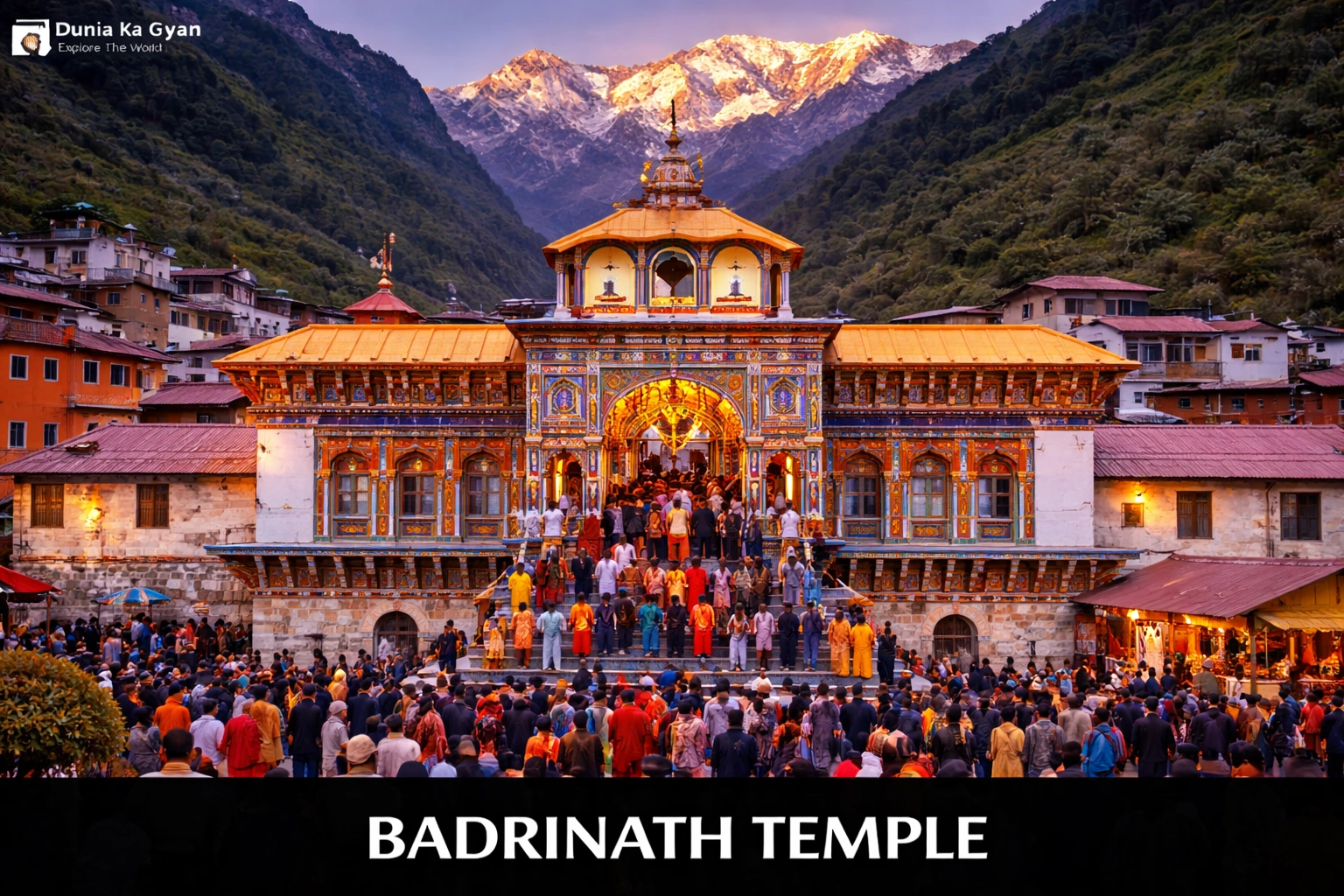
High in the Garhwal Himalayas, the Badrinath Temple Guide 2026 begins at one of the most sacred pilgrimage sites in India. Surrounded by snow-covered peaks and the powerful flow of the Alaknanda River, Badrinath Temple stands as a symbol of devotion and spiritual strength. Located in the Chamoli district of Uttarakhand, Badrinath Dham sits at an altitude of approximately 3,133 meters above sea level.
Badrinath is not just a temple. It is one of the four main pilgrimage sites of the all-India Char Dham (along with Rameswaram, Dwarka, and Puri) and also a key part of Uttarakhand’s Chota Char Dham circuit. Every year, lakhs of devotees plan their spiritual journey under the Char Dham Yatra 2026, making Badrinath the final and most significant stop of the sacred route.
For centuries, saints, sages, and devotees have walked through difficult mountain routes to reach this holy shrine. Today, improved roads have made the journey easier, but the spiritual aura remains untouched. The chants, the icy wind, and the sight of the colorful temple façade against white Himalayan peaks it is an experience that words can barely describe.
This detailed Badrinath Temple Guide 2026 covers everything from opening dates and darshan timings to travel routes and nearby attractions.
Badrinath Temple History and Mythological Significance
The origins of Badrinath are deeply rooted in Hindu mythology. According to ancient scriptures, Lord Vishnu performed deep meditation here. To protect him from harsh weather, Goddess Lakshmi took the form of a Badri (berry) tree, giving the place its name Badri Nath (Lord of the Badri forest).
The temple is believed to have been re-established by Adi Shankaracharya in the 8th century. He discovered the idol of Lord Badri Narayan in the Alaknanda River and installed it in the present temple.
The black stone idol inside the sanctum is about one meter tall and depicts Lord Vishnu in a meditative posture. The temple architecture reflects a mix of Garhwali and North Indian styles, with a brightly painted facade and a small cupola on top.
Over centuries, the temple has been renovated multiple times due to natural calamities and harsh weather. Despite this, its spiritual identity has remained intact.
Key Highlights
- One of the holiest Vishnu temples in India
- Established in present form by Adi Shankaracharya
- Idol made of black stone (Shaligram)
- Situated between Nar and Narayan mountain ranges
- Banks of the sacred Alaknanda River
Why Is Badrinath Temple Famous?
Badrinath Temple is famous for being one of the holiest shrines dedicated to Lord Vishnu and a major part of the Char Dham Yatra. It is believed that visiting Badrinath helps devotees attain spiritual liberation (moksha). The temple is also renowned for its stunning Himalayan backdrop, the sacred Alaknanda River, and the natural hot spring Tapt Kund. Its religious importance, mythological history, and breathtaking location make it one of the most visited pilgrimage sites in India. This is why the Badrinath Temple Guide 2026 remains one of the most searched pilgrimage travel resources.
Badrinath Temple Opening and Closing Dates
The sacred Badrinath Temple does not remain open throughout the year due to extreme winter snowfall in the Himalayas. The Badrinath Temple opening date in 2026 is usually announced on the auspicious occasion of Akshaya Tritiya in April or May by the temple authorities. The official date is declared after a traditional ceremony at the royal court of Tehri.
According to the official temple committee, the Badrinath Temple Guide 2026 confirms that the shrine opens on 24 April 2026. The Badrinath closing date generally falls in October or November on the festival of Bhai Dooj, two days after Diwali. After the temple closes for winter, the idol is ceremonially shifted to Joshimath for seasonal worship.
During winter months, heavy snowfall makes the region inaccessible, and temperatures drop below freezing.
Key Highlights
- Opening Date: 24 April 2026
- Closing Month: 13 Nov 2026
- Winter worship held in Joshimath
- Best months to visit: May to June & September to October
Spiritual Importance of Badrinath in Char Dham Yatra
Badrinath is considered the final and most significant stop in the Chota Char Dham circuit. Pilgrims usually visit Yamunotri, Gangotri, Kedarnath, and finally Badrinath.
In Hindu belief, visiting Badrinath helps cleanse past sins and leads to moksha (liberation). It is also believed that even a single visit to Badrinath grants spiritual merit equivalent to multiple religious rituals performed elsewhere.
The temple doors open every year around April or May (on Akshaya Tritiya) and close around October or November (on Bhai Dooj), depending on weather conditions.
Best Time to Visit Badrinath Dham
Due to extreme winter snowfall, Badrinath remains closed for nearly six months.
Summer (May to June)
- Pleasant daytime weather (10°C to 18°C)
- Peak Char Dham pilgrimage season
- Heavy rush but lively atmosphere
Monsoon (July to August)
- Risk of landslides
- Roadblocks possible
- Not recommended for elderly travelers
Autumn (September to October)
- Clear skies
- Fewer crowds
- Best for peaceful darshan and photography
Winter (November to April)
- Temple closed
- Heavy snowfall
Badrinath Weather and Temperature Guide
Badrinath weather changes drastically due to its high altitude of 3,133 meters. Even in summer, nights can be cold. Understanding temperature conditions helps in better trip planning.
May to June
- Temperature: 10°C to 18°C.
- Pleasant days, cold nights.
July to August
- Frequent rainfall
- Landslide-prone routes
September to October
- Temperature: 5°C to 15°C
- Clear skies and stable weather
November to April
- Heavy snowfall;
- Temple closed
My Personal Experience
I visited Badrinath in early September. The roads were clear, and the crowd was manageable. What struck me most was the silence of the mountains in the early morning. As the temple bells rang and the sun slowly touched the snowy peaks, the entire valley glowed in golden light. It was one of the rare moments where you truly feel small in front of nature and connected to something much bigger.
How to Reach Badrinath, Uttarakhand
As part of this Badrinath Temple Guide 2026, understanding the travel route is essential for smooth planning.
By Road
Badrinath is well connected by motorable roads from:
- Rishikesh
- Haridwar
- Dehradun
Distance from Rishikesh: Approx. 295 km
Travel time: 10–12 hours (depending on road and traffic conditions)
Regular buses and shared taxis operate during Char Dham season.
By Train
- Nearest Railway Station: Rishikesh (approx. 295 km)
- Alternative major station: Haridwar
By Air
Nearest Airport: Jolly Grant Airport (around 310 km from Badrinath)
From the airport, taxis are available.
Travel Tip
Start your road journey early in the morning. Mountain driving after sunset is not recommended due to fog and narrow roads.
Travelers are advised to check the latest road conditions and follow the official Badrinath route map before starting their journey, especially during monsoon season when certain mountain roads may face temporary closures.
Distance from Major Cities to Badrinath
Distance information helps travelers plan better.
- Distance from Rishikesh to Badrinath: approx. 295 km
- Distance from Haridwar to Badrinath: approx. 320 km
- Distance from Dehradun to Badrinath: approx. 335 km
- Distance from Delhi to Badrinath: approx. 525 km
Travel time depends on road and weather conditions.
Badrinath Temple Route Overview
The most common route to Badrinath is via Rishikesh – Devprayag – Rudraprayag – Karnaprayag – Joshimath – Badrinath. The journey follows the Alaknanda River and offers scenic Himalayan views. Roads are well maintained during Char Dham season, but travelers should check weather updates before departure.
Badrinath Darshan Timings and Rituals
Opening Timings
Morning: 4:30 AM – 1:00 PM
Evening: 4:00 PM – 9:00 PM
Major Rituals
- Maha Abhishek
- Abhishek Puja
- Geeta Path
- Evening Aarti
Advance booking for special pujas can be done during the pilgrimage season.
Char Dham Yatra Registration and VIP Darshan
For visiting Badrinath Temple during Char Dham Yatra season, registration is mandatory as per Uttarakhand government rules.
Pilgrims can register online through the official Char Dham portal or offline at designated centers.
Important Information:
- Registration required for all pilgrims
- Carry valid ID proof
- VIP Darshan booking available during peak season
- Advance puja booking recommended
Important Travel Information
Altitude: 3,133 meters
State: Uttarakhand
District: Chamoli
Nearest Bus Stand: Badrinath Bus Stand
Nearest Railway Station: Rishikesh
Nearest Airport: Jolly Grant Airport
Best Time to Visit: May–June & September–October
Places to Visit Near Badrinath
The region around Badrinath is not only spiritually powerful but also incredibly scenic. Snow-covered peaks, glacial rivers, mythological caves, and sacred trekking routes make this area ideal for both pilgrims and nature lovers. Here are the must-visit places near Badrinath with complete details.
1. Mana Village
Mana Village is famously known as the last Indian village before the Indo-China (Tibet) border. Located at an altitude of around 3,200 meters, this small Himalayan settlement is rich in mythology and cultural heritage. It is believed that the Pandavas passed through this route while heading towards heaven. The village is home to the Indo-Mongolian tribe and offers a glimpse into traditional mountain life. Surrounded by dramatic landscapes and flowing rivers, Mana feels untouched and spiritually significant.
Activities to Do
- Visit Vyas Gufa (cave where sage Ved Vyas composed the Mahabharata)
- See Bhim Pul (natural rock bridge over Saraswati River)
- Explore the origin of the Saraswati River
- Interact with local villagers and explore handicrafts
Distance from Badrinath: Approx. 3 km (10–15 minutes by road)
2. Vasudhara Falls
Vasudhara Falls is a breathtaking waterfall located amidst high Himalayan cliffs. The water cascades from a height of nearly 400 feet, creating a misty and refreshing atmosphere. According to local belief, the water of this waterfall only touches pure souls. The trek to Vasudhara offers panoramic views of snow-capped peaks and alpine meadows. It is a peaceful retreat for travelers who want to combine spirituality with adventure.
Activities to Do
- Moderate 5–6 km trek from Mana Village
- Landscape photography
- Meditation in peaceful surroundings
- Enjoy panoramic Himalayan views
Distance from Badrinath: Approx. 9 km (3 km by road to Mana + 6 km trek)
3. Tapt Kund
Tapt Kund is a natural hot water spring located just below the Badrinath Temple. Despite the freezing temperatures of the region, the water in Tapt Kund remains warm throughout the year due to geothermal activity. It is considered sacred, and devotees take a holy dip here before entering the temple for darshan. The kund is believed to have medicinal properties that help relieve skin ailments and body aches.
Activities to Do
- Take a holy dip before temple darshan
- Experience natural geothermal hot springs.
- Relax and rejuvenate tired muscles
Distance from Badrinath Temple: Located within the temple complex (walking distance)
4. Charan Paduka
Charan Paduka is a revered rock situated on a hilltop above Badrinath. It is believed to bear the footprints of Lord Vishnu. The short but slightly steep trek to this sacred spot rewards visitors with breathtaking views of the Badrinath Valley and surrounding Himalayan peaks. The peaceful atmosphere and mythological significance make it a spiritually uplifting experience.
Activities to Do
- Short uphill trek (around 3 km round trip)
- Offer prayers at the sacred footprint rock
- Enjoy panoramic views of Badrinath town
- Capture scenic photographs
Distance from Badrinath: Approx. 3 km trek from the temple
5. Hemkund Sahib
Hemkund Sahib is one of the highest Gurudwaras in the world, located at an altitude of about 4,329 meters. This sacred Sikh pilgrimage site is dedicated to Guru Gobind Singh Ji. Surrounded by seven snow-covered peaks and a crystal-clear glacial lake, the place offers a divine and serene atmosphere. The journey to Hemkund Sahib is physically demanding but spiritually rewarding.
Activities to Do
- Trek from Govindghat to Hemkund Sahib
- Offer prayers at the Gurudwara
- Sit by the serene Hemkund Lake
- Visit nearby Valley of Flowers (seasonal)
Distance from Badrinath: Approx. 40 km to Govindghat by road + 13 km trek
Accommodation in Badrinath
Badrinath offers various accommodation options ranging from budget lodges to government guest houses. Many travelers prefer booking hotels in Badrinath near the temple for easy access to early morning darshan and evening aarti. Staying close to the temple complex saves travel time and allows a more peaceful pilgrimage experience.
Budget Hotels
- Near temple complex
- Basic amenities
- Affordable pricing
GMVN Guest Houses
- Government managed
- Clean and reliable
Dharamshalas
- Economical
- Ideal for pilgrims
Advance booking is strongly recommended during peak season.
Food and Local Cuisine
Most restaurants in Badrinath serve pure vegetarian food. Common options include:
- North Indian thali
- Simple dal, rice, roti
- Tea and snacks
- Garhwali dishes (in select places)
Alcohol and non-vegetarian food are not permitted in the temple town.
Health and Safety Tips for High Altitude Travel
Since Badrinath is located above 3,000 meters:
- Acclimatize properly
- Stay hydrated
- Avoid overexertion
- Carry warm clothes
- Consult doctor if you have heart or breathing issues
Suggested 3-Day Badrinath Itinerary
Day 1
- Arrival from Rishikesh
- Evening temple darshan
Day 2
- Morning Aarti
- Visit Mana Village and Tapt Kund
- Short trek to Charan Paduka
Day 3
- Excursion to Vasudhara Falls
- Return journey
Why Badrinath Dham Is More Than Just a Pilgrimage
Badrinath is where spirituality meets raw Himalayan beauty. Whether you are a devotee or a traveler seeking peace, this destination offers something unique silence, faith, nature, and introspection.
The sound of temple bells echoing in the mountains, the icy wind touching your face, and the sight of devotees standing in prayer it changes something inside you.
By following this Badrinath Temple Guide 2026, pilgrims can plan a safe and spiritually fulfilling journey.
Conclusion
This Badrinath Temple Guide 2026 is designed to help devotees experience the shrine with complete clarity and preparation. Badrinath is not just a pilgrimage site; it is a spiritual experience carved into the heart of the Himalayas. The journey tests your patience, the altitude humbles you, and the temple fills you with a sense of peace that is difficult to describe.
From the sacred Alaknanda River to the peaceful chants inside the temple, every moment here feels meaningful. Whether you come for religious reasons, Himalayan beauty, or inner reflection, Badrinath leaves a lasting impression.
If you are planning your Char Dham Yatra or a spiritual escape in Uttarakhand, Badrinath Dham deserves to be at the top of your list.
Frequently Asked Questions
The temple usually opens around April or May on Akshaya Tritiya.
Yes, registration is mandatory as per Uttarakhand government guidelines.
2–3 days are ideal for darshan and nearby sightseeing.
Approximately 3,133 meters above sea level.
Yes, but medical consultation is advised due to high altitude.
It is possible but not recommended due to landslide risks.
Mana Village, Vasudhara Falls, Tapt Kund, and Charan Paduka.
People are also reading:


One thought on “Badrinath Temple Guide 2026: Opening Date & Yatra Plan”