
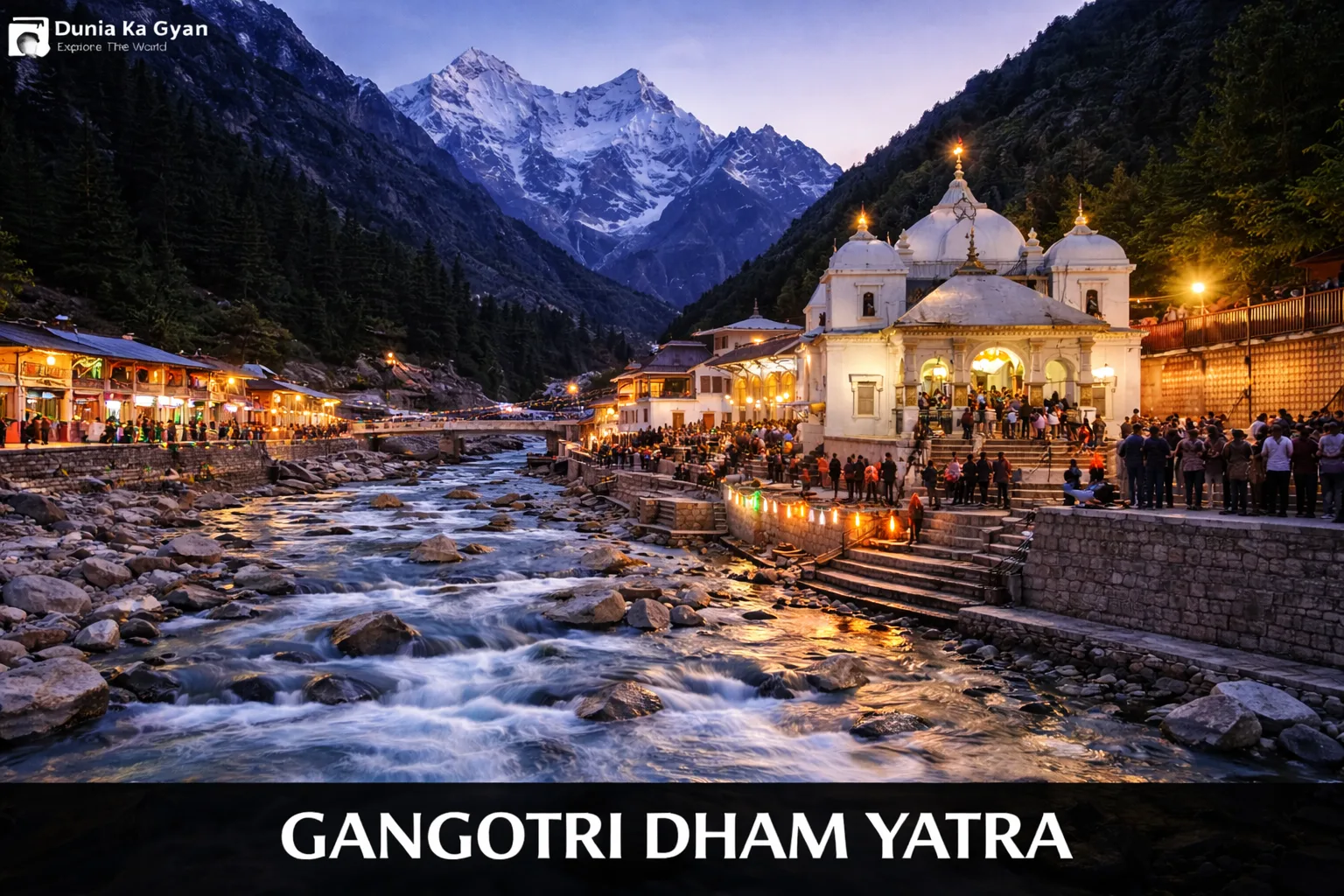
Gangotri Dham is one of the four holy places of Uttarakhand’s Char Dham Yatra. It is located in Uttarkashi district and is dedicated to Goddess Ganga. The temple stands beside the Bhagirathi River and is surrounded by beautiful mountains and forests.
According to Hindu beliefs, Goddess Ganga came down to Earth after King Bhagirath prayed to her. Gangotri is linked to this story. The actual source of the Ganga is at Gaumukh, which can be reached by trekking from Gangotri.
Gangotri is also known for its beautiful views and peaceful surroundings. Places like Harsil Valley, Bhairon Ghati and Gaumukh are popular among visitors. This guide covers the temple, timings, history, route and other useful travel information.
About Gangotri Dham
Gangotri is a small pilgrimage town in Uttarkashi district, Uttarakhand. It is one of the four destinations of the Uttarakhand Char Dham circuit, along with Yamunotri, Kedarnath and Badrinath.
The main attraction is the Gangotri Temple, situated on the right bank of the Bhagirathi River. The town also serves as the starting point for treks to Gaumukh and other high-altitude Himalayan destinations.
Here are some quick facts about Gangotri Dham:
| Detail | Information |
| Location | Gangotri, Uttarkashi district, Uttarakhand |
| Main deity | Goddess Ganga |
| Altitude | Approximately 3,100 metres |
| River | Bhagirathi |
| Pilgrimage | Uttarakhand Char Dham Yatra |
| Temple season | Generally April/May to October/November |
| Nearest major town | Uttarkashi |
| Nearest airport | Jolly Grant Airport, Dehradun |
| Nearest railway station | Rishikesh |
| Temple entry fee | No regular entry ticket |
| Gaumukh trek | Separate permit required |
Gangotri Temple Timings and 2026 Yatra Season Dates
The Gangotri Temple remains open for devotees during the Char Dham Yatra season. Here are the daily darshan timings and important travel dates for 2026.
Gangotri Temple Daily Timings and Darshan Schedule
| Activity | Timings / Fee |
| Morning Darshan | 6:00 AM to 2:00 PM |
| Mangala Aarti | 6:00 AM (held behind closed doors) |
| Afternoon Closure | 2:00 PM to 3:00 PM |
| Evening Darshan | 3:00 PM to 9:30 PM |
| Sandhya / Ganga Aarti | Around 7:45 PM |
| Entry Fee | Free |
2026 Yatra Season Dates
- Opening Date: April 19, 2026 (Akshaya Tritiya).
- Tentative Closing Date: November 10, 2026. After the temple closes for winter, the idol is shifted to Mukhba village.
- Mandatory Registration: Char Dham Yatra registration is free and required for pilgrims. Register through the official Uttarakhand Government portal.
Temple timings and closing dates may change due to religious events or official announcements. Confirm the latest information before your visit.
Gangotri Temple Entry Fee and Other Charges
Visiting Gangotri Temple for general darshan is free. There is no regular entry ticket, but you may need to pay for certain facilities and activities during your trip.
| Activity | Fee Information |
| Gangotri Temple Darshan | Free |
| Char Dham Registration | Free and mandatory |
| Special Puja | Charges depend on the ritual |
| Vehicle Parking | Around ₹50, subject to local rates |
| Wheelchair Rental | Around ₹225, as reported by local travel guides |
| Gaumukh Trek | Separate forest permit and applicable charges required |
| Accommodation and Food | Depends on your hotel, guesthouse or restaurant |
Important Things to Know
- Char Dham Yatra registration is free and can be completed through the official Uttarakhand registration portal.
- Special puja and online puja services may have separate charges. Confirm the rates with the temple committee.
- If you plan to trek to Gaumukh, you need a permit to enter Gangotri National Park. Check the latest permit rules and availability before your trek.
- Parking and wheelchair charges may change, so confirm the rates locally.
Gangotri Dham Yatra Registration
Pilgrims visiting Gangotri as part of the Uttarakhand Char Dham Yatra should complete the registration process through the official Tourist Care Uttarakhand portal.
The general registration process is:
- Visit the official Tourist Care Uttarakhand website.
- Select the registration or login option.
- Create a tour by entering travel dates, the number of visitors and the Dhams you plan to visit.
- Enter the required pilgrim details.
- Download and carry your Yatra Registration Letter.
- Complete verification at the designated checkpoint or destination as instructed.
Registration requirements and procedures can be updated by the state government. Check the official portal before travelling.
Religious Significance of Gangotri Dham
Gangotri is considered sacred because of its association with Goddess Ganga. In Hinduism, the Ganga is worshipped as a mother goddess and is believed to have the power to purify the soul.
Devotees visit the temple to offer prayers, seek blessings and perform religious rituals near the Bhagirathi River. Many pilgrims also collect Ganga water in containers and carry it home for worship and other religious ceremonies.
Gangotri is also an important destination in the Char Dham Yatra. Visiting the four shrines is considered a significant pilgrimage in Hindu tradition.
The Sacred Ganga River
The Ganga is one of the most revered rivers in India. According to Hindu beliefs, bathing in its sacred waters helps cleanse spiritual impurities. Devotees often offer prayers on the riverbank and collect its water as a symbol of faith and devotion.
At Gangotri, the river is known as the Bhagirathi. It receives water from Himalayan glaciers and streams as it flows downstream. The Bhagirathi meets the Alaknanda at Devprayag, where the combined river is known as the Ganga.
The Bhagirathi River
The river flowing beside Gangotri Temple is the Bhagirathi. It is one of the two major headstreams of the Ganga.
The Bhagirathi originates from the Gangotri Glacier system near Gaumukh. Its journey through the Himalayan valleys is an important part of the river’s geographical and religious identity.
What Can You See at Gangotri Temple?
The Gangotri Temple complex and its surroundings have several places worth visiting. You can explore sacred structures, the riverbank and nearby natural attractions.
1. Main Gangotri Temple
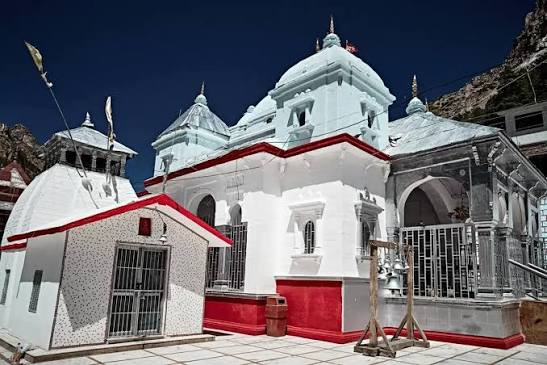
The main shrine is dedicated to Goddess Ganga. Built in the traditional Himalayan temple style, the white temple structure stands close to the Bhagirathi River. Devotees visit to offer prayers and participate in religious rituals.
2. Bhagirath Shila
Bhagirath Shila is a sacred stone near the temple. According to local religious tradition, King Bhagirath meditated here to bring Goddess Ganga to Earth. Pilgrims often visit this spot as part of their temple visit.
3. Bhagirathi Riverbank
The riverbank near the temple is an important place for prayers and religious rituals. Visitors can sit beside the flowing river, observe the Himalayan surroundings and experience the peaceful atmosphere of Gangotri.
4. Surya Kund
Surya Kund is a natural waterfall area near Gangotri Temple. The flowing water and rocky surroundings make it a popular stop for visitors. A bridge nearby provides a view of the waterfall and the river.
5. Gauri Kund
Gauri Kund is another waterfall area near Surya Kund. Both spots are located close to Gangotri Temple and are worth visiting while exploring the surrounding area.
6. Pandava Gufa
Pandava Gufa is a small cave located near Gangotri. Local belief associates it with the Pandavas from the Mahabharata, who are said to have meditated here. Visitors can reach it by a walk from the main town.
Best Places to Visit Near Gangotri Dham
Gangotri is surrounded by Himalayan valleys, forests, rivers and trekking routes. If you have extra time, you can visit these nearby attractions.
1. Gaumukh Glacier
Gaumukh is the snout of the Gangotri Glacier and is traditionally associated with the source of the River Ganga. It is approximately 18–19 km from Gangotri by trekking route.
The trek generally passes through Chirbasa and Bhojbasa before reaching Gaumukh. It involves high-altitude walking, rocky paths and changing mountain weather.
Highlights:
- Views of the Gangotri Glacier
- Himalayan mountain scenery
- Bhagirathi peaks
- High-altitude trekking experience
Important Information: Gaumukh is not accessible by road. The trek passes through Gangotri National Park, and visitors need the required forest entry permit. Check current permit fees, daily visitor limits and weather conditions before departure.
2. Harsil Valley
Harsil is a beautiful Himalayan valley located on the route between Uttarkashi and Gangotri. It is known for its apple orchards, deodar forests, mountain views and the Bhagirathi River.
The peaceful surroundings make it a good place to stop during the journey to or from Gangotri. You can enjoy nature walks, photography and views of traditional mountain villages.
Highlights:
- Apple orchards
- Deodar forests
- Bhagirathi River
- Mountain scenery and village life
3. Bhairon Ghati
Bhairon Ghati is a scenic mountain area near Gangotri, known for its deep valley, forested slopes and river views. The Bhairon Temple is an important religious stop in the area.
The location is worth visiting for its natural surroundings and views of the Himalayan landscape. Road and local access conditions can change, so check before planning a stop.
4. Kedartal Lake
Kedartal is a high-altitude glacial lake surrounded by dramatic Himalayan peaks. It is a challenging trekking destination and not a casual sightseeing spot.
The trek starts from the Gangotri region and requires proper preparation, suitable equipment and experience in high-altitude trekking. It is best attempted with a qualified local guide and after checking current conditions.
Note: Kedartal should not be confused with an easy day trip from Gangotri. Allow sufficient time and plan it as a separate trek.
5. Tapovan
Tapovan is a high-altitude meadow known for its views of Mount Shivling and the surrounding Bhagirathi peaks. It is accessed through the Gaumukh trekking route and requires additional trekking beyond the glacier.
The route involves challenging terrain and high-altitude conditions. Visitors should plan it as a separate trek with the necessary permits, preparation and local guidance.
Best Time to Visit Gangotri Dham
The best time to visit Gangotri is generally from May to June and September to October. During these periods, the weather is usually more suitable for road travel and temple visits.
The temple remains closed during winter because of heavy snowfall and difficult weather conditions. The idol of Goddess Ganga is traditionally moved to Mukhba village for winter worship.
Summer (May to June)
Summer is one of the most popular periods for visiting Gangotri. The weather is generally pleasant during the day, although mornings and nights can remain cold. This is also the beginning of the main pilgrimage season.
Monsoon (July to August)
Heavy rainfall can cause landslides, roadblocks and travel delays in the Himalayan region. The risk of road disruption is higher during this period. Check weather alerts and road conditions before starting your journey.
Autumn (September to October)
Autumn offers relatively clear skies and pleasant daytime conditions. It is a good period for temple visits and mountain views, although temperatures drop considerably at night.
Winter (November to April)
Gangotri experiences heavy snowfall and very cold conditions in winter. The temple remains closed, and regular tourist access may be restricted by weather and road conditions. The winter worship of Goddess Ganga takes place at Mukhba village.
Gangotri Weather and Temperature
Gangotri has a cold mountain climate because of its high altitude. Temperatures can change quickly, and evenings are often much colder than daytime.
| Season | General Weather |
| Summer | Mild days and cold mornings and nights |
| Monsoon | Rainy, cloudy and prone to road disruption |
| Autumn | Cool days and cold nights |
| Winter | Very cold, with heavy snowfall |
Carry warm clothing even if you are travelling during summer. Check the latest local weather forecast before departure, especially if you plan to trek beyond Gangotri.
How to Reach Gangotri Dham
Gangotri is connected by road, and most pilgrims reach the town by vehicle from Uttarkashi. The journey passes through mountain roads and scenic Himalayan valleys.
By Air
The nearest airport is Jolly Grant Airport in Dehradun. It is approximately 250 km from Gangotri, depending on the route.
From the airport, you can hire a taxi or continue by road towards Uttarkashi and Gangotri. The road journey takes several hours, so plan your arrival accordingly.
By Train
Rishikesh is the nearest major railway station commonly used by pilgrims travelling to Gangotri. Haridwar and Dehradun are other convenient railway stations with connections to several major Indian cities.
From these stations, you can hire a taxi or take a bus towards Uttarkashi and continue to Gangotri.
By Road
Gangotri is accessible by road from Uttarkashi via Harsil. Common routes include:
- Rishikesh to Chamba, Dharasu, Uttarkashi, Harsil and Gangotri
- Haridwar to Rishikesh, Chamba, Dharasu, Uttarkashi, Harsil and Gangotri
- Dehradun to Mussoorie, Uttarkashi, Harsil and Gangotri
Approximate road distances are:
| Starting Point | Approx. Distance to Gangotri |
| Uttarkashi | 100 km |
| Rishikesh | 270 km |
| Haridwar | 290 km |
| Dehradun | 240 km |
Travel times depend on road conditions, traffic, weather and stops along the way. Keep extra time for mountain driving and possible delays.
Important: Gangotri Temple itself is accessible by road. You do not need to trek from Janki Chatti to reach the temple. Janki Chatti is the trekking starting point for Yamunotri, not Gangotri.
Can You Visit Gangotri Dham by Helicopter?
Yes, you can visit Gangotri Dham by helicopter. Helicopters usually land at Harsil or Jhalla, from where you need a road transfer of around 22–25 km to reach Gangotri Temple.
- Departure Point: Sahastradhara Helipad, Dehradun.
- Landing Point: Harsil or Jhalla.
- Road Transfer: Around 22–25 km to Gangotri Temple.
- Duration: Same-day trips and multi-day Char Dham packages are available.
- Cost: Prices may range from around ₹95,000 to ₹4 lakh, depending on the package and booking type.
- Best Time: May to June and September to October, subject to weather conditions.
Check the latest route, package price, availability and inclusions with the helicopter operator before booking.
Pricing Source: https://www.himalayanheli.com/ekdham-helitour.php
Accommodation in Gangotri
Gangotri has basic accommodation options for pilgrims and travellers. Depending on the season, you can find guesthouses, budget hotels, dharamshalas, ashrams and government or private accommodation.
Harsil and Uttarkashi also offer places to stay and may provide more options than Gangotri itself.
Travel Tips for Accommodation:
- Book ahead during the peak pilgrimage season.
- Check whether meals and hot water are available.
- Confirm the location and road access before booking.
- Keep a backup option during busy dates or periods of bad weather.
- Carry some cash, as digital payment facilities may not work everywhere.
Food Options in Gangotri
Food options in Gangotri are generally simple and suited to pilgrims. You can find basic North Indian meals, vegetarian food, tea, snacks and meals at local eateries, hotels and ashrams.
Do not expect a wide variety of restaurants or late-night dining options. Carry some packaged snacks and drinking water for the road journey, and avoid littering in the mountains.
Gangotri Temple History
The history of Gangotri Temple is closely connected with the legend of Goddess Ganga and King Bhagirath.
According to Hindu mythology, King Sagar’s 60,000 sons were reduced to ashes. Their souls could attain salvation only when the sacred Ganga descended from heaven and touched the Earth.
King Bhagirath performed intense penance to please the gods and bring Ganga to Earth. Goddess Ganga agreed to descend, but her powerful flow could have flooded the Earth. Lord Shiva received the river in his matted hair and released it gently through the Himalayas.
This legend is associated with Gangotri. A sacred stone known as Bhagirath Shila, located near the temple, is traditionally believed to be the place where King Bhagirath meditated.
The present Gangotri Temple was built in the early 19th century by Gorkha commander Amar Singh Thapa. It has undergone renovations over the years and remains an important place of worship for devotees visiting the Char Dham.
A Suggested 3-Day Gangotri Travel Itinerary
A three-day trip can give you time to visit the temple and enjoy some nearby places without rushing. This itinerary assumes normal road and weather conditions.
Day 1: Reach Uttarkashi or Harsil
Travel towards Uttarkashi or Harsil from Rishikesh or Haridwar. Depending on your arrival time and road conditions, stay overnight at Uttarkashi or Harsil.
Day 2: Visit Gangotri Temple
Continue by road to Gangotri. Visit the temple, Bhagirath Shila and the Bhagirathi Riverbank. If time and access conditions allow, explore nearby spots such as Surya Kund and Gauri Kund. Stay overnight in Gangotri or return towards Harsil.
Day 3: Explore Harsil and Return
Spend some time exploring Harsil Valley before beginning your return journey. Keep enough time for the mountain drive.
Note: Gaumukh, Tapovan and Kedartal require separate trekking plans and should not be squeezed into this short itinerary.
Safety Tips for Visiting Gangotri
Gangotri is a high-altitude destination, so a little preparation can make your trip safer and more comfortable.
- Give yourself time to adjust to the altitude.
- Avoid rushing or undertaking strenuous activity immediately after arrival.
- Carry warm clothes, even during summer.
- Check weather forecasts and road updates before travelling.
- Follow local administration instructions during bad weather.
- Do not enter the river at unsafe spots or ignore warning signs.
- Carry personal medicines and a basic first-aid kit.
- For Gaumukh and Kedartal treks, follow permit rules and use qualified local support.
- Avoid travelling on mountain roads after dark whenever possible.
- Keep the surroundings clean and do not leave plastic waste behind.
What to Pack for Gangotri Dham
Pack according to the season and your travel plans.
- Warm jacket, sweaters and thermal wear
- Comfortable walking shoes with good grip
- Raincoat or waterproof jacket
- Woollen cap, gloves and socks
- Personal medicines and basic first-aid supplies
- Valid photo ID and Yatra registration details
- Reusable water bottle
- Sunscreen, sunglasses and lip balm
- Power bank and essential charging accessories
- Small backpack for day trips
If you plan to trek to Gaumukh or Kedartal, you will need additional trekking equipment and should follow the requirements of the relevant permit and local authorities.
Why Visit Gangotri Dham?
Gangotri offers a combination of religious significance and Himalayan natural beauty. It is an important destination for devotees as well as travellers interested in mountain landscapes.
Here are a few reasons to include it in your Uttarakhand travel plans:
- Religious Importance: Visit one of the four sacred destinations of Uttarakhand’s Char Dham Yatra.
- Ganga’s Story: Learn about the legend of Goddess Ganga and King Bhagirath.
- Himalayan Scenery: Enjoy views of mountains, forests and the Bhagirathi River.
- Nearby Attractions: Visit Harsil, Bhairon Ghati and other places in the region.
- Trekking Opportunities: Plan a separate trek to Gaumukh or Kedartal if you have the experience and time.
Conclusion
Gangotri Dham offers a beautiful mix of spirituality, Himalayan landscapes and sacred sites. Whether you visit the Gangotri Temple, explore Harsil Valley or trek to Gaumukh, the journey offers a memorable experience. Check the latest temple timings, registration rules, weather and road conditions before travelling.
Frequently Asked Questions
Gangotri Dham is located in Uttarkashi district of Uttarakhand, in the Garhwal Himalayas. The temple stands beside the Bhagirathi River at an altitude of approximately 3,100 metres.
There is no regular entry ticket for Gangotri Temple. General darshan is free for devotees. However, special pujas and other religious services may have separate charges.
Gangotri Temple generally opens around Akshaya Tritiya in April or May and closes around Diwali in October or November. Exact dates are announced every year according to the Hindu calendar and temple traditions.
Yes. Gangotri Temple is connected by road from Uttarkashi via Harsil. Visitors do not need to undertake a trek from Janki Chatti to reach Gangotri.
Pilgrims should complete the Char Dham Yatra registration through the official Tourist Care Uttarakhand portal and follow the latest government instructions for verification.
Senior citizens can visit Gangotri by road, but the high altitude, cold weather and mountain journey may be physically demanding. They should consult their doctor if they have health concerns, travel at a comfortable pace and avoid strenuous treks unless medically and physically fit.
Gangotri is the sacred pilgrimage town associated with the descent of Goddess Ganga. The river’s glacial source is associated with Gaumukh, the snout of the Gangotri Glacier. The river is known as the Bhagirathi at Gangotri.
People are also reading:

2 thoughts on “Gangotri Dham: History, Timings, Entry Fee & Travel Guide”