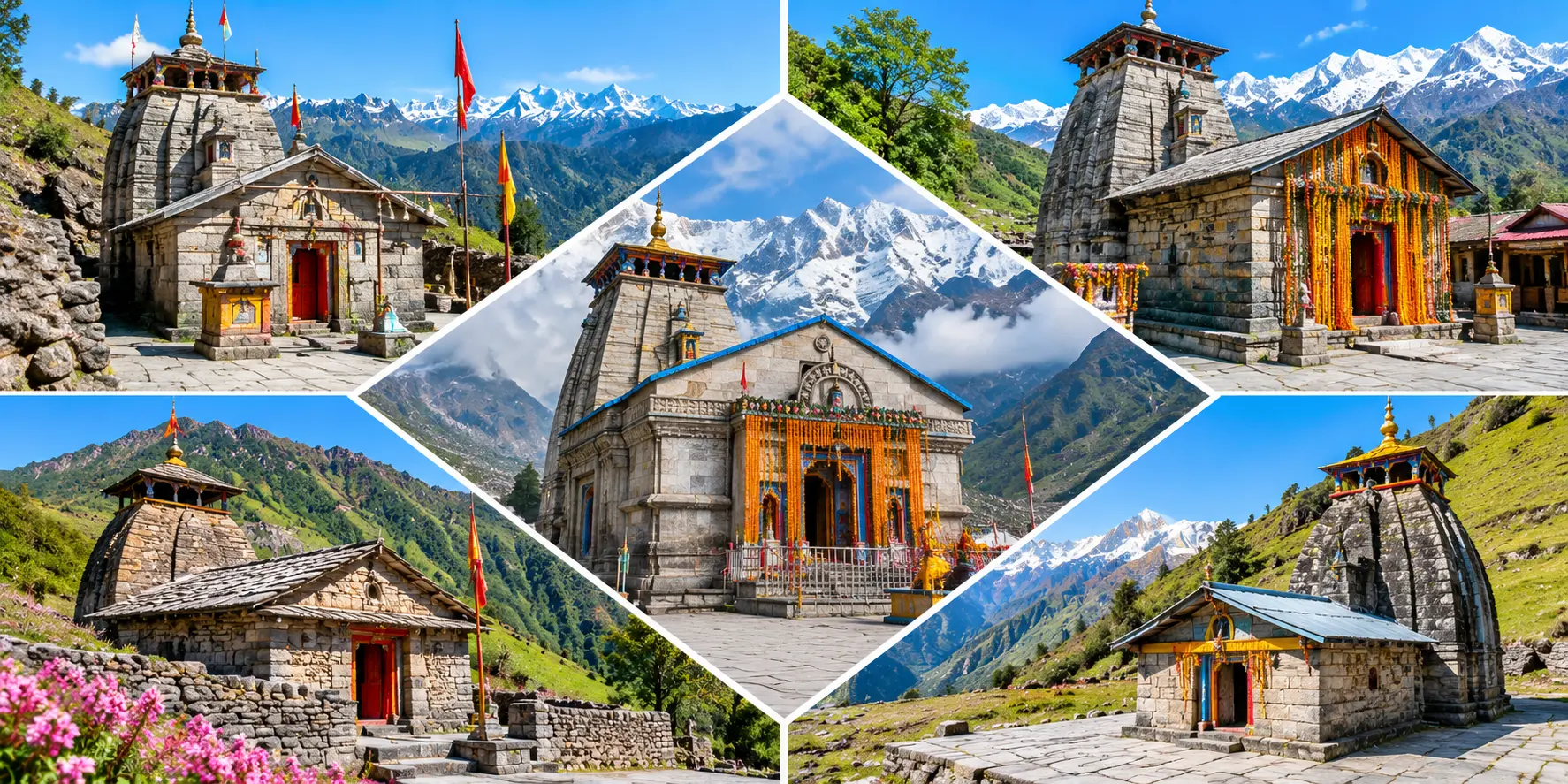
Uttarakhand is home to five famous temples dedicated to Lord Shiva. These temples are known as the Panch Kedar. They are Kedarnath, Madhyamaheshwar, Tungnath, Rudranath, and Kalpeshwar.
All five temples are located in the Garhwal Himalayas. Each temple has a different story and religious importance. Some are easy to reach, while others require long walks through forests, villages, and mountain trails.
The Panch Kedar Yatra is a special journey for Lord Shiva’s devotees. It also gives travellers a chance to see the natural beauty of Uttarakhand. Here is everything you need to know about the five temples, their locations, trekking routes, best time to visit, and travel tips.
What Are the Panch Kedar Temples?
The word “Panch” means five. Panch Kedar refers to five temples of Lord Shiva in Uttarakhand.
According to Hindu belief, different parts of Lord Shiva’s body appeared at five places in the Garhwal Himalayas. Temples were built at these places, and they became known as the Panch Kedar.
The five temples are:
- Kedarnath: The hump of Lord Shiva appeared here.
- Madhyamaheshwar: His navel or middle part appeared here.
- Tungnath: His arms appeared here.
- Rudranath: His face appeared here.
- Kalpeshwar: His matted hair, also called Jata, appeared here.
All five temples are dedicated to Lord Shiva. Kedarnath is also one of the 12 Jyotirlingas in India.
History and Story of Panch Kedar
The story of Panch Kedar is linked to the Pandavas from the Mahabharata.
After the Kurukshetra war, the Pandavas wanted to meet Lord Shiva and ask for forgiveness for the deaths caused during the war. However, Lord Shiva did not want to meet them and took the form of a bull to hide in the Himalayas.
The Pandavas searched for him and finally found the bull. When they tried to catch it, Lord Shiva disappeared into the ground. Different parts of his body appeared at five different places.
These places later became the five Panch Kedar temples:
- Kedarnath: Hump
- Madhyamaheshwar: Navel or middle part
- Tungnath: Arms
- Rudranath: Face
- Kalpeshwar: Matted hair
This is the popular story behind the Panch Kedar pilgrimage.
Panch Kedar Temples in Uttarakhand
1. Kedarnath Temple
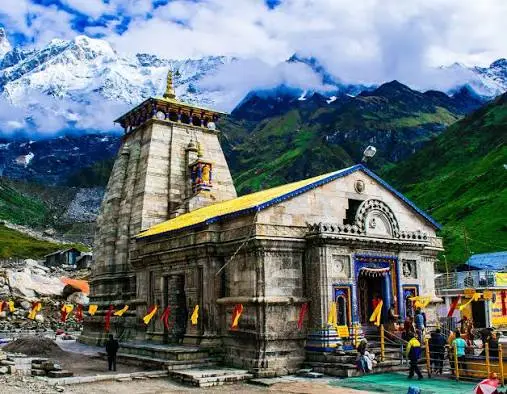
Kedarnath Temple is the most famous temple among the five Panch Kedar temples. It is located in the Rudraprayag district of Uttarakhand at an altitude of around 3,583 meters.
The temple is dedicated to Lord Shiva and is also one of the 12 Jyotirlingas in India. According to the Panch Kedar story, the hump of Lord Shiva appeared at this place.
The temple stands among high mountains and is visited by thousands of pilgrims every year during the yatra season.
Location and Trek Route
Kedarnath is reached through a trek from Gaurikund. The route is around 16–19 km, depending on the distance measurement and route information used.
You can reach Gaurikund by road through Sonprayag. From Gaurikund, pilgrims walk to Kedarnath. Pony, palki, and helicopter services may also be available under the rules of the current yatra season.
Kedarnath Temple Information
| Detail | Information |
| District | Rudraprayag |
| Altitude | 3,583 meters (11,755 feet) |
| Dedicated To | Lord Shiva |
| Trek Starting Point | Gaurikund |
| Trek Distance | Around 16–19 km |
| Winter Seat | Omkareshwar Temple, Ukhimath |
Best Time to Visit Kedarnath
May to June and September to October are generally good months to visit Kedarnath.
The temple remains closed during winter because of heavy snowfall. The monsoon season can also bring heavy rain and landslides, so check the weather before travelling.
2. Madhyamaheshwar Temple
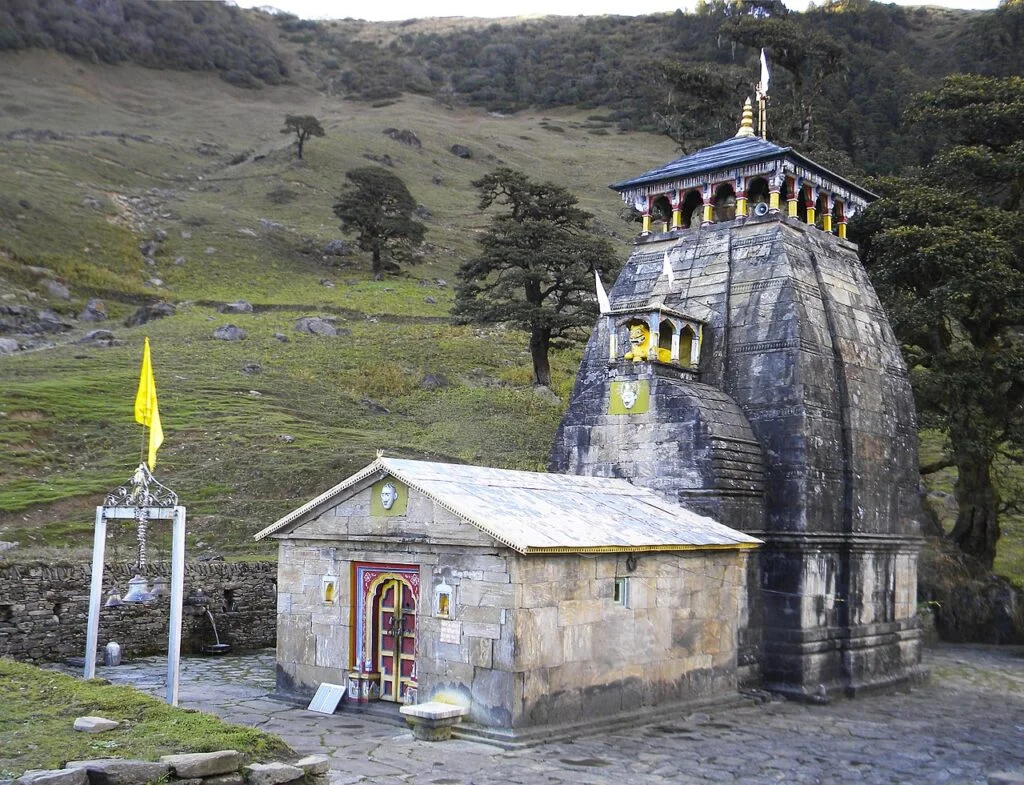
Madhyamaheshwar Temple is the second temple of the Panch Kedar. It is located in the Rudraprayag district at an altitude of around 3,497 meters .
The temple is dedicated to Lord Shiva. According to the Panch Kedar story, his navel or middle part appeared here.
The temple is surrounded by green hills and high mountain peaks. Many visitors also walk to Budha Madhyamaheshwar, a nearby place known for its mountain views.
Location and Trek Route
The trek to Madhyamaheshwar starts from Uniana. Ransi and Gaundar are important villages along the route.
The total trek is around 19 km from Uniana, according to Uttarakhand Tourism. Some travel guides give a longer distance depending on the starting point and route.
The trail passes through forests, small villages, and mountain paths. It is a long uphill walk, so basic fitness is important.
Madhyamaheshwar Temple Information
| Detail | Information |
| District | Rudraprayag |
| Altitude | 3,497 meters (11,473 feet) |
| Dedicated To | Lord Shiva |
| Trek Starting Point | Uniana |
| Main Route | Uniana, Ransi, Gaundar, Madhyamaheshwar |
| Trek Distance | Around 19 km |
| Winter Seat | Omkareshwar Temple, Ukhimath |
Best Time to Visit Madhyamaheshwar
May to June and September to October are generally suitable for this trek.
Avoid visiting during heavy rainfall because the trail can become slippery. Check local weather and road updates before starting the journey.
3. Tungnath Temple
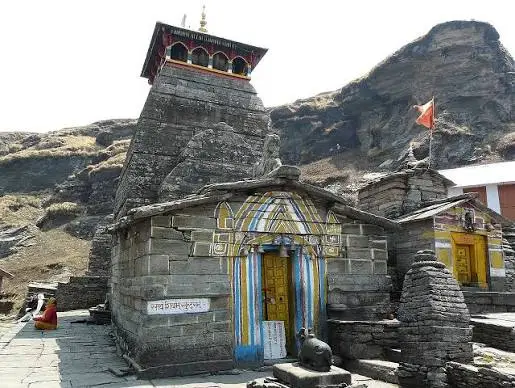
Tungnath Temple is one of the highest Shiva temples in the world. It is located in the Rudraprayag district at an altitude of 3,680 meters.
It is the third temple of the Panch Kedar. According to the popular story, the arms of Lord Shiva appeared here.
Tungnath is also popular among trekkers because its route starts from Chopta. The trail offers beautiful views of the surrounding mountains.
Location and Trek Route
The trek to Tungnath starts from Chopta. The distance is around 3–4 km, depending on the route and measurement.
The path is uphill, but it is shorter than the treks to Kedarnath, Madhyamaheshwar, and Rudranath.
Many visitors also continue to Chandrashila after visiting Tungnath. Chandrashila is a separate mountain viewpoint and is not one of the Panch Kedar temples.
Tungnath Temple Information
| Detail | Information |
| District | Rudraprayag |
| Altitude | 3,680 metres (12,073 feet) |
| Dedicated To | Lord Shiva |
| Trek Starting Point | Chopta |
| Trek Distance | Around 3–4 km |
| Winter Seat | Makkumath |
Best Time to Visit Tungnath
April to June and September to October are generally good months to visit Tungnath.
Snow can remain on the trail during winter and early spring. Check local conditions before starting the trek.
4. Rudranath Temple
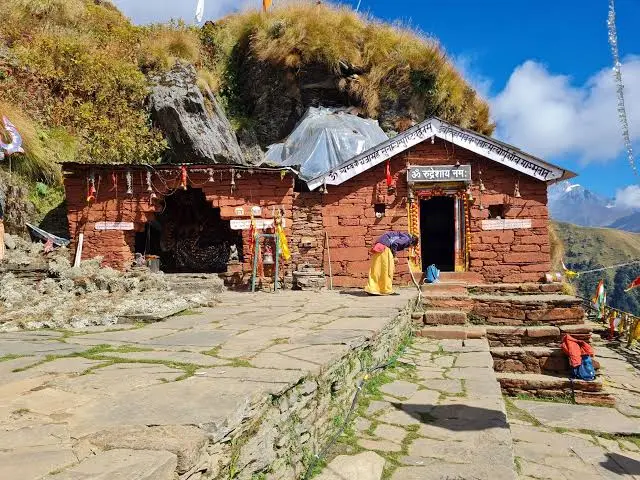
Rudranath Temple is one of the most difficult Panch Kedar temples to reach. It is located in the Chamoli district at an altitude of around 2,290 meters.
The temple is dedicated to Lord Shiva. According to the Panch Kedar story, his face appeared at this place.
Rudranath is surrounded by forests, green meadows, and mountain views. It is also known for sacred water pools such as Surya Kund, Chandra Kund, Tara Kund, and Mana Kund.
Location and Trek Route
One common route to Rudranath starts from Sagar village near Gopeshwar.
The trek from Sagar is around 20 km. There are also other routes from places such as Gangolgaon and Mandal.
The trail includes long uphill walks and forest paths. Because the temple is in a remote area, it is important to plan your stay and return journey in advance.
Rudranath Temple Information
| Detail | Information |
| District | Chamoli |
| Altitude | 2,290 meters (7,510 ft) |
| Dedicated To | Lord Shiva |
| Common Trek Starting Point | Sagar Village |
| Trek Distance | Around 20 km from Sagar |
| Winter Seat | Gopinath Temple, Gopeshwar |
Best Time to Visit Rudranath
May to June and September to October are generally suitable months for the Rudranath trek.
The monsoon season is not a good time because heavy rain can make the trail slippery and difficult.
5. Kalpeshwar Temple
Kalpeshwar Temple is the fifth and last temple of the Panch Kedar. It is located in the Urgam Valley of the Chamoli district at an altitude of 2,200 meters.
The temple is dedicated to Lord Shiva. According to the Panch Kedar story, his matted hair, also called Jata, appeared here.
Kalpeshwar is different from the other four temples because it generally remains open throughout the year. The temple is inside a small cave and is reached through a short walk.
Location and Trek Route
Kalpeshwar is located in the Urgam Valley. You can travel by road towards Helang and then continue towards Urgam using available local transport, depending on road conditions.
From Urgam, the temple is around 2 km away by foot.
The walk is much shorter than the other Panch Kedar treks, making Kalpeshwar easier to reach for many visitors.
Kalpeshwar Temple Information
| Detail | Information |
| District | Chamoli |
| Altitude | 2,200 meters (7,218 feet) |
| Dedicated To | Lord Shiva |
| Location | Urgam Valley |
| Trek Distance | Around 2 km from Urgam |
| Opening | Generally open throughout the year |
Best Time to Visit Kalpeshwar
Kalpeshwar can generally be visited throughout the year. April to June and September to November are comfortable months for travel.
During winter, check road and weather conditions before planning your visit.
Panch Kedar Temples: Quick Comparison
Here is a simple comparison of all five temples.
| Temple | Trek Distance | Difficulty | Special Importance |
| Kedarnath | Around 16–19 km | Moderate to difficult | Shiva’s hump |
| Madhyamaheshwar | Around 19 km | Moderate to difficult | Shiva’s navel |
| Tungnath | Around 3–4 km | Moderate | Shiva’s arms |
| Rudranath | Around 20 km from Sagar | Difficult | Shiva’s face |
| Kalpeshwar | Around 2 km from Urgam | Easy to moderate | Shiva’s hair |
The difficulty of a trek also depends on your fitness, the weather, and the condition of the trail.
Panch Kedar Yatra Route
There is no fixed rule that says you must visit the five temples in one particular order. Most travellers plan the route according to road access, weather, and temple opening dates.
A common route plan is:
- Rishikesh or Haridwar
- Guptkashi and Kedarnath
- Uniana and Madhyamaheshwar
- Chopta and Tungnath
- Sagar village and Rudranath
- Helang, Urgam Valley, and Kalpeshwar
- Return to Rishikesh or Haridwar
This is only a suggested route. You may need to change the order according to road conditions, trekking plans, and available accommodation.
Best Time to Visit Panch Kedar
The best time to visit the Panch Kedar temples is generally May to June and September to October.
Most of the temples are located in the mountains, where the weather can change quickly. Choosing the right month makes the journey easier.
Summer: May to June
Summer is one of the most popular times for the Panch Kedar Yatra.
- The weather is generally suitable for trekking.
- Snow starts clearing from many mountain routes.
- The temples that close in winter reopen during this season.
- Green forests and mountain views make the journey beautiful.
Monsoon: July to August
The monsoon season is usually not recommended for the full Panch Kedar Yatra.
- Heavy rain can cause landslides.
- Mountain roads may get blocked.
- Trekking paths can become slippery.
- Travel delays are common during bad weather.
Autumn: September to October
September and October are also good months for the Panch Kedar Yatra.
- The monsoon rain usually reduces.
- The sky is often clearer.
- Mountain views are better on clear days.
- The weather starts getting colder, especially at higher places.
Winter: November to April
Most Panch Kedar temples close during winter because of heavy snowfall and difficult weather.
Kalpeshwar generally remains open throughout the year. However, road access can still be affected by snow and bad weather.
Panch Kedar Temple Opening and Closing Dates 2026
The opening and closing dates of the Panch Kedar temples are decided every year according to religious traditions and the Hindu calendar. Here are the dates for the 2026 pilgrimage season.
| Temple | Opening Date (2026) | Closing Date (2026) | Winter Seat |
| Kedarnath | 22 April 2026 | 11 November 2026 | Omkareshwar Temple, Ukhimath |
| Tungnath | 22 April 2026 | 6 November 2026 | Makkumath |
| Rudranath | 18 May 2026 | 17 October 2026 | Gopinath Temple, Gopeshwar |
| Madhyamaheshwar | 21 May 2026 | 16 November 2026 | Omkareshwar Temple, Ukhimath |
| Kalpeshwar | Open throughout the year | No winter closure | No seasonal shift |
What Happens During Winter?
Four Panch Kedar temples close during winter because heavy snowfall makes the high-altitude routes difficult to access. During this time, the ceremonial idols are taken to their winter seats, where devotees can continue to offer prayers.
- Kedarnath and Madhyamaheshwar: Worship continues at Omkareshwar Temple in Ukhimath.
- Tungnath: Worship continues at Makkumath.
- Rudranath: Worship continues at Gopinath Temple in Gopeshwar.
- Kalpeshwar: Remains open throughout the year.
Panch Kedar Yatra Registration and Permits
Registration and permit rules depend on the temple and trekking route you plan to visit. Kedarnath is part of the Char Dham Yatra, so pilgrims visiting Kedarnath must complete the required registration.
1. Kedarnath Yatra Registration
Kedarnath pilgrims must register through the official Uttarakhand Tourist Care portal before starting their journey.
Official registration website: https://registrationandtouristcare.uk.gov.in/
- Registration fee: Free
- Documents required: Aadhaar card or another valid government ID, mobile number and other details requested on the portal.
- Registration proof: Download the Yatra Registration Letter with its QR code and keep it with you.
- Verification: Officials may check your registration at designated checkpoints and at the temple.
2. Permits for Other Panch Kedar Temples
For Madhyamaheshwar, Tungnath, Rudranath and Kalpeshwar, check the latest rules with the local administration or Forest Department before starting your trek.
Some trekking routes may pass through protected forest areas, where separate entry permission or fees may apply. The requirements can differ by route and season.
3. Important Travel Rules
- Carry a valid government ID during the journey.
- Keep your registration letter or permit, wherever required.
- Follow the instructions given by local authorities and forest officials.
- Avoid littering and do not leave plastic waste on trekking routes.
- Follow local rules about camping, fires and the use of drones.
Important: Do not assume that Kedarnath registration covers all five Panch Kedar temples or that the same forest permit applies to every route. Confirm the latest requirements before travelling.
Panch Kedar Yatra Itinerary
Visiting all five temples takes several days because they are located in different parts of Uttarakhand. You should keep enough time for road journeys, trekking, rest, and bad weather.
The following is a broad 12-day route idea. It is a demanding plan, so add extra days if you want a slower journey.
| Day | Travel Plan |
| Day 1 | Rishikesh to Sonprayag |
| Day 2 | Gaurikund to Kedarnath trek |
| Day 3 | Kedarnath darshan and return towards Gaurikund |
| Day 4 | Travel towards Ransi and trek to Gaundar |
| Day 5 | Gaundar to Madhyamaheshwar |
| Day 6 | Return towards Ransi and travel to Ukhimath |
| Day 7 | Ukhimath to Chopta, visit Tungnath, and travel towards Sagar |
| Day 8 | Sagar to Lyuti Bugyal |
| Day 9 | Visit Rudranath and return to the planned stay |
| Day 10 | Return towards Sagar |
| Day 11 | Travel to Helang and Urgam Valley, visit Kalpeshwar |
| Day 12 | Return towards Rishikesh |
This itinerary is only a route outline, not a fixed schedule. Trekking speed, overnight stays, road conditions, and weather can change the number of days needed. Keep extra days, especially for the Kedarnath and Rudranath routes.
How Difficult Is the Panch Kedar Yatra?
The Panch Kedar Yatra includes both short and long treks. Some temples are easier to reach, while others need good fitness and more time.
| Temple | General Difficulty | Reason |
| Kedarnath | Moderate to difficult | Long uphill trek and high altitude |
| Madhyamaheshwar | Moderate to difficult | Long uphill trail |
| Tungnath | Moderate | Short but steep trek |
| Rudranath | Difficult | Long trek and remote route |
| Kalpeshwar | Easy to moderate | Short walk from Urgam |
If you are new to trekking, do not try to complete all five temples without preparation. Start walking regularly before the trip and take enough rest during the journey.
How to Prepare for the Panch Kedar Yatra
A little preparation can make your journey safer and more comfortable.
1. Improve Your Fitness
Start walking regularly at least a few weeks before the trip. Practice walking uphill and climbing stairs to prepare for the mountain trails.
2. Wear Good Trekking Shoes
Choose comfortable shoes with a good grip. Avoid wearing new shoes for the first time during a long trek.
3. Carry Warm Clothes
The weather can become cold even during summer. Carry a warm jacket, gloves, socks, and a raincoat.
4. Keep Basic Medicines
Carry your regular medicines, a basic first-aid kit, and any personal medical supplies you may need.
5. Drink Enough Water
Drink water regularly during the trek. Carry some light snacks to keep your energy up.
6. Take Enough Rest
Do not rush while walking uphill. Take breaks and give your body time to adjust to the high altitude.
7. Check Weather Updates
Check the weather and road conditions before starting each part of the journey. Follow local instructions if a route is closed or unsafe.
How to Reach Panch Kedar Temples
Rishikesh and Haridwar are common starting points for the Panch Kedar Yatra. From there, you can travel by road towards the different temple routes.
By Air
Jolly Grant Airport in Dehradun is the nearest major airport for the region. From the airport, you can hire a taxi or continue by road towards the relevant starting point.
By Train
Rishikesh and Haridwar are the main railway stations used by travellers visiting this part of Uttarakhand.
From the railway station, you can take a bus or taxi towards places such as Guptkashi, Ukhimath, Chopta, and Gopeshwar.
By Road
Rishikesh and Haridwar are connected to the main towns of Garhwal by road.
You can travel towards:
- Kedarnath: Sonprayag and Gaurikund
- Madhyamaheshwar: Uniana and Ransi
- Tungnath: Chopta
- Rudranath: Sagar village near Gopeshwar
- Kalpeshwar: Helang and Urgam Valley
Road conditions can change during the monsoon and winter. Check local updates before starting your journey.
Accommodation During Panch Kedar Yatra
You can find hotels, guesthouses, homestays, and camps near some of the Panch Kedar routes. However, facilities are limited near remote temples.
| Location | Stay Options |
| Guptkashi and Sonprayag | Hotels and guesthouses |
| Kedarnath | Camps and seasonal guesthouses |
| Ransi and Gaundar | Basic guesthouses and homestays, depending on availability |
| Chopta | Guesthouses, camps, and homestays |
| Sagar and Rudranath route | Basic stays and limited trekking accommodation |
| Urgam Valley | Guesthouses and homestays |
Book your stay in advance during the busy yatra season. For remote routes, confirm accommodation before starting the trek.
Panch Kedar vs Char Dham Yatra
Panch Kedar and Char Dham are two different pilgrimage routes in Uttarakhand. Both include Kedarnath, but the other temples are different.
The Panch Kedar Yatra covers five temples dedicated to Lord Shiva:
- Kedarnath
- Madhyamaheshwar
- Tungnath
- Rudranath
- Kalpeshwar
The Char Dham Yatra of Uttarakhand covers four major pilgrimage sites:
- Yamunotri
- Gangotri
- Kedarnath
- Badrinath
The main difference is that Panch Kedar focuses on five Shiva temples, while Char Dham covers four important pilgrimage sites dedicated to different deities. Kedarnath is the only temple common to both routes.
Panch Kedar vs Panch Badri vs Panch Prayag
Uttarakhand has three important pilgrimage groups: Panch Kedar, Panch Badri, and Panch Prayag. Each group has a different religious meaning.
- Panch Kedar: A group of five temples dedicated to Lord Shiva.
- Panch Badri: A group of five temples associated with Lord Vishnu.
- Panch Prayag: Five sacred river confluences where different rivers meet.
All three have great religious importance in Uttarakhand. Panch Kedar and Panch Badri are associated with Hindu deities, while Panch Prayag refers to sacred river meeting points.
Why Visit the Panch Kedar Temples?
The Panch Kedar Yatra is not just about visiting temples. It is also a chance to see the beautiful mountain areas of Uttarakhand.
Here are a few reasons to plan this journey:
- Religious importance: Visit five sacred temples dedicated to Lord Shiva.
- Mountain views: Enjoy views of the Garhwal Himalayas.
- Village life: Pass through small mountain villages and see local life.
- Trekking: Walk through forests, meadows, and mountain trails.
- Peaceful places: Spend time away from busy towns and crowded areas.
Conclusion
The Panch Kedar temples are five important places of Lord Shiva in Uttarakhand. Each temple has its own story, location, and trekking route. From the famous Kedarnath Temple to the quiet Kalpeshwar cave, every place offers a different experience.
Plan your journey well, check the weather, and give yourself enough time for the treks. This will help you enjoy the Panch Kedar Yatra safely and comfortably
Frequently Asked Questions
The Panch Kedar temples are five temples dedicated to Lord Shiva in Uttarakhand. They are Kedarnath, Madhyamaheshwar, Tungnath, Rudranath, and Kalpeshwar.
Tungnath is the highest temple among the Panch Kedar. It is located at an altitude of around 3,680 metres.
Kalpeshwar is generally the easiest to reach because it has a short walk from Urgam. The other four temples require longer treks.
You should keep around 12–15 days or more for the full journey, depending on your route, walking speed, and rest days. Extra time is helpful if the weather changes.
May to June and September to October are generally good months for the Panch Kedar Yatra. Avoid planning long treks during heavy monsoon rain.
Kedarnath pilgrims must follow the applicable Char Dham registration rules. For the other temple routes, check local administration and forest department requirements before travelling.
Kalpeshwar generally remains open throughout the year. However, road access may be affected by snow or bad weather.
According to Hindu belief, the Pandavas searched for Lord Shiva after the Mahabharata war. Shiva took the form of a bull, and different parts of his body appeared at five places in the Garhwal Himalayas.
Yes, you can visit all five temples in one trip. You need to plan your road journeys, trekking days, accommodation, and rest days carefully.
People are also reading: