
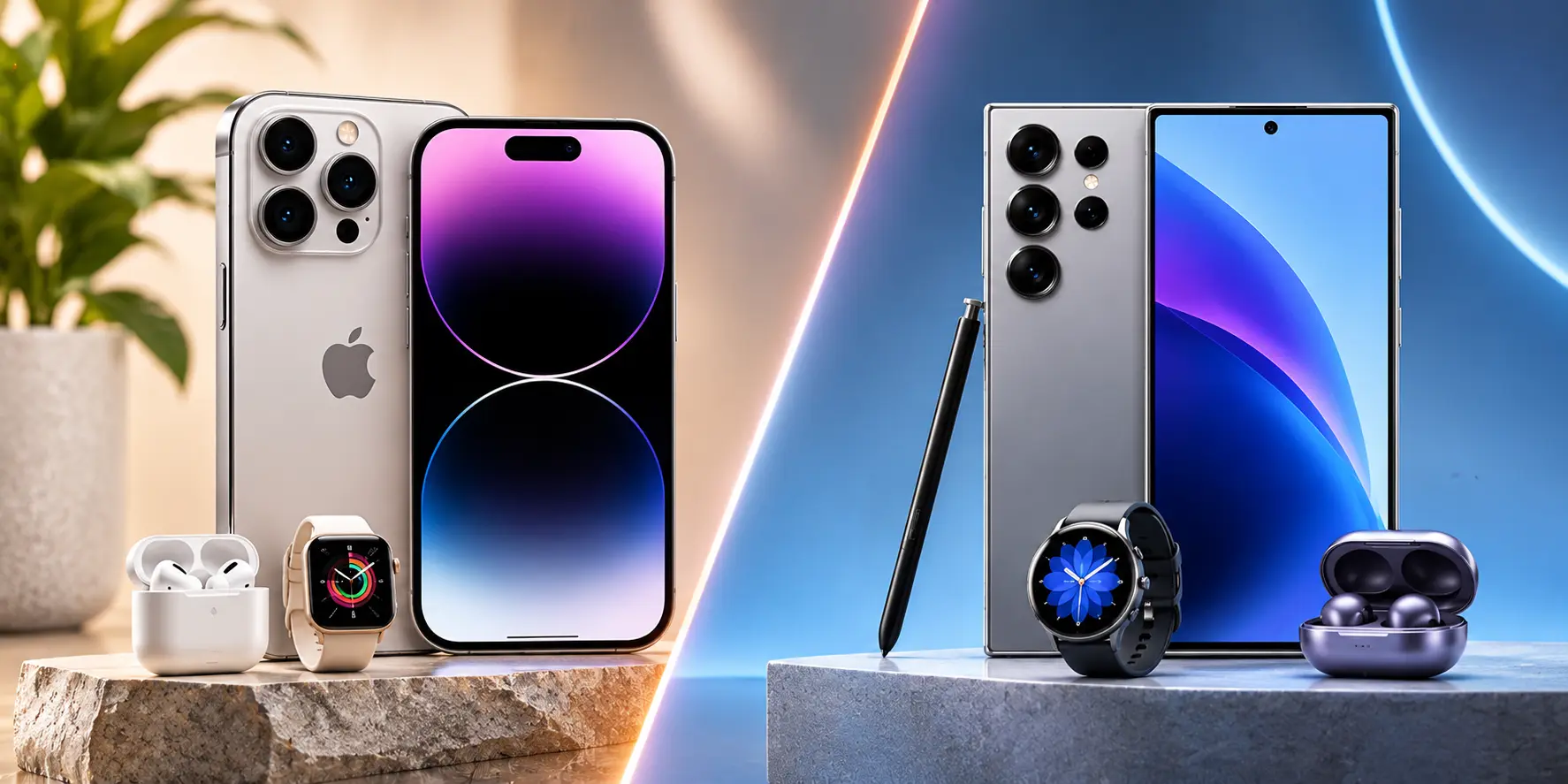
Apple and Samsung are two of the biggest names in the smartphone industry. Both brands offer powerful processors, high-quality cameras, premium designs, and advanced software features. However, they approach smartphone technology differently. Apple focuses on a simple user experience, strong privacy, and seamless integration between its devices. Samsung offers more smartphone choices, flexible software, advanced displays, and features such as foldable screens.
But which brand is better? Is an iPhone worth its premium price, or does Samsung offer better features for the money?
The answer depends on your budget and how you use your phone. In this Apple vs Samsung comparison, we will compare their market demand, features, pricing, resale value, and overall performance to help you choose the right smartphone.
Quick Comparison Table
Apple is known for its smooth software, seamless device connectivity, and strong resale value. Samsung, in contrast, provides a wider range of devices, greater customization, and more pricing options.
| Feature | Apple | Samsung |
| Smartphone Lineup | iPhone | Galaxy A, S, and Z series |
| Operating System | iOS | Android with One UI |
| Price Range | Premium and mid-premium | Budget to premium |
| Design | Minimal and consistent | Multiple designs and foldables |
| Display | Super Retina XDR OLED | Dynamic AMOLED |
| Performance | Apple A-series processors | Snapdragon and Exynos |
| Camera | Strong video recording and consistent photos | Versatile photography and zoom |
| Battery | Good optimization and battery life | Larger batteries and faster charging on selected models |
| Customization | Limited but simple | Extensive customization |
| Software Support | Long-term iOS updates | Up to 7 years on eligible models |
| AI Features | Apple Intelligence | Galaxy AI |
| Resale Value | Generally higher | Generally lower |
| Best For | Ecosystem, video, and simplicity | Customization, variety, and multitasking |
Apple vs Samsung: Which Brand Has Better Market Demand?
Apple and Samsung have strong positions in the global smartphone market, but their business strategies are different. Samsung sells smartphones across budget, mid-range, and premium categories. Apple focuses mainly on premium and mid-premium buyers.
According to Counterpoint Research, Samsung held 22% of global smartphone shipments in Q3 2026, while Apple held 21%. However, Apple captured 50% of global smartphone revenue during the same quarter, compared with Samsung’s 19%.
This shows that Samsung leads in shipment volume, while Apple generates a much larger share of industry revenue through its premium-focused strategy.
Source: Counterpoint Research
Brand Popularity and Customer Loyalty
Both brands have loyal customers, but they attract buyers for different reasons.
- Apple: Builds customer loyalty through iOS, iCloud, AirPods, Apple Watch, and Mac integration. Users who own several Apple products often prefer staying within the ecosystem.
- Samsung: Builds loyalty through product variety. Customers can upgrade from an affordable Galaxy A phone to a premium Galaxy S or foldable Z model.
Product Range and Target Audience
Apple maintains a focused smartphone lineup, making it easier for customers to choose between standard and Pro models.
Samsung targets a wider audience through different product categories:
- Apple: Targets customers looking for premium smartphones, simple software, and long-term device support.
- Samsung: Targets budget, mid-range, and premium buyers through Galaxy A, Galaxy S, and Galaxy Z series phones.
Operating Systems and User Preferences
Apple uses iOS, while Samsung uses Android with its One UI interface.
- Apple (iOS): Offers a simple interface, consistent software updates, and controlled application permissions.
- Samsung (One UI): Provides greater customization, flexible file management, split-screen multitasking, and more system controls.
Market Positioning and Pricing Strategy
Apple positions the iPhone as a premium smartphone, relying on its brand reputation, software, and ecosystem rather than competing in the budget segment.
- Apple: Focuses on premium pricing, trade-in offers, financing, and a relatively consistent product lineup.
- Samsung: Uses a wider pricing strategy, offering affordable Galaxy A models alongside premium Galaxy S and foldable Z devices.
Customer Base and Brand Reputation
Both companies have strong brand reputations, but their main strengths differ.
- Apple: Known for premium design, video recording, privacy features, software consistency, and high resale value.
- Samsung: Known for display technology, camera versatility, foldable phones, hardware innovation, and product variety.
Apple vs Samsung: Detailed Feature Comparison
Apple focuses on hardware and software optimization, privacy, and ecosystem integration. Samsung emphasizes hardware variety, customization, multitasking, and display technology.
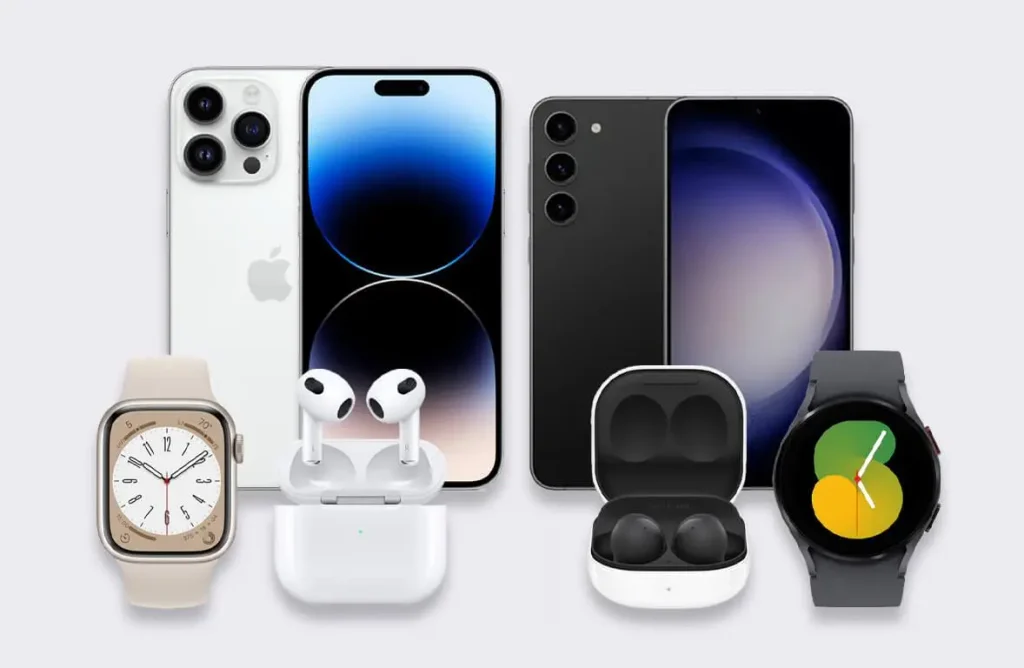
Here is how both brands compare across their most important smartphone features.
Design and Build Quality
Both brands use premium materials in their flagship smartphones, but their design approaches are different.
- Apple: Offers a clean and consistent design with glass backs, aluminum frames on standard models, and premium materials on Pro models.
- Samsung: Offers slim Galaxy S phones and different foldable designs through its Galaxy Z Fold and Z Flip series.
- Better Choice: Apple for a consistent design; Samsung for more design variety.
Durability and Water Resistance
Both brands provide dust and water resistance on many premium models, along with strengthened front and back glass.
- Apple: Uses Ceramic Shield front glass and IP68 protection on supported iPhones.
- Samsung: Uses Gorilla Glass protection and IP68 ratings on many Galaxy S models. Foldable phones have different protection ratings.
- Better Choice: Both offer good flagship durability. Actual protection depends on the model and usage.
Display Quality
Samsung has a strong reputation for display technology, while Apple focuses on brightness, color accuracy, and smooth performance.
- Apple: Uses Super Retina XDR OLED displays with sharp visuals, accurate colors, and ProMotion 120 Hz refresh rates on Pro models.
- Samsung: Offers Dynamic AMOLED displays with high brightness, vibrant colors, high resolution on selected models, and advanced anti-reflective technology.
- Better Choice: Samsung for display variety and advanced screen features; Apple for excellent color accuracy and viewing quality.
Performance and Processor
Both brands offer powerful processors that can handle gaming, multitasking, video editing, and everyday applications.
- Apple: Uses custom A-series processors that work closely with iOS, delivering strong processing performance and power efficiency.
- Samsung: Uses Snapdragon or Exynos processors depending on the model and market. Its flagship phones also offer strong multitasking and gaming performance.
- Better Choice: Apple for chip optimization and single-core performance; Samsung for hardware flexibility and multitasking features.
Camera Quality and Photography
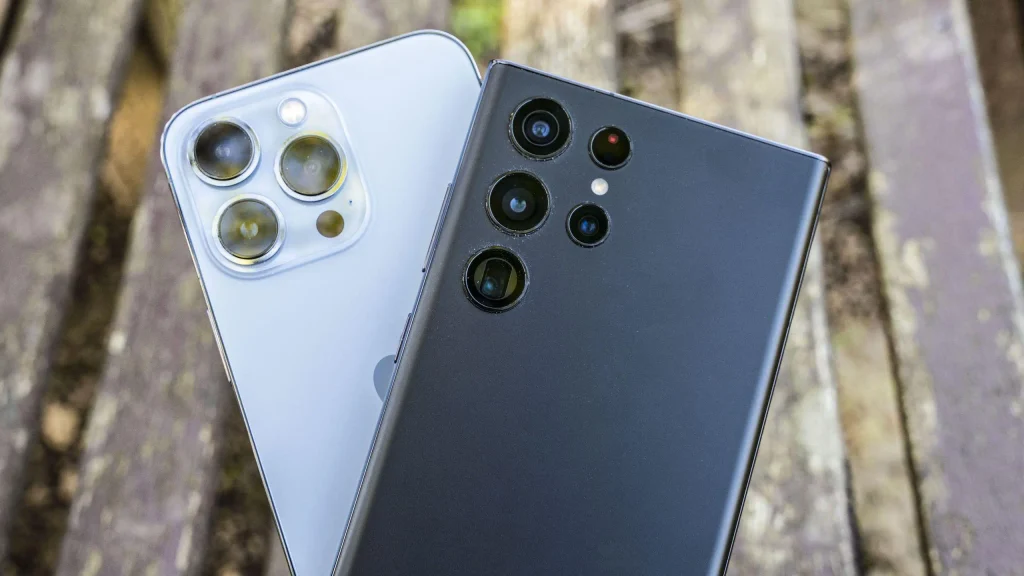
Apple and Samsung both offer excellent smartphone cameras, but their image processing and camera features differ.
- Apple: Delivers natural skin tones, reliable stabilization, consistent colors, and excellent video recording.
- Samsung: Offers high-resolution sensors, versatile camera lenses, and powerful zoom capabilities on flagship models.
- Better Choice: Apple for video recording and Samsung for zoom photography and camera versatility.
Battery Life and Charging
Battery performance depends on the phone model, battery capacity, processor, and usage habits.
- Apple: Focuses on battery efficiency through hardware and software optimization. Larger Pro Max models offer particularly good endurance.
- Samsung: Offers different battery capacities, faster wired charging on selected models, and reverse wireless charging on compatible devices.
- Better Choice: Samsung for charging flexibility; Apple is also competitive in battery endurance.
Software and User Experience
The biggest difference between Apple and Samsung is how much control users get over their smartphone software.
- Apple (iOS): Offers a clean interface, consistent application experience, and simple system navigation.
- Samsung (One UI): Provides customizable home screens, flexible file management, split-screen applications, and additional system features.
- Better Choice: Apple for simplicity; Samsung for customization and control.
Software Updates and Long-Term Support
Both companies provide long-term software support, helping users keep their smartphones secure and updated.
- Apple: Releases iOS updates directly to supported iPhones, with major updates generally available across eligible devices simultaneously.
- Samsung: Offers up to seven generations of OS upgrades and seven years of security updates on eligible flagship models.
- Better Choice: Both are strong options for long-term use. Samsung’s seven-year commitment makes it particularly competitive.
Repairability and Availability of Spare Parts
Repair costs depend on the smartphone model, damaged component, and availability of replacement parts.
- Apple: Provides official and authorized repair services, but display and back-glass replacements can be expensive.
- Samsung: Has a broad service network in India and spare parts for many popular models. Foldable screen repairs can still be costly.
- Better Choice: Depends on the model and location. Compare local repair costs before purchasing.
Artificial Intelligence Features
Apple Intelligence and Samsung Galaxy AI bring AI-powered tools to supported smartphones.
- Apple Intelligence: Includes Writing Tools, notification summaries, photo editing features, and improvements to Siri on supported devices.
- Samsung Galaxy AI: Offers Circle to Search, live translation, writing assistance, photo editing, and audio-related features.
- Better Choice: Samsung for the variety of available AI tools; Apple for integration with the iOS experience.
Security and Privacy
Both brands provide security features to protect personal information, applications, and online accounts.
- Apple: Offers Face ID, App Tracking Transparency, Stolen Device Protection, and controlled application permissions.
- Samsung: Uses Samsung Knox, Secure Folder, biometric authentication, and additional privacy controls.
- Better Choice: Both provide strong security. Apple offers a more controlled software environment, while Samsung provides flexible security features.
Storage and Connectivity
Storage options and connectivity features affect how easily you can manage files and connect other devices.
- Apple: Offers multiple internal storage options, USB-C, Wi-Fi 7 on supported models, and satellite emergency features on compatible devices. iPhones do not support microSD cards.
- Samsung: Offers different internal storage options, USB-C connectivity, desktop display output on supported models, and expandable storage on selected devices.
- Better Choice: Samsung for storage flexibility; Apple for users who prefer cloud-based file management and its connected ecosystem.
Cross-Platform Compatibility and Switching Experience
Your smartphone should work smoothly with the computers and accessories you already own.
- Apple: Works particularly well with MacBooks, iPads, Apple Watches, and AirPods. Some features are limited when connecting with Windows or Android devices.
- Samsung: Supports Windows connectivity through Link to Windows, standard USB file transfers, and a wider range of third-party accessories.
- Better Choice: Samsung for cross-platform flexibility; Apple for users already using Apple products.
Ecosystem and Device Integration
An ecosystem connects your smartphone with other devices, making everyday tasks easier.
- Apple: Offers AirDrop, Handoff, Universal Clipboard, Continuity Camera, and smooth integration with Mac, iPad, Apple Watch, and AirPods.
- Samsung: Provides Quick Share, Multi Control, Smart View, and integration across compatible Galaxy devices and Samsung appliances.
- Better Choice: Apple for a more consistent connected-device experience; Samsung for users invested in the Galaxy ecosystem.
Customization and Productivity
Samsung provides more options for users who want to personalize their smartphones and manage multiple tasks.
- Apple: Offers lock-screen widgets, Focus modes, app icon customization, and Shortcuts automation.
- Samsung: Provides Good Lock, split-screen multitasking, floating windows, Modes and Routines, Samsung DeX, and S Pen support on selected models.
- Better Choice: Samsung for customization and productivity features.
Apple vs Samsung: Which Brand Offers Better Value for Money?
Samsung generally offers better upfront value because it sells smartphones at different price points. Apple focuses on premium devices but offers stronger resale value.
Budget Smartphones
Samsung is the better choice in the budget segment.
- Apple: Does not offer a true entry-level smartphone range. Buyers generally need to consider older or refurbished iPhones.
- Samsung: Offers affordable Galaxy A and M series phones with modern displays, good battery capacity, and useful everyday features.
Winner: Samsung. It provides more choices for budget-conscious buyers.
Mid-Range Smartphones
Samsung offers more hardware options in the mid-range category, while Apple competes through more affordable and discounted iPhone models.
- Apple: Provides strong processors, reliable cameras, and a smooth software experience, but some models compromise on display refresh rates and camera versatility.
- Samsung: Offers AMOLED displays, multiple cameras, fast charging on selected models, and long software support.
Winner: Samsung for hardware variety and features. Apple is worth considering if you prefer iOS.
Premium Flagship Smartphones
Both brands offer powerful flagship phones with premium features.
- Apple: Focuses on processor performance, video recording, software optimization, and ecosystem integration.
- Samsung: Offers advanced displays, versatile cameras, multitasking, and S Pen support on Ultra models.
Winner: Tie. Samsung offers more hardware flexibility, while Apple provides a polished software experience and higher resale value.
Features and Performance at Different Price Points
| Price Segment | Better Choice | Main Reason |
| Under ₹20,000 | Samsung | More affordable smartphone options |
| ₹20,000–₹35,000 | Samsung | Better hardware variety |
| ₹35,000–₹60,000 | Samsung, depending on the model | More display and camera choices |
| Above ₹75,000 | Both | Premium performance and features |
These are general buying guidelines. Actual prices and value depend on the model, storage, offers, and availability.
Buyback Value Comparison: Samsung vs iPhone
iPhones generally retain more resale value than most Samsung Galaxy phones. However, the final selling price depends on the model, condition, battery health, and market demand.
iPhone Resale and Buyback Value
iPhones generally have strong second-hand demand because of their brand reputation, software support, and consistent performance.
- Retain a higher percentage of their original price in many cases.
- Receive long-term iOS and security updates.
- Have strong demand in the refurbished smartphone market.
- Benefit from Apple Trade In and third-party buyback services.
Samsung Galaxy Resale and Buyback Value
Samsung phones generally depreciate faster, particularly when new models receive launch discounts and exchange offers.
- Galaxy S Ultra models may retain value better than many other Galaxy phones.
- Mid-range Galaxy A models usually have lower resale prices.
- Launch discounts and promotional offers can affect second-hand prices.
- Samsung exchange offers can improve the value of an upgrade.
Factors Affecting Smartphone Resale Value
Several factors influence the price you receive when selling your phone:
- Brand and Model: Popular flagship models generally attract more buyers.
- Physical Condition: Scratches, cracks, and damaged components reduce value.
- Battery Health: Better battery condition can improve resale offers.
- Software Support: Longer remaining support makes a phone more attractive.
- Storage: Higher storage variants may receive better offers.
- Market Demand: Prices change with new launches and buyer preferences.
How to Get a Better Resale Price
You can improve your phone’s resale value with a few simple steps:
- Sell before a new generation launches, if possible.
- Use a protective case and screen protector.
- Avoid unauthorized repairs and low-quality replacement parts.
- Keep the original box, invoice, and accessories.
- Compare buyback offers from multiple platforms.
- Back up your data and reset the phone before selling.
Apple vs Samsung: Which Brand Is Better for Different Users?
The right smartphone depends on your daily requirements. Here is which brand makes more sense for different types of users.
Best for Photography and Video Recording
- Apple: Better for video recording, stabilization, natural skin tones, and consistent camera performance.
- Samsung: Better for zoom photography, high-resolution images, and versatile camera options.
Our recommendation: Apple for video creators and Samsung for photography enthusiasts.
Best for Gaming and Performance
- Apple: Offers powerful A-series processors, efficient performance, and strong optimization for supported games.
- Samsung: Provides powerful flagship processors, large displays, advanced cooling, and gaming features.
Our recommendation: Both are excellent for gaming. Compare the specific models and their cooling performance.
Best for Business and Productivity
- Apple: Works smoothly with MacBooks and iPads through AirDrop, Handoff, and Universal Clipboard.
- Samsung: Offers split-screen multitasking, Samsung DeX, S Pen support on selected models, and Windows connectivity.
Our recommendation: Samsung for standalone mobile productivity and Apple for professionals using multiple Apple devices.
Best for Customization
- Apple: Provides widgets, Focus modes, icon customization, and Shortcuts while maintaining a consistent interface.
- Samsung: Offers Good Lock, custom themes, icon packs, third-party launchers, and advanced system controls.
Our recommendation: Samsung is the better choice for customization.
Best for Battery Life
- Apple: Offers good battery optimization, particularly on larger Pro Max models.
- Samsung: Provides larger battery options on many models, faster wired charging on selected devices, and reverse wireless charging.
Our recommendation: Both offer good battery performance. Samsung has more charging flexibility.
Best for Long-Term Use
- Apple: Offers long-term iOS support, reliable performance, and generally higher resale value.
- Samsung: Provides up to seven years of software and security updates on eligible flagship models.
Our recommendation: Both are suitable for long-term use. Apple has an advantage in resale value, while Samsung offers competitive software support.
Apple vs Samsung: Advantages and Disadvantages
Both brands have their strengths and limitations. Understanding these differences can help you make a better buying decision.
Advantages and Disadvantages of Apple iPhones
Advantages
- Smooth Software: iOS offers a consistent and easy-to-use interface.
- Connected Ecosystem: Works seamlessly with MacBooks, iPads, Apple Watches, and AirPods.
- Excellent Video: Offers reliable stabilization and advanced video recording.
- High Resale Value: Generally retains more value than comparable Android phones.
- Privacy Features: Provides strong privacy controls and hardware-based security.
Disadvantages
- High Prices: iPhones are generally more expensive than many Android alternatives.
- Limited Customization: Offers fewer personalization options than Android.
- Restricted File Management: Provides less control over system files.
- Expensive Repairs: Some out-of-warranty repairs can be costly.
- Limited Product Range: Does not compete directly in the budget smartphone segment.
Advantages and Disadvantages of Samsung Phones
Advantages
- Wide Price Range: Offers budget, mid-range, and premium smartphones.
- Excellent Displays: Provides vibrant AMOLED screens and advanced display features.
- Customization: One UI offers extensive personalization options.
- Multitasking: Supports split-screen, floating windows, and Samsung DeX.
- Camera Versatility: Premium models offer multiple lenses and advanced zoom.
- Foldable Options: Provides book-style and flip-style smartphones.
- Long Software Support: Eligible flagship models receive up to seven years of updates.
Disadvantages
- Lower Resale Value: Many Galaxy phones depreciate faster than iPhones.
- Pre-Installed Apps: Some models include duplicate Samsung and Google applications.
- Update Timing: Updates may arrive at different times depending on the model and region.
- Complex Product Range: Choosing between multiple Galaxy models can be confusing.
- Foldable Repair Costs: Screen and hinge repairs can be expensive.
When Should You Choose Apple or Samsung?
Your final choice should depend on your budget, preferred operating system, and the features you use most.
Choose Apple (iPhone) If:
- You already use a MacBook, iPad, Apple Watch, or AirPods.
- You regularly record videos for YouTube, social media, or professional projects.
- You prefer a simple and consistent interface.
- You want strong privacy features and long-term software support.
- You plan to upgrade every few years and want better resale value.
- You prefer a connected smartphone ecosystem.
Choose Samsung (Galaxy) If:
- You want more smartphone options across different price ranges.
- You prefer Android and greater control over your device.
- You enjoy customizing your home screen and system settings.
- You regularly multitask using multiple applications.
- You want advanced zoom photography and faster charging on selected models.
- You are interested in foldable smartphones or S Pen functionality.
- You use a Windows PC and want flexible phone-to-PC connectivity.
Conclusion
Apple and Samsung both offer excellent smartphones, but they serve different types of users. Apple is a better choice if you value a simple software experience, strong ecosystem integration, video recording, privacy, and higher resale value. Its iPhones are particularly suitable for people who already use other Apple products. Samsung is a better choice if you want more smartphone options, greater customization, advanced displays, multitasking features, and flexible pricing. Its Galaxy lineup offers devices for almost every budget.
Our final verdict: Choose Apple for a premium, connected, and straightforward smartphone experience. Choose Samsung for hardware variety, customization, and flexibility. Before purchasing, compare specific models in the same price range rather than choosing a brand based only on popularity.
Frequently Asked Questions
Both Samsung and Apple smartphones can last several years with proper care. Their lifespan depends on battery health, physical condition, and software support. Samsung offers up to seven years of updates on eligible models, while Apple also provides long-term iOS support.
Repairability depends on the model and damaged component. Both brands offer authorized repair services. Some Samsung models may have more affordable replacement parts, while premium iPhones and Samsung foldables can be expensive to repair.
iPhones often deliver consistent results when capturing photos and videos directly through social media applications. Samsung also offers excellent cameras, but results can vary depending on the model and application. iPhones are particularly popular for video consistency.
Both brands provide official customer support and authorized service centres. The experience depends on your location, device model, warranty coverage, and spare-part availability. Check your nearest service centre before purchasing.
Switching is worthwhile if the other brand offers features that better match your needs. Moving to an iPhone makes sense if you prefer iOS and Apple ecosystem integration. Switching to Samsung is useful if you want Android customization, multitasking, and more hardware choices. Consider your apps, photos, contacts, and accessories before making the change.
People Are Also Reading:
- Zara VS H&M
- Dynamo Gaming Net Worth
- Flavoured Cigarettes
- Nail Paint Remover Brands
- Gym Tshirt Brands for Women
- Handbags for Women