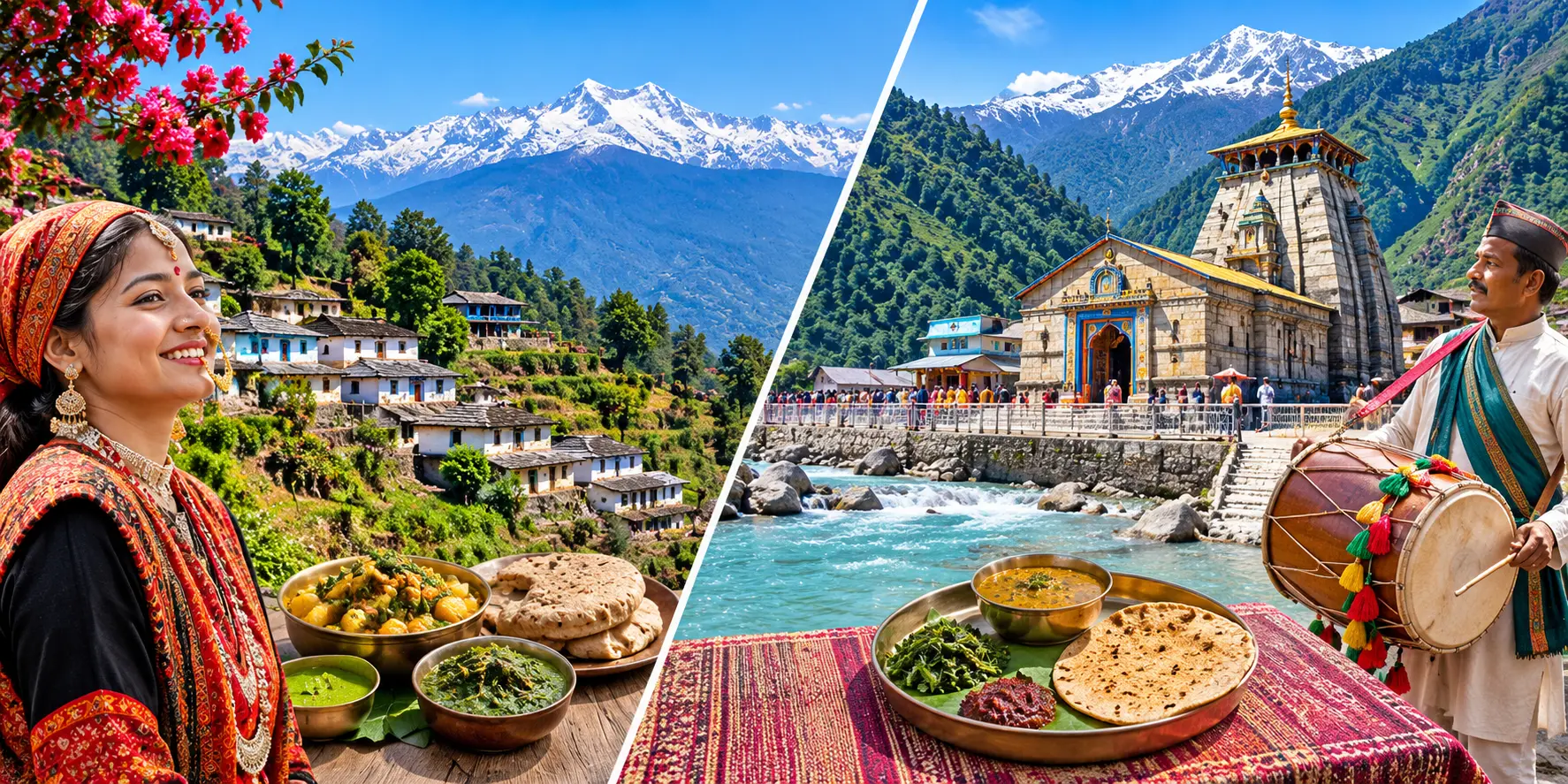
Uttarakhand is home to two culturally distinct regions, Kumaon and Garhwal. Located in the eastern and western parts of the state, respectively, both offer different landscapes, traditions, cuisines and travel experiences.
Kumaon is known for its scenic hill towns, Himalayan views, lakes and ancient temples. Garhwal is famous for its pilgrimage routes, high-altitude valleys, alpine meadows and adventure destinations.
But the difference goes beyond tourism. From Kumaoni and Garhwali languages to folk dances, festivals, traditional food and architecture, each region has a distinct identity.
This guide compares Kumaon vs Garhwal across geography, popular destinations, culture, cuisine, festivals, temples and adventure activities to help you understand both regions and plan your Uttarakhand trip.
Kumaon vs Garhwal: Understanding the Two Regions
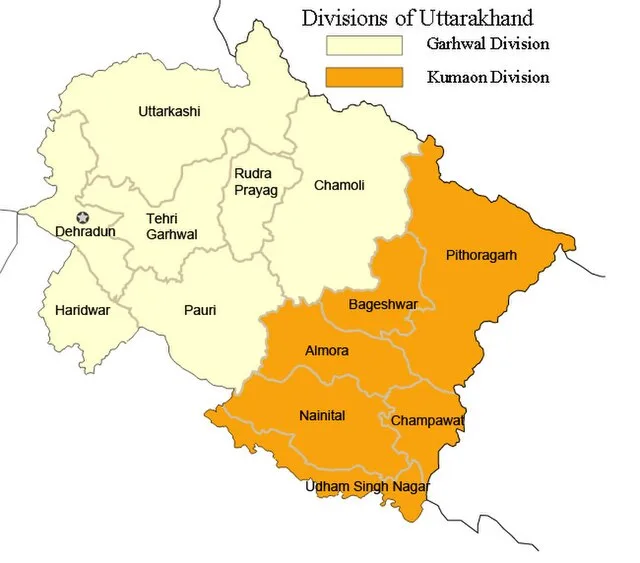
Kumaon and Garhwal are the two administrative divisions of Uttarakhand. They occupy the eastern and western parts of the state respectively and together represent much of its geographical and cultural diversity.
Although people often compare them as tourist destinations, both regions have their own historical background, local identities and traditional ways of life.
1. Kumaon: The Eastern Himalayan Region
Kumaon occupies the eastern part of Uttarakhand and is particularly known for its lake towns, forested hills, traditional settlements and views of the Himalayan peaks.
The Kumaon Division consists of six districts:
- Nainital
- Almora
- Pithoragarh
- Bageshwar
- Champawat
- Udham Singh Nagar
Nainital is the administrative headquarters of Kumaon Division.
Some of the best-known destinations include Nainital, Almora, Ranikhet, Kausani, Mukteshwar, Munsiyari, Binsar and Jageshwar.
Kumaon offers different travel experiences depending on where you go. Nainital and Bhimtal are popular for their lakes, Almora is known for its cultural heritage, and Munsiyari attracts travellers interested in remote Himalayan landscapes and trekking.
The region is also associated with traditional Aipan art, Kumaoni folk songs, Baithaki Holi and local festivals such as Harela.
2. Garhwal: The Western Himalayan Region
Garhwal occupies the western part of Uttarakhand and is famous for its sacred temples, mountain valleys, rivers, glaciers and high-altitude trekking routes.
The Garhwal Division consists of seven districts:
- Dehradun
- Haridwar
- Uttarkashi
- Tehri Garhwal
- Pauri Garhwal
- Rudraprayag
- Chamoli
Pauri is the administrative headquarters of Garhwal Division.
Some of its best-known destinations include Mussoorie, Rishikesh, Haridwar, Kedarnath, Badrinath, Gangotri, Yamunotri, Auli, Chopta and Valley of Flowers.
Garhwal is especially important for religious tourism because it is home to the four traditional Char Dham pilgrimage sites. It also offers opportunities for river rafting, skiing, mountaineering and trekking.
Its cultural heritage includes Garhwali folk songs, Jagar traditions, Pandav Nritya, Phool Dei and several local fairs and religious celebrations.
In simple terms: Kumaon is widely associated with lakes, traditional hill towns and peaceful Himalayan escapes, while Garhwal is particularly recognised for pilgrimage journeys, dramatic mountain landscapes and adventure tourism. However, both regions offer all these experiences to varying degrees.
Kumaon vs Garhwal: Quick Comparison
| Feature | Kumaon | Garhwal |
| Geographical location | Eastern Uttarakhand | Western Uttarakhand |
| Number of districts | 6 | 7 |
| Administrative headquarters | Nainital | Pauri |
| Main regional language | Kumaoni | Garhwali |
| Famous destinations | Nainital, Almora, Munsiyari | Mussoorie, Rishikesh, Kedarnath |
| Popular landscapes | Lakes, forests, valleys and mountain villages | River valleys, glaciers, meadows and high peaks |
| Cultural highlights | Aipan, Chholiya, Baithaki Holi | Jagar, Pandav Nritya, Langvir Nritya |
| Famous food | Bhatt Ki Churkani, Aloo Ke Gutke | Chainsoo, Phaanu, Jhangora Ki Kheer |
| Major spiritual attractions | Jageshwar, Baijnath, Patal Bhuvaneshwar | Kedarnath, Badrinath, Gangotri, Yamunotri |
| Adventure experiences | Pindari Glacier, Munsiyari treks, wildlife | River rafting, Auli skiing, Himalayan treks |
| Travel gateway | Kathgodam and Haldwani | Dehradun, Haridwar and Rishikesh |
Kumaon vs Garhwal: Famous Places to Visit
The biggest attraction of both regions is their natural beauty, but their popular tourist destinations offer different experiences.
Let’s look at the places that make each region special.
Kumaon: Tranquility, Lakes and Himalayan Views
Kumaon is a wonderful destination for travellers who enjoy peaceful hill towns, beautiful lakes, forest walks and traditional mountain settlements.
Here are some of its most popular destinations.
1. Nainital
Nainital is one of the most famous hill stations in Uttarakhand. Located around the beautiful Naini Lake, the town is known for boating, scenic viewpoints, temples and its lively Mall Road.
Visitors can also explore Snow View Point, Tiffin Top, Naina Devi Temple and nearby lakes.
2. Almora
Almora is one of the important cultural centres of Kumaon. Its old markets, traditional architecture, temples and Himalayan views give visitors a glimpse of the region’s heritage.
Do not miss the local sweets, particularly Bal Mithai and Singori, when visiting Almora.
3. Ranikhet
Surrounded by pine and oak forests, Ranikhet is a peaceful hill station known for its mountain views, colonial-era buildings and green landscapes.
It is a good choice for travellers looking for a relaxed holiday away from busy tourist centres.
4. Munsiyari
Munsiyari is a beautiful mountain town in Pithoragarh district, famous for its views of the Panchachuli mountain range.
It is also a base for exploring the Johar Valley and trekking routes towards Milam, Ralam and other Himalayan areas.
5. Kausani
Kausani is known for its panoramic Himalayan views and peaceful surroundings. It is particularly attractive to photographers and travellers interested in slow mountain holidays.
The views of peaks such as Trishul and Nanda Devi from the region are among its major attractions.
6. Mukteshwar
Mukteshwar is a scenic hill destination known for orchards, forest trails, mountain views and the ancient Mukteshwar Mahadev Temple.
It is a good option for travellers who prefer quieter mountain stays and nature experiences.
7. Binsar
Binsar is famous for its wildlife sanctuary, oak and rhododendron forests, birdwatching and Himalayan viewpoints.
The Zero Point viewpoint is a major attraction for visitors interested in mountain photography.
8. Jageshwar Dham
Jageshwar is an important heritage and spiritual destination featuring a group of ancient stone temples surrounded by deodar forests.
Its temple architecture and peaceful surroundings make it one of the most distinctive cultural attractions in Kumaon.
Other places worth exploring in Kumaon:
- Bhimtal and Sattal for lakes and birdwatching.
- Chaukori for Himalayan views.
- Patal Bhuvaneshwar for its limestone cave shrine.
- Champawat for historic temples and heritage.
- Lohaghat for peaceful mountain surroundings.
- Pangot for birdwatching and forest stays.
Garhwal: Spiritual Journeys, Valleys and Adventure
Garhwal is famous for its religious destinations, mountain landscapes, river adventures and some of India’s most recognised Himalayan trekking routes.
Here are the places worth including in your travel plans.
1. Mussoorie
Mussoorie, popularly known as the Queen of Hills, is one of Uttarakhand’s best-known hill stations.
Its attractions include Mall Road, Kempty Falls, Gun Hill, Lal Tibba and scenic walking routes.
2. Rishikesh
Rishikesh is famous for yoga, meditation, spiritual learning and adventure activities.
Travellers can visit Ram Jhula, Lakshman Jhula area, Triveni Ghat and nearby ashrams. River rafting is another major attraction during permitted seasons.
3. Haridwar
Haridwar is one of India’s important pilgrimage destinations. Har Ki Pauri is particularly famous for its evening Ganga Aarti, which attracts devotees and visitors from different parts of the country.
The city is also associated with major religious gatherings, including the Kumbh Mela.
4. Kedarnath
Kedarnath is one of the twelve Jyotirlingas of Lord Shiva and an important destination in the Char Dham Yatra.
Located in the high Himalayas, the temple requires a demanding journey from Gaurikund. Its religious importance and mountain setting make it one of Garhwal’s most recognised destinations.
5. Badrinath
Badrinath is a major pilgrimage destination dedicated to Lord Vishnu. Situated along the Alaknanda River, it is one of the four traditional Char Dham sites.
The surrounding mountains, Tapt Kund and nearby Mana village add to the travel experience.
6. Auli
Auli is known for its snow-covered slopes, skiing opportunities and spectacular views of Himalayan peaks.
During suitable winter conditions, it becomes a popular destination for snow lovers and adventure enthusiasts.
7. Chopta and Tungnath
Chopta is a beautiful mountain destination surrounded by forests and alpine meadows.
It serves as the starting point for the Tungnath trek, which leads to one of the Panch Kedar temples. Many travellers continue towards Chandrashila for its panoramic Himalayan views.
8. Valley of Flowers
Located in Chamoli district, Valley of Flowers National Park is a UNESCO World Heritage Site.
It is famous for its seasonal alpine flowers, mountain scenery and biodiversity. The valley is generally accessible during the summer and monsoon flowering season, subject to official opening and weather conditions.
Other places worth exploring in Garhwal:
- Harsil for apple orchards and mountain scenery.
- Khirsu for peaceful village surroundings.
- Kanatal for forest stays and camping.
- Devprayag for the sacred confluence of the Bhagirathi and Alaknanda.
- Mana for its cultural and geographical significance.
- Lansdowne for quiet hill-station experiences.
- Dayara Bugyal for alpine meadows and trekking.
Which region has better tourist destinations?
Choose Kumaon if you prefer lakes, forest walks, cultural towns and peaceful mountain stays. Choose Garhwal if your priorities include pilgrimage journeys, famous Himalayan valleys, skiing and river adventures.
However, neither region should be limited to one type of tourism. Kumaon also has challenging glacier treks, while Garhwal has beautiful quiet villages and relaxed hill destinations.
Kumaon vs Garhwal: Culture, Traditions and Local Lifestyle
Culture is one of the most interesting differences between Kumaon and Garhwal.
Both regions share a wider Pahadi heritage, but their languages, folk music, traditional art, festivals and community practices have developed their own identities.
Kumaoni Culture: Art, Music and Community Traditions
Kumaoni culture is closely connected with mountain agriculture, religious beliefs, local festivals and community celebrations.
Kumaoni is the traditional regional language, with different local variations across the region.
Some important elements of Kumaoni culture include:
Aipan Art
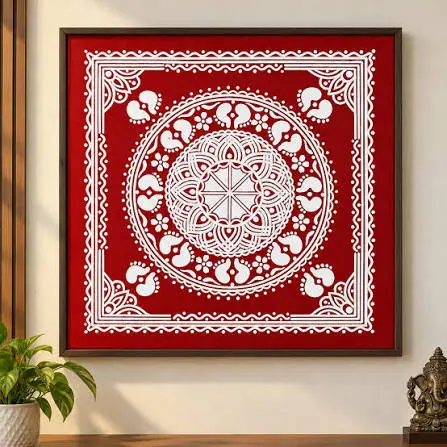
Aipan is a traditional folk art of Kumaon. It involves creating decorative geometric and religious patterns, traditionally using a white rice-paste design on a red ochre background.
These patterns are commonly seen on floors, walls and ceremonial spaces during festivals, weddings and religious occasions.
Pichhaura, a traditional decorated garment worn during important ceremonies, is another recognisable part of Kumaoni cultural heritage.
Chholiya Dance
Chholiya is a traditional martial folk dance associated with Kumaon, particularly performed during weddings and festive occasions.
Dancers traditionally carry swords and shields and perform to the rhythm of instruments such as the dhol and damau.
Baithaki and Khari Holi
Kumaon has a distinctive way of celebrating Holi through traditional musical gatherings.
- During Baithaki Holi, people sit together and sing classical and semi-classical Holi compositions.
- During Khari Holi, groups stand, sing and move through communities.
These musical traditions are an important part of Kumaon’s cultural identity.
Harela Festival
Harela is a traditional festival associated with greenery, agriculture and seasonal change.
People grow small crops in baskets or containers before the festival and use the green seedlings in traditional celebrations. It is particularly significant in Kumaon.
Nanda Devi Fair
The Nanda Devi Fair is an important religious and cultural celebration in several Kumaoni towns, including Almora and Nainital.
It brings together local traditions, devotional activities, community participation and regional heritage.
Garhwali Culture: Folk Music, Spiritual Traditions and Dance
Garhwali culture reflects the region’s mountain lifestyle, religious beliefs, folk stories and community celebrations.
Garhwali is widely spoken across the region, although pronunciation and vocabulary vary between local areas.
Some important elements include:
Jagar Tradition
Jagar is a traditional spiritual folk practice in parts of Uttarakhand.
It involves ritual singing, storytelling and musical performances associated with local deities and ancestral traditions.
The performers use traditional instruments such as the dhol and damau. The practice holds cultural and religious significance in many Garhwali communities.
Pandav Nritya
Pandav Nritya is a traditional folk performance based on stories from the Mahabharata.
Groups perform it during religious gatherings and community celebrations. The performance often includes traditional music and storytelling.
Langvir Nritya
Langvir Nritya is a distinctive traditional dance of Garhwal in which a performer balances on a tall bamboo pole and performs acrobatic movements.
It is one of the region’s recognisable folk performance traditions.
Phool Dei Festival
Phool Dei is a traditional spring festival associated with welcoming the new season.
Children visit homes with flowers and place them at doorsteps while offering good wishes. The celebration reflects community bonding and a connection with nature.
Local Folk Songs
Garhwali folk songs cover subjects such as village life, love, separation, nature, religious beliefs and migration.
Traditional forms such as Jhora, Thadiya and other regional singing and dance traditions remain important parts of community celebrations.
Kumaoni vs Garhwali Culture: Main Differences
| Cultural Element | Kumaon | Garhwal |
| Regional language | Kumaoni | Garhwali |
| Traditional art | Aipan | Distinct regional folk crafts and woodwork |
| Famous dance | Chholiya | Pandav Nritya and Langvir Nritya |
| Folk music | Baithaki and Khari Holi traditions | Jagar and regional folk songs |
| Major festivals | Harela, Kumaoni Holi, Nanda Devi fairs | Phool Dei, local fairs and religious festivals |
| Traditional clothing | Pichhaura and regional garments | Ghagra, traditional ornaments and regional garments |
A cultural detail worth remembering: Kumaon and Garhwal are not culturally uniform. Traditions can vary considerably between districts, valleys, villages and communities. Uttarakhand is also home to other distinct communities, including Jaunsari, Bhotia, Tharu, Buksa and Raji groups.
Kumaon vs Garhwal: Traditional Food and Local Cuisine
Food is another way to understand the cultural identity of Kumaon and Garhwal.
Both regions traditionally depend on locally available grains, pulses, seasonal vegetables and agricultural produce. Mandua, bhatt, jhangora and locally grown greens feature in many traditional meals.
Although some dishes are shared across the state, their ingredients and preparation can vary between households and districts.
Famous Kumaoni Dishes
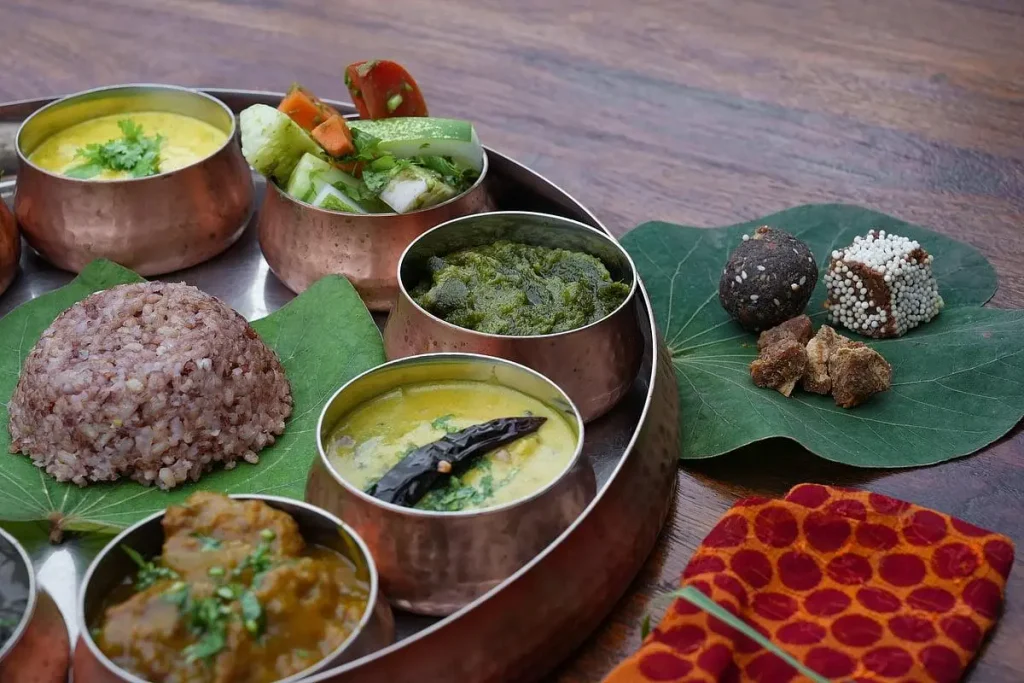
1. Bhatt Ki Churkani
Bhatt Ki Churkani is a traditional Kumaoni preparation made using black soybeans known as bhatt.
The beans are cooked with spices to create a rich curry, generally served with steamed rice.
2. Aloo Ke Gutke
Aloo Ke Gutke is one of the most popular Kumaoni dishes.
Boiled potatoes are cut into pieces and cooked with local spices, often including jakhiya, coriander and red chilli. It is commonly served with bhang ki chutney.
3. Dubuk
Dubuk is a traditional Kumaoni dish prepared using ground pulses such as bhatt or other local lentils.
It is generally slow-cooked into a thick, comforting preparation and enjoyed with rice.
4. Sisunak Saag
Sisunak Saag is made using nettle leaves, which are carefully cleaned and cooked. It is a traditional preparation in several Himalayan households.
5. Bal Mithai
Bal Mithai is one of Almora’s most famous sweets. It is made from roasted khoya and coated with small white sugar balls.
It is also one of the most popular food souvenirs from Kumaon.
6. Singori
Singori is a traditional sweet prepared using khoya and wrapped in a fragrant maalu leaf.
Its distinctive leaf wrapping makes it easily recognisable.
Famous Garhwali Dishes
1. Chainsoo
Chainsoo is a traditional Garhwali dish prepared using roasted black gram or other lentils.
The roasted pulses are ground and cooked with spices to create a thick, flavourful curry.
2. Phaanu
Phaanu is a nutritious lentil-based dish made using soaked and ground pulses.
It is generally slow-cooked and served with rice.
3. Kafuli
Kafuli is a traditional green leafy preparation commonly made using spinach and other local greens.
It is enjoyed in different parts of Uttarakhand, including Garhwal and Kumaon, with variations in ingredients and cooking methods.
4. Jhangora Ki Kheer
Jhangora Ki Kheer is a traditional dessert made from barnyard millet, milk and sugar.
It is commonly served during celebrations and special occasions.
5. Mandua Ki Roti
Mandua Ki Roti is made using finger millet flour and is a traditional part of mountain cuisine.
It is often served with seasonal vegetables, chutneys or local curries.
6. Arsa
Arsa is a traditional sweet prepared using rice flour and jaggery. It is often associated with festivals, family celebrations and special occasions.
If you visit Almora, try Bal Mithai and Singori from a traditional local sweet shop. In Garhwal, look for local eateries and homestays serving Chainsoo, Phaanu and seasonal mountain vegetables.
Do not assume every dish belongs exclusively to one region. Local cuisines overlap, and recipes often change from one household to another.
Kumaon vs Garhwal: Temples and Spiritual Significance
Uttarakhand is widely known as Devbhoomi because of its ancient temples, sacred rivers and religious traditions.
Both Kumaon and Garhwal have important spiritual destinations, but Garhwal is particularly associated with the Char Dham pilgrimage, while Kumaon is known for historic Shiva temples, Shakti shrines and cave temples.
Important Temples in Kumaon
1. Jageshwar Dham
Jageshwar is a historic temple complex near Almora, featuring numerous ancient stone temples dedicated mainly to Lord Shiva.
Surrounded by deodar forests, the complex is one of Kumaon’s most important heritage and spiritual attractions.
2. Baijnath Temple
Located in Bageshwar district, Baijnath temple is an important historic temple complex on the banks of the Gomti River.
The temples are known for their stone architecture and religious significance.
3. Patal Bhuvaneshwar
Patal Bhuvaneshwar is a limestone cave shrine in Pithoragarh district.
The cave contains naturally formed rock structures associated with Hindu religious beliefs. Visitors should follow local guidance while exploring the cave.
4. Kasar Devi Temple
Kasar Devi is a popular spiritual destination near Almora, known for its peaceful surroundings, panoramic views and connection with the region’s cultural history.
5. Katarmal Sun Temple
Katarmal is an important historic Sun Temple near Almora. Its traditional stone architecture makes it a significant heritage site in Kumaon.
Important Temples in Garhwal
1. Kedarnath Temple
Kedarnath is one of the twelve Jyotirlingas and an important pilgrimage destination dedicated to Lord Shiva.
It is also one of the four traditional Char Dham sites of Uttarakhand.
2. Badrinath Temple
Badrinath is dedicated to Lord Vishnu and is located along the Alaknanda River.
It is one of the most important Vaishnav pilgrimage centres in India.
3. Gangotri Temple
Gangotri is a sacred temple dedicated to Goddess Ganga and is associated with the origin of the River Ganga.
It is one of the four Char Dham pilgrimage sites.
4. Yamunotri Temple
Yamunotri temple is dedicated to Goddess Yamuna and is another important destination in the Char Dham Yatra.
5. Tungnath Temple
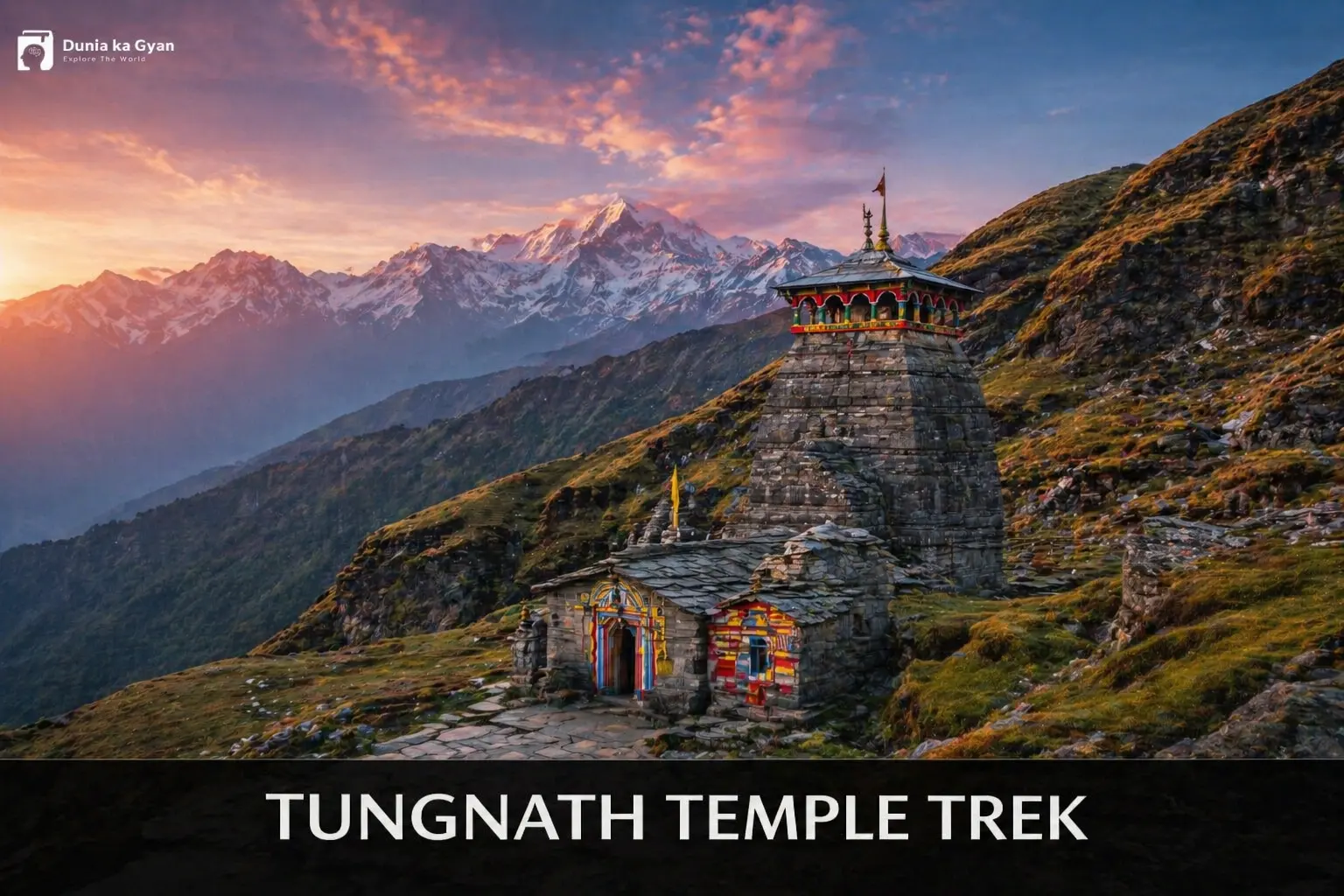
Tungnath temple is one of the Panch Kedar temples and is situated on a scenic Himalayan trekking route above Chopta.
6. Madhyamaheshwar Temple
Madhyamaheshwar is another important Panch Kedar temple, located in a beautiful Himalayan valley in Rudraprayag district.
Which Region Is Better for Spiritual Tourism?
Garhwal is the stronger choice if you are planning the Char Dham Yatra, Panch Kedar pilgrimage or visits to major Himalayan shrines.
Kumaon is an excellent choice for travellers interested in ancient temple architecture, peaceful spiritual destinations and historic religious sites.
Both regions offer meaningful religious and cultural experiences.
Kumaon vs Garhwal: Adventure and Outdoor Activities
Adventure tourism is not limited to Garhwal. Kumaon also offers some of Uttarakhand’s most beautiful and challenging trekking routes.
The difference is mainly in the type of experiences and destinations available.
Adventure Activities in Kumaon
1. Pindari Glacier Trek
The Pindari Glacier trek is one of Kumaon’s well-known Himalayan trekking routes.
It passes through beautiful mountain landscapes, forests, villages and river valleys in the Bageshwar region.
2. Munsiyari Trekking Routes
Munsiyari serves as a base for exploring several Himalayan trekking routes, including trails towards Milam and Ralam glaciers.
These routes are suitable for experienced trekkers with proper preparation and local support.
3. Wildlife Safaris in Jim Corbett
Jim Corbett National Park is one of India’s most famous wildlife destinations.
Visitors can explore permitted safari zones to experience the region’s forests and wildlife, including Bengal tigers, elephants and numerous bird species.
4. Birdwatching in Pangot and Sattal
Pangot and Sattal are popular destinations for birdwatching and nature photography.
Their forest landscapes attract bird enthusiasts throughout the year.
5. Forest Walks in Binsar
Binsar offers peaceful walking trails through oak and rhododendron forests, along with opportunities for birdwatching and Himalayan photography.
Adventure Activities in Garhwal
1. River Rafting in Rishikesh
Rishikesh is one of India’s best-known destinations for white-water rafting.
Different stretches of the Ganga offer varying levels of difficulty. Choose an authorised operator and follow safety instructions.
2. Skiing in Auli
Auli is famous for its winter sports opportunities and snow-covered slopes.
Skiing conditions depend on snowfall, weather and the operation of local facilities.
3. Valley of Flowers Trek
This seasonal trek takes visitors through alpine landscapes and colourful flowering meadows in Chamoli district.
The national park has a limited seasonal opening period.
4. Kedarkantha Trek
Kedarkantha is a popular winter trekking destination known for its snow-covered trails, forest campsites and mountain views.
5. Chopta-Chandrashila Trek
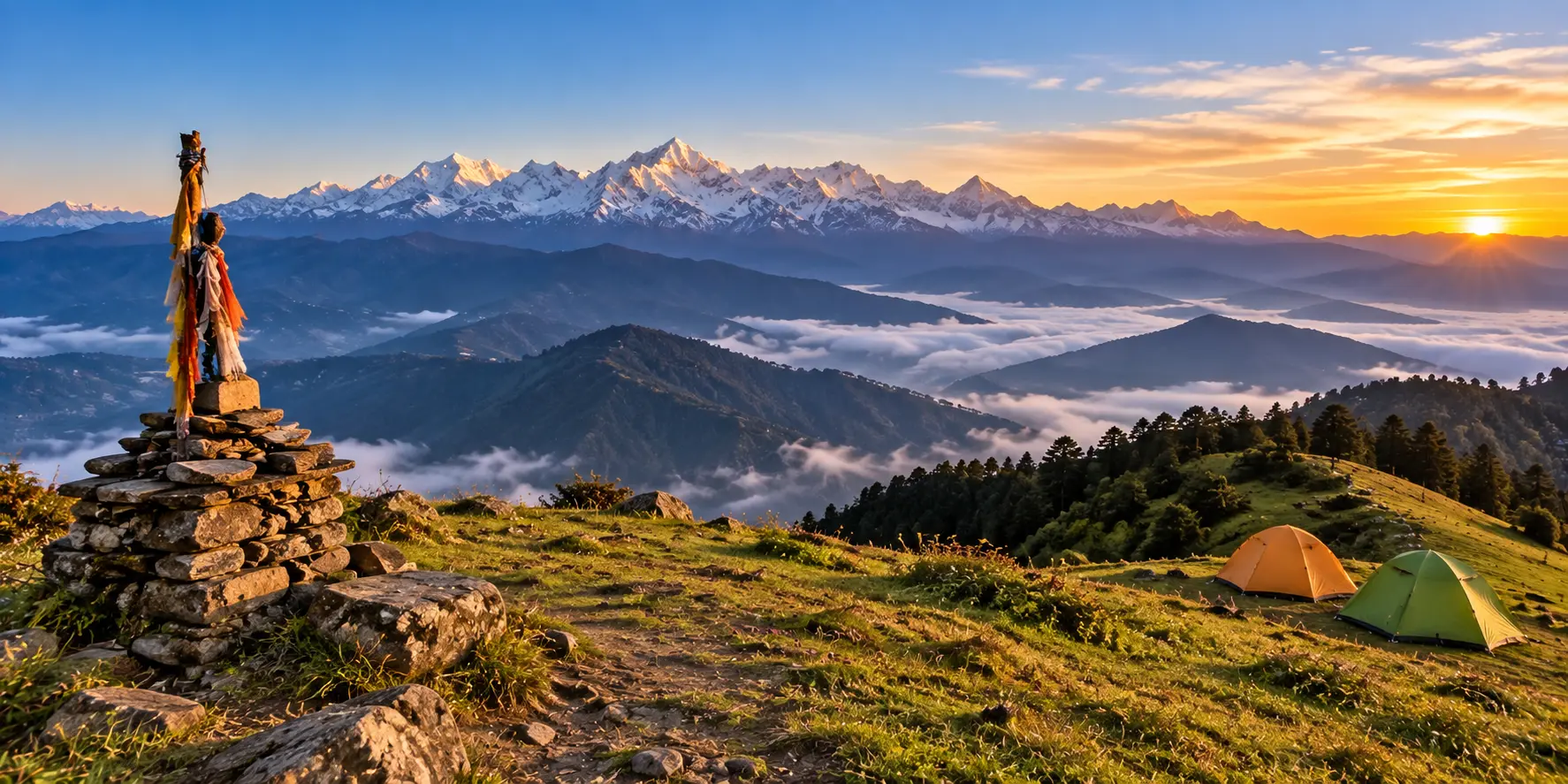
This route offers forest trails, mountain meadows and panoramic views from Chandrashila.
Tungnath Temple is an important stop along the way.
6. Har Ki Dun Trek
Har Ki Dun is known for its beautiful valley landscapes, traditional villages and mountain scenery.
The route is particularly interesting for travellers who want to combine trekking with an experience of Himalayan village life.
Which Region Is Better for Adventure?
Kumaon is particularly attractive for glacier trekking, wildlife experiences, forest exploration and quieter mountain trails.
Garhwal offers a wide range of activities, including river rafting, skiing, famous high-altitude treks and pilgrimage-linked trekking routes.
Adventure enthusiasts can find excellent experiences in both regions.
Kumaon vs Garhwal: Traditional Architecture and Village Life
One aspect that many travel guides overlook is the traditional architecture and everyday lifestyle of Himalayan villages.
The houses, farming practices, local materials and settlement patterns reflect how communities have adapted to mountain terrain and changing weather conditions.
Traditional Architecture in Kumaon
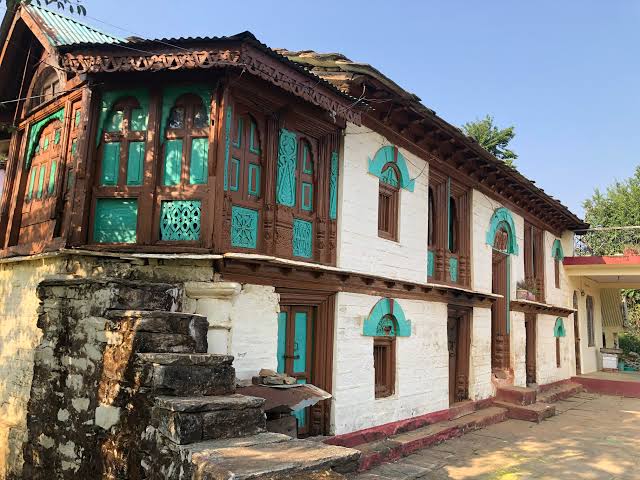
Traditional Kumaoni houses can often be recognised by their stone walls, wooden elements, sloping roofs and carved doors.
In older settlements, houses were designed using locally available materials and adapted to the surrounding landscape.
Some traditional homes also feature decorative wooden windows and stone courtyards.
Villages in areas such as Munsiyari, Pithoragarh, Almora and Bageshwar offer opportunities to observe different forms of traditional mountain architecture.
Traditional Architecture in Garhwal
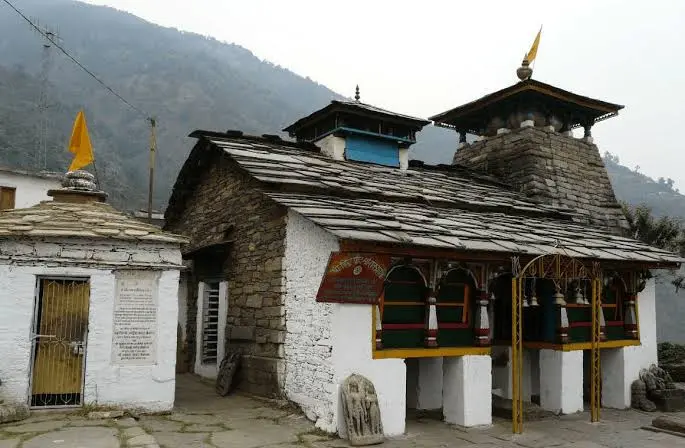
Traditional Garhwali houses also use locally available stone and wood.
In many mountain villages, older houses feature stone walls, wooden balconies, sloping roofs and carved architectural elements.
Some villages in Uttarkashi, Chamoli and Pauri retain distinctive traditional building styles.
For example, Har Ki Dun’s surrounding villages offer an opportunity to experience mountain settlement patterns, traditional wooden houses and agricultural lifestyles.
How Is Village Life Different?
Both Kumaoni and Garhwali communities have traditionally depended on agriculture, livestock rearing, seasonal activities and forest resources.
However, village lifestyles vary according to altitude, climate, road connectivity, available land and local economic opportunities.
In both regions, traditional agricultural practices include terraced farming, with crops such as mandua, jhangora, wheat and seasonal vegetables grown according to local conditions.
A village homestay can be a good way to experience regional food, local conversations, traditional architecture and everyday mountain life.
Travel tip: When visiting villages, respect local customs, ask permission before photographing residents or private homes and avoid treating traditional communities as tourist attractions.
Kumaon vs Garhwal: Best Time to Visit
Both regions experience seasonal changes, but the best time to visit depends on the destination, altitude and purpose of your trip.
Best Time to Visit Kumaon
March to June:
This is a popular period for visiting Nainital, Almora, Ranikhet, Mukteshwar and Kausani.
The weather is generally pleasant for sightseeing, boating, nature walks and family holidays.
July to September
The monsoon brings greenery and fresh landscapes to Kumaon.
However, heavy rainfall can cause landslides, road closures and travel delays. Remote mountain routes require particular caution.
October to November
This is a good period for travellers interested in clear mountain views, photography and peaceful hill-station holidays.
December to February
Winter brings cold weather and occasional snowfall in higher locations.
Travellers can enjoy winter landscapes, but should check road conditions and accommodation availability.
Best Time to Visit Garhwal
March to June
This is a popular period for sightseeing, many pilgrimage journeys and selected trekking routes.
The weather is generally suitable for visiting destinations such as Rishikesh, Mussoorie and accessible mountain towns.
July to September
The monsoon brings lush greenery, but heavy rainfall can affect road connectivity, trekking routes and pilgrimage travel.
October to November
This period often offers clearer skies and favourable conditions for selected sightseeing and trekking trips.
December to February
Winter is suitable for snow experiences in destinations such as Auli, depending on snowfall.
Higher-altitude routes may be inaccessible or difficult during this period.
Important seasonal advice: Char Dham temples and several high-altitude trekking destinations have specific opening periods. Their schedules can change because of weather and administrative decisions. Check official announcements, road conditions and local advisories before departure.
How to Reach Kumaon and Garhwal
Both regions have road, rail and air connectivity, but the most convenient entry point depends on your final destination.
How to Reach Kumaon
By Train
Kathgodam is an important railway gateway for Kumaon.
It is commonly used by travellers heading towards Nainital, Almora, Ranikhet and other hill destinations.
Haldwani is another major transport and commercial centre in the region.
By Road
Kumaon is connected through road networks from Delhi, Haldwani, Kathgodam and other parts of Uttarakhand.
Buses, shared taxis and private vehicles are commonly used for travelling between towns.
By Air
Pantnagar Airport is the main airport serving parts of Kumaon. However, flight availability and schedules should be checked before planning your journey.
How to Reach Garhwal
By Train
Haridwar, Rishikesh and Dehradun are important railway gateways for different parts of Garhwal.
The most convenient station depends on whether you are visiting the Char Dham routes, Mussoorie, Rishikesh or other destinations.
By Road
Garhwal has road connectivity through Dehradun, Haridwar and Rishikesh.
These towns connect travellers to destinations such as Mussoorie, Uttarkashi, Rudraprayag, Joshimath and Chamoli.
By Air
Jolly Grant Airport near Dehradun is the main airport for many Garhwal destinations.
Which Region Is Easier to Reach?
For a trip to Nainital, Almora or Ranikhet, Kathgodam is generally a convenient railway gateway.
For Rishikesh, Haridwar, Mussoorie and many Garhwal destinations, Haridwar, Rishikesh or Dehradun are more convenient depending on the route.
Neither region has a single entry point that works for every destination.
Kumaon vs Garhwal: Which Is Better for Different Travellers?
The right choice depends on your interests, available time and travel expectations.
| Traveller Type | Recommended Region | Reason |
| Family holidays | Both | Lakes, hill stations and sightseeing |
| Honeymoon | Both | Scenic stays and peaceful mountain locations |
| Wildlife enthusiasts | Kumaon | Jim Corbett and Binsar |
| Spiritual travellers | Garhwal | Char Dham and Panch Kedar |
| Cultural explorers | Both | Distinct folk traditions and village heritage |
| River rafting lovers | Garhwal | Rishikesh |
| Skiing enthusiasts | Garhwal | Auli |
| Glacier trekking | Both | Pindari and Garhwal Himalayan routes |
| Birdwatchers | Kumaon | Pangot, Sattal and Binsar |
| Peaceful village holidays | Both | Traditional mountain settlements |
Choose Kumaon If:
- You want to explore beautiful lakes and hill stations.
- You enjoy peaceful mountain villages and forest landscapes.
- You are interested in Kumaoni food, Aipan art and traditional music.
- You want wildlife experiences and birdwatching opportunities.
- You prefer a relaxed sightseeing holiday.
Choose Garhwal If:
- You want to undertake the Char Dham Yatra.
- You enjoy high-altitude trekking and mountain adventures.
- You want to experience river rafting and skiing.
- You are interested in ancient temples and religious traditions.
- You want to explore dramatic valleys and alpine meadows.
Can You Visit Both Kumaon and Garhwal?
Yes. You can explore both regions during one extended Uttarakhand trip.
However, distances between popular destinations can be considerable, and mountain roads often require more travel time than expected.
If you have around 10–12 days, you can combine selected destinations from both regions.
For example:
- Start with Nainital and Bhimtal in Kumaon.
- Continue towards Almora and Kausani.
- Travel towards Rishikesh in Garhwal.
- Explore Rishikesh and Haridwar.
- Finish with Mussoorie before returning.
This route is a broad sightseeing plan, not a fixed schedule. Check road conditions and travel times before finalising the journey.
If you want to include remote destinations such as Munsiyari or high-altitude pilgrimage sites, allow additional days instead of rushing between regions.
Kumaon vs Garhwal: Travel Budget and Planning Tips
Travel costs depend on the season, accommodation, transport, number of travellers and activities.
A budget trip using public transport and basic accommodation will cost considerably less than a private-car trip with premium hotels.
Instead of assuming that one region is always cheaper, compare the costs of your actual destinations.
Here are the main expenses to consider:
| Expense | Kumaon | Garhwal |
| Accommodation | Budget stays to luxury resorts | Budget stays to luxury hotels and homestays |
| Local transport | Buses, shared taxis and private cabs | Buses, shared taxis and private cabs |
| Food | Local eateries and hotel restaurants | Local eateries and hotel restaurants |
| Adventure activities | Trekking, safaris and nature activities | Rafting, skiing and trekking |
| Special expenses | Wildlife safari and remote-route transport | Pilgrimage transport, trekking permits and adventure operators |
Practical Travel Tips
1. Avoid Rushing Between Destinations
Mountain travel takes time. A short distance on a map may require several hours by road.
2. Check Weather and Road Conditions
Landslides, snowfall and heavy rainfall can affect travel plans, especially during monsoon and winter.
3. Book Accommodation in Advance
Popular places such as Nainital, Mussoorie, Kedarnath and Badrinath can experience high visitor demand during peak seasons.
4. Carry Cash
Some remote villages and mountain destinations may have limited digital payment facilities.
5. Respect Local Culture
Ask permission before taking photographs of people, religious ceremonies or private properties.
6. Support Local Businesses
Choose local homestays, guides, food outlets and artisans wherever possible. This also helps travellers experience regional culture more closely.
7. Prepare for High Altitude
For high-altitude journeys, allow time to acclimatise, follow local health and safety guidance and avoid pushing beyond your fitness level.
Kumaon vs Garhwal: Which Region Should You Visit?
The answer depends on what you want from your Uttarakhand holiday.
Kumaon is a wonderful choice for travellers who enjoy lakes, forest landscapes, traditional hill towns, peaceful villages and local food. It offers opportunities to explore destinations such as Nainital, Almora, Munsiyari, Kausani and Binsar.
Garhwal is ideal for travellers interested in sacred pilgrimage sites, mountain adventures, alpine meadows, river rafting and famous Himalayan destinations such as Kedarnath, Badrinath, Auli, Chopta and Valley of Flowers.
But there is no reason to treat these regions as competitors.
A traveller interested in adventure can find excellent treks in Kumaon. Someone seeking a quiet holiday can find beautiful villages and peaceful hill destinations in Garhwal.
Both regions are part of Uttarakhand’s wider cultural and natural heritage.
The best choice is not necessarily the region with more famous attractions. It is the one that matches the kind of journey you want to experience.
Frequently Asked Questions
Not necessarily. Temperature depends more on altitude, season and location than the region itself.
Both offer budget and premium stays. Costs depend on your route, accommodation and transport choices.
Kathgodam is a major railhead for Kumaon destinations such as Nainital, Bhimtal, Almora and Ranikhet.
Pantnagar Airport is useful for parts of Kumaon, while Jolly Grant Airport serves major Garhwal destinations. Your best option depends on your itinerary.
Yes. Homestays and village stays in places such as Munsiyari, Sarmoli, Peora, Harsil and remote Garhwali villages offer opportunities to experience local food, traditions and daily life.
People are also reading: