
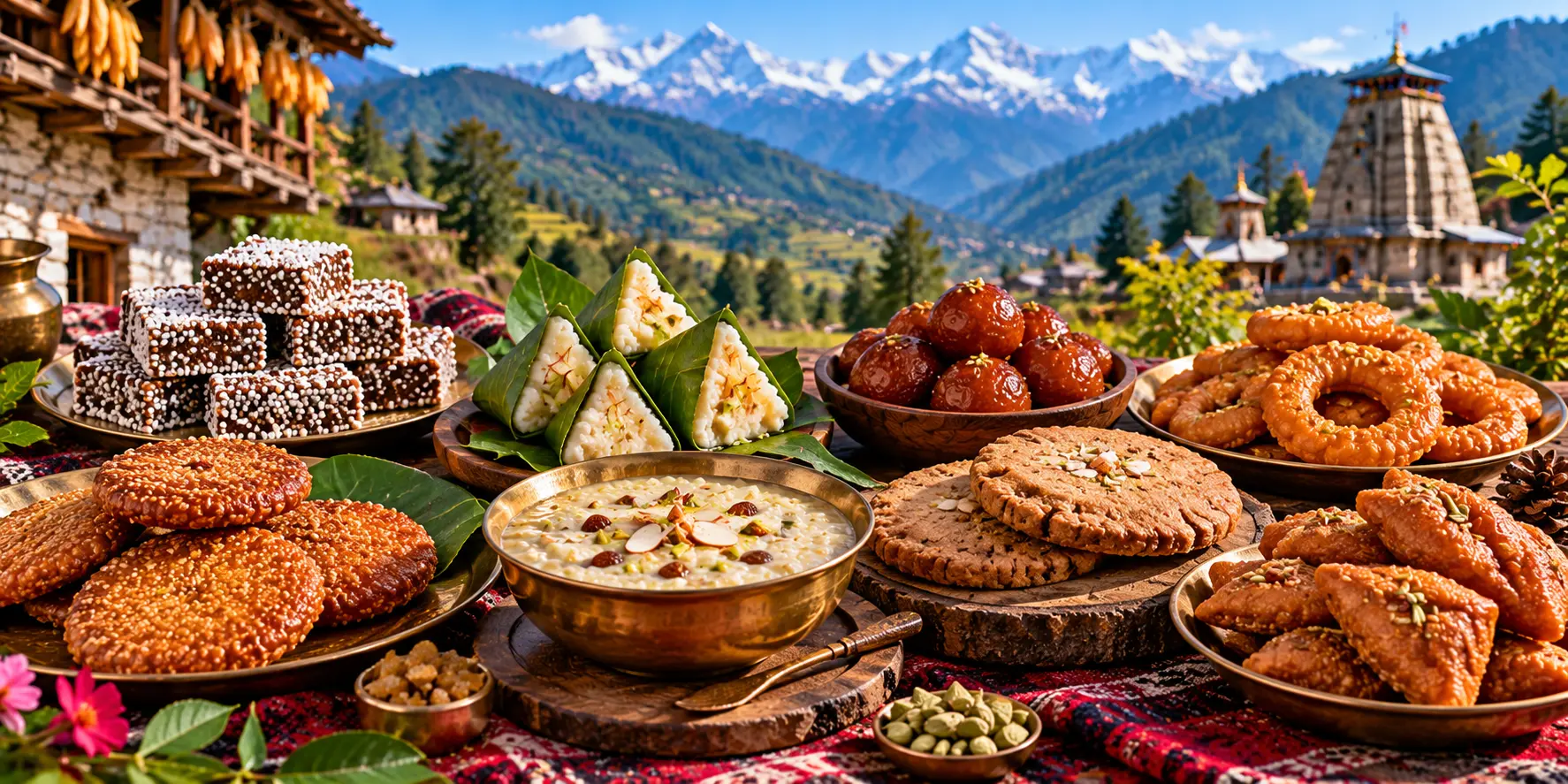
Uttarakhand’s traditional sweets reflect the diverse food culture of Kumaon and Garhwal. From Almora’s famous Bal Mithai and leaf-wrapped Singori to Arsa and Gulgula, each sweet has its own ingredients and regional connections.
Having tried all 10 sweets in Kumaon, Gulgula remains my personal favourite, while Singori stands out for its distinctive taste. If you’re looking for the famous sweets of Uttarakhand to try, this list covers their origins, key ingredients, and where to find them.
1. Bal Mithai, Almora
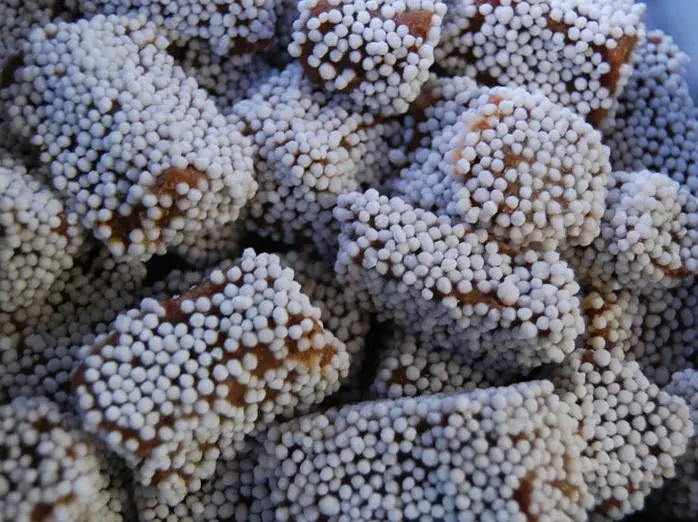
Bal Mithai is one of Uttarakhand’s most recognisable sweets, originating in the Almora region. It is made by roasting khoya with sugar until it turns dark brown, then coating the pieces with tiny white sugar balls.
Its dense texture and contrasting sugar coating make it different from ordinary milk-based mithai. You can find it in sweet shops across Kumaon, but Almora remains the place most closely associated with it.
- Region: Almora and Kumaon
- Main ingredients: Khoya, sugar and sugar balls
- Best place to try it: Almora’s local sweet shops
2. Singori
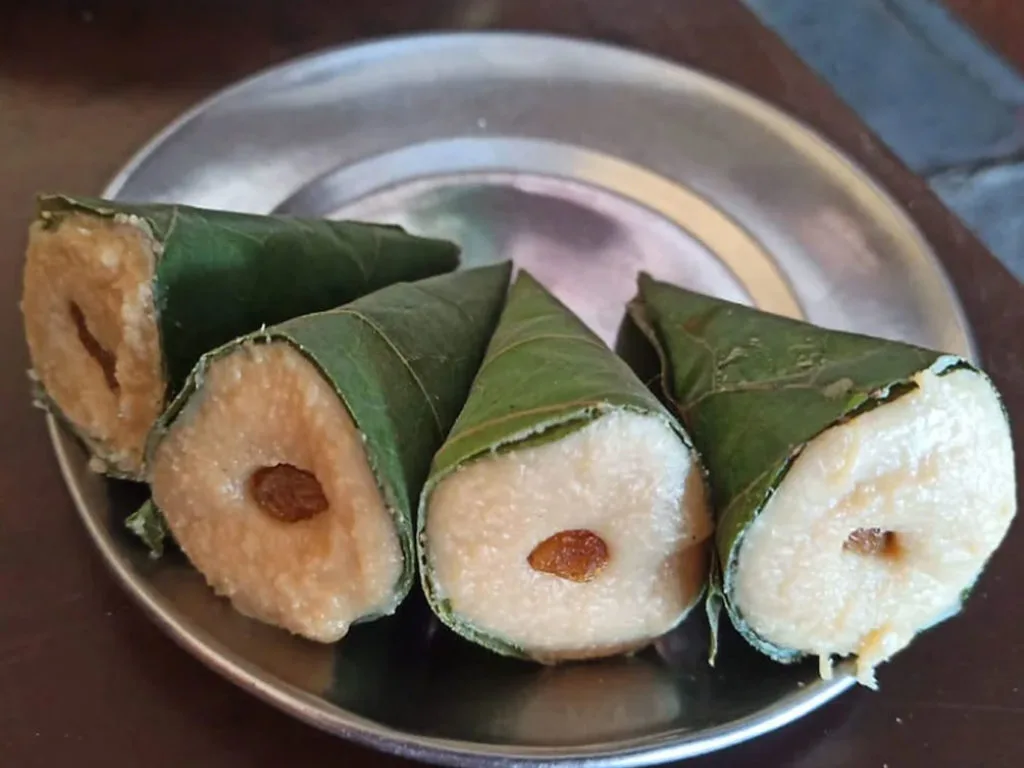
Singori, also called Singodi or Singauri, is a Kumaoni speciality made from sweetened khoya, often flavoured with cardamom and coconut. It is shaped into a cone and wrapped in a Malu leaf.
Having tried it in Kumaon, I found Singori particularly distinctive. Its creamy filling and traditional leaf wrapping give it a character that sets it apart from other khoya sweets. The leaf is an important part of its identity, not merely decoration.
- Region: Kumaon, especially Almora
- Main ingredients: Khoya, sugar, cardamom and sometimes coconut
- Best place to try it: Almora
3. Arsa
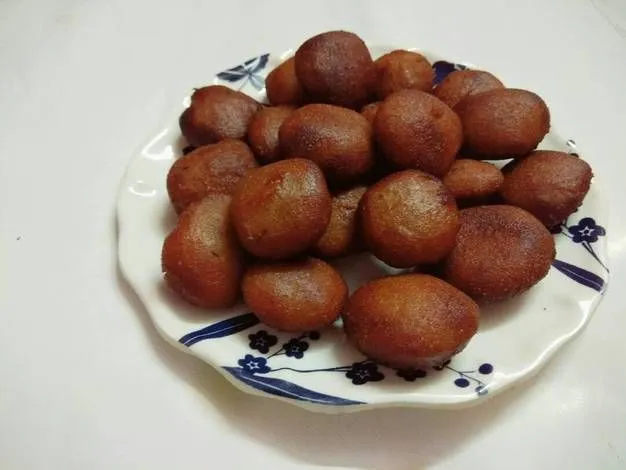
Arsa is a traditional rice-and-jaggery sweet prepared for weddings, festivals and family celebrations. The mixture is shaped and fried, with mustard oil commonly used in traditional recipes.
Unlike Bal Mithai and Singori, Arsa does not rely on khoya for its flavour. Its connection with special occasions makes it an important part of traditional food culture in both Kumaon and Garhwal.
- Region: Kumaon and Garhwal
- Main ingredients: Rice and jaggery
- When to try it: During local festivals and family celebrations
4. Jhangora Ki Kheer
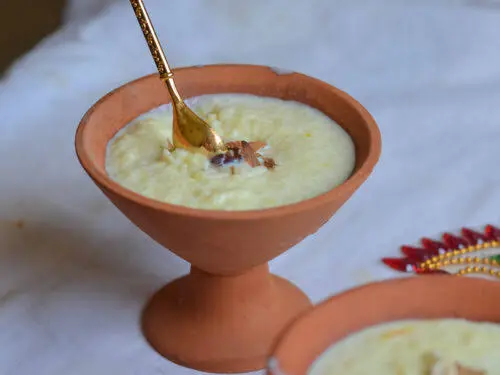
Jhangora Ki Kheer is a creamy dessert made with barnyard millet, known locally as jhangora. The millet is cooked in milk, with sugar and dry fruits such as cashews and raisins added to many recipes.
It is a good example of how traditional Uttarakhand cuisine uses local grains in sweet dishes. Unlike conventional rice kheer, jhangora gives the dessert a different texture.
- Region: Kumaon and Garhwal
- Main ingredients: Barnyard millet, milk, sugar and dry fruits
- Where to find it: Traditional eateries and regional meals
5. Gulgula
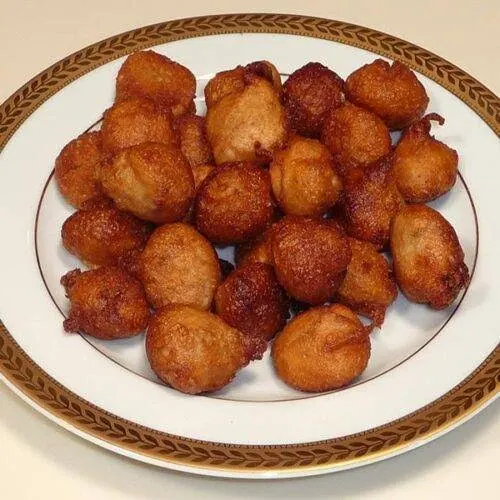
Gulgula is my favourite among these 10 sweets. Made mainly with wheat flour and jaggery, these small fried treats are simple compared with rich, khoya-based mithai. Some household recipes also use fennel or mashed banana.
Gulgula is associated with traditional home cooking, and jaggery gives it a flavour different from sweets made primarily with milk solids. It is also associated with Garhwal in descriptions of Uttarakhand’s regional cuisine, although preparations and local traditions can vary.
- Region: Uttarakhand, with a strong association with Garhwal
- Main ingredients: Wheat flour and jaggery
- My pick: Gulgula is my personal favourite from the sweets I’ve tried in Kumaon.
6. Singhal
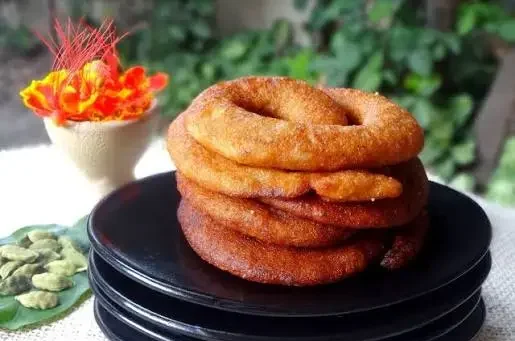
Singhal is a traditional Kumaoni sweet recognised by its distinctive ring shape. It is commonly prepared around festivals and Sankranti celebrations.
Recipes often include semolina, curd, banana, milk, sugar and cardamom. The batter is shaped into rings and fried, producing a soft interior and a browned exterior.
Its shape and texture distinguish it from the denser khoya-based sweets of Kumaon. If you visit during a local celebration, ask whether Singhal is being prepared or sold nearby.
- Region: Kumaon
- Main ingredients: Semolina and a batter that may include banana, curd and cardamom
- When to try it: Local festivals and Sankranti
7. Roat
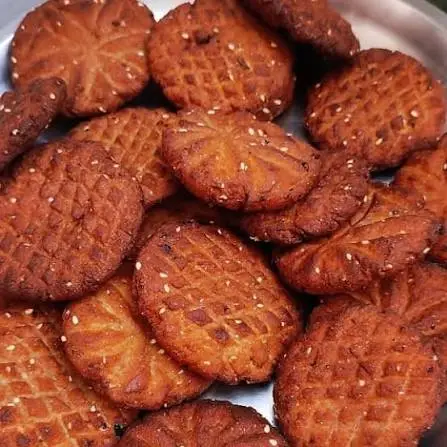
Roat is a traditional sweet preparation associated with parts of Garhwal. It is generally made with wheat flour, jaggery or sugar, and ghee, although recipes vary.
Roat has a denser, bread-like texture rather than the creamy consistency of milk-based mithai. In some communities, it is prepared for religious rituals and special occasions.
It is worth distinguishing Roat from Arsa: traditional Arsa is rice-based, while Roat generally uses wheat flour.
- Region: Parts of Garhwal
- Main ingredients: Wheat flour, sweetener and ghee
- Traditional connection: Religious occasions and family customs
8. Khajoor, Regional Variations
Khajoor are names used for traditional fried sweet preparations in some local food contexts. Recipes may include wheat flour, jaggery or sugar, semolina and fennel.
The names and ingredients can differ from one place or household to another, so they should not automatically be treated as the same sweet everywhere. If you encounter them at a local shop or during a festival, asking about the recipe can help you understand the regional version.
- Region: Varies by local tradition
- Main ingredients: Often flour and jaggery or sugar
- Where to look: Local sweet shops and traditional household preparations
9. Pahadi Halwa
Pahadi Halwa is a broad description for halwa-style sweets prepared in local kitchens, rather than one standard recipe unique to Uttarakhand. Depending on the household, it may use wheat flour or semolina, ghee and jaggery or sugar.
The flour is roasted before the sweetener and liquid are added, giving the halwa its rich aroma and thick texture. Since halwa is popular across India, its regional character depends on the particular recipe rather than the name alone.
- Region: Household preparations vary across Uttarakhand
- Main ingredients: Wheat Flour or semolina, ghee and jaggery or sugar
- Where to find it: Homes and eateries serving traditional food
10. Khenchuva, Didihat
Khenchuva is a milk-based sweet closely associated with Didihat in Pithoragarh district. Local reports trace its preparation in the town to a family that came from Devidhura in the 1980s.
It is made by boiling milk for an extended period and adding sugar. The process gives the sweet its characteristic stretchy consistency, which also explains its name’s association with pulling or stretching.
Unlike Bal Mithai, which is dense and fudge-like, Khenchuva is known for its elasticity. It is also served at weddings and other occasions in the region.
- Region: Didihat, Pithoragarh district
- Main ingredients: Milk and sugar
- Best place to try it: Local sweet shops in Didihat
Famous Sweets of Kumaon and Garhwal
Kumaon and Garhwal share many food traditions, but some sweets are more closely associated with particular towns or regions. Bal Mithai is strongly linked to Almora, while Singori is known for its distinctive Malu leaf wrapping. Singhal is another traditional Kumaoni sweet.
Arsa is prepared in both Kumaon and Garhwal, while Roat is associated with Garhwali festive and religious traditions. Gulgula is also strongly associated with Garhwal, although it can be enjoyed elsewhere in Uttarakhand. Recipes and local names may vary between communities.
Uttarakhand’s culinary traditions go beyond desserts. Read our guide to the traditional food of Uttarakhand for more regional dishes and local specialties.
Where to Buy Famous Sweets in Uttarakhand
If you want to try these traditional sweets, consider looking in the regions most closely associated with them.
- Almora: Look for Bal Mithai and Singori at local sweet shops.
- Didihat: Ask local sweet shops about Khenchuva, a regional speciality associated with the town.
- Kumaon: Local sweet shops and festive preparations may offer Singhal and Arsa.
- Garhwal: Ask local sweet shops or residents about traditional Gulgula and Roat preparations.
- Traditional eateries and local households: Jhangora Ki Kheer and other home-style sweets may be available depending on the location and season.
Final Thoughts
Uttarakhand’s sweets range from Almora’s khoya-based Bal Mithai and leaf-wrapped Singori to jaggery-based Gulgula and the milk-rich Khenchuva of Didihat.
After trying all 10 in Kumaon, Gulgula remains my favourite, while Singori stands out for its distinctive taste. If you’re visiting Uttarakhand, try the famous sweets, but also ask about the traditional preparations made in the area you’re exploring. They offer a more meaningful glimpse into the region’s food culture.
Frequently Asked Questions
Traditional Uttarakhand sweets use ingredients such as khoya, milk, rice, wheat flour, jaggery, sugar, and millets. The ingredients vary depending on the sweet and the local recipe.
Arsa and Singhal are associated with festive traditions in Uttarakhand. Roat is also prepared for religious occasions in parts of Garhwal, although customs and recipes vary by community.
Bal Mithai is a dark brown khoya-based sweet coated with small white sugar balls. Singori is also made with khoya but is traditionally wrapped in a Malu leaf, which gives it a distinctive identity.
Many sweets, including Bal Mithai and Singori, are sold throughout the year in their associated regions. Other homemade or festival-related sweets may be easier to find during particular celebrations or at local sweet shops.
Bal Mithai and Singori are good starting points for exploring Kumaon’s sweet traditions. Visitors can also try Arsa, Singhal, and Gulgula to experience different ingredients and regional food traditions.
People are also reading: