Rajaji National Park is one of the most beautiful wildlife destinations in Uttarakhand, known for its rich biodiversity, elephant population, and peaceful forest landscapes. There are very few places where you don’t just travel but actually feel the environment around you. Located in the foothills of the Himalayas, this park offers an experience that goes beyond sightseeing. It is about stepping into a world where nature is still untouched, where silence has a sound, and where every small movement in the forest feels meaningful. Rajaji is also known as an important part of the Rajaji Tiger Reserve.
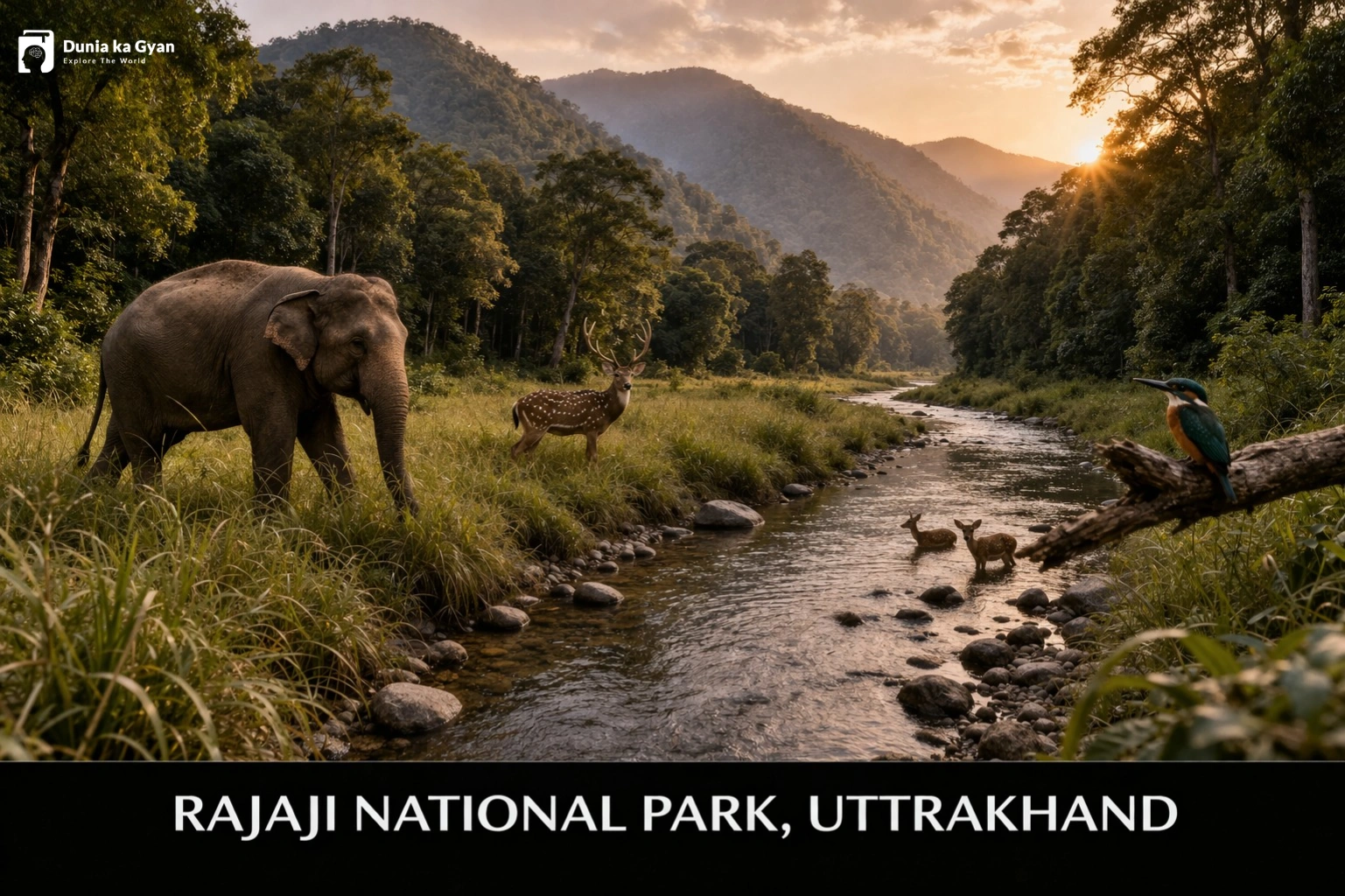
The first time I visited Rajaji, it wasn’t just another trip. It felt different from the beginning. As we entered through the forest gate near Haridwar early in the morning, there was a light mist in the air and a calmness that is almost impossible to find in cities. Within minutes, we saw deer grazing quietly, and later, a group of elephants appeared in the distance. That moment made me realize that Rajaji is not about rushing from one spot to another, it is about patience, observation, and truly experiencing nature.
About Rajaji National Park
This park is one of the most important wildlife reserves in northern India. Spread across the districts of Haridwar, Dehradun, and Rishikesh, in Uttarakhand it covers a vast area of over 800 square kilometers.
The park was established in 1983 by combining three wildlife sanctuaries: Rajaji, Motichur, and Chilla. Over time, it gained recognition as a tiger reserve, making it an important part of India’s wildlife conservation efforts. It also plays a key role as an elephant corridor, allowing elephants to move safely between forest regions.
Quick Highlights
- Spread across 800+ sq. km
- Declared as a Tiger Reserve
- Famous for Asian elephants
- Home to 300+ bird species
- Located in Shivalik range
Geography and Landscape
One of the strongest aspects of this park is its diverse landscape. Unlike many parks that have a single type of terrain, Rajaji offers a mix of ecosystems that make the experience more dynamic.
The park lies in the Shivalik foothills, which creates a natural transition between plains and hills. This results in a variety of landscapes, including dense forests, open grasslands, riverbeds, and hilly terrains.
Key Landscape Features
- Dense Sal forests forming thick canopy
- Open grasslands ideal for herbivores
- Riverine ecosystems near the Ganga
- Rocky and hilly terrain
Because of this variation, every safari feels different. One moment you are surrounded by thick forest, and the next moment you are in an open field where visibility stretches far ahead.
Flora and Vegetation
The vegetation here is mainly tropical and subtropical. Sal trees dominate the region and form the backbone of the forest ecosystem. Along with Sal, you will also find Sheesham, Khair, bamboo, and a variety of shrubs.
These forests are not just visually appealing but also essential for wildlife survival. They provide food, shelter, and breeding grounds for many species.
From personal experience, even when animals are not visible, the forest itself feels alive. The movement of leaves, the sound of insects, and occasional bird calls create a unique atmosphere.
Wildlife in Rajaji National Park
This national park is especially famous for its population of Asian elephants. It is considered one of the best places in North India to see elephants in their natural habitat.
However, elephants are just one part of the story. The park supports a wide range of wildlife.
Major Animals Found
- Asian Elephants
- Bengal Tigers (rare sightings)
- Leopards
- Spotted Deer and Sambar
- Wild Boar
- Langurs and Monkeys
Birdlife
Rajaji is also a paradise for bird watchers. The park is home to more than 300 bird species, including migratory birds during winter. While tiger sightings are rare, the presence of tigers indicates a healthy ecosystem. The unpredictability of wildlife is what makes every safari exciting.
Safari Experience in Rajaji National Park
A safari is the most important part of visiting Rajaji National Park. It allows you to explore the forest and observe wildlife in its natural habitat.
The park offers jeep safaris, and Rajaji National Park safari booking can be done online or through local operators. Each zone has its own characteristics.
Safari Zones
- Chilla Zone – Best for elephant sightings and most popular
- Motichur Zone – Dense forest area with rich biodiversity
- Ranipur Zone – Less crowded and peaceful
Safari Timings
- Morning: 6:00 AM – 9:00 AM
- Evening: 3:00 PM – 6:00 PM
Morning safaris are generally more rewarding because animals are more active. Evening safaris offer a quieter experience and beautiful sunset views. Rajaji National Park timings may vary slightly depending on the season and forest regulations.
During one of my evening safaris, we didn’t spot much wildlife at first, and it felt like the day might end quietly. But just as we were heading back, a small group of elephants slowly crossed the trail right in front of us. That unexpected moment completely changed the experience and showed how unpredictable and rewarding a safari in Rajaji National Park can be.
How to Book Safari in Rajaji National Park
Booking a safari in Rajaji National Park is an important step that should be planned in advance, especially during peak tourist seasons. Unlike many other tourist activities, safari slots are limited, and last-minute bookings are often difficult.
You can book your safari through both online and offline methods. The most reliable way is through the official forest department website, where you can select your preferred safari zone, date, and time slot. It is advisable to book at least a few days in advance, especially if you are visiting on weekends or holidays.
For those who prefer offline booking, local travel agents in Haridwar and Rishikesh also arrange safari bookings. However, always ensure that you are dealing with authorized operators.
Important Booking Tips
- Carry a valid ID proof (mandatory)
- Choose morning safari for better wildlife sightings
- Book early during peak season
- Select Chilla range if visiting for the first time
Which Safari Zone is Best in Rajaji National Park?
Choosing the right safari zone can significantly affect your experience. While all zones offer unique landscapes, each one has its own advantages.
- The Chilla range is considered the best zone for most visitors. It has better accessibility and higher chances of spotting elephants, which makes it ideal for first-time travelers. The forest here is relatively open, making wildlife sightings easier.
- The Motichur range is known for its dense forest cover. It offers a more raw jungle experience, but sightings may require more patience. This zone is better suited for those who want a deeper forest experience rather than guaranteed sightings.
- The Ranipur range is less crowded and more peaceful. It is perfect for travelers who want to avoid crowds and enjoy a quieter safari.
Overall, if your goal is better chances of wildlife sightings, Chilla is the best option. But if you want a more peaceful and immersive experience, the other zones are equally rewarding.
Things to Do in Rajaji National Park
Rajaji National Park offers a variety of experiences beyond just wildlife spotting. While safari remains the main activity, there are several other things that make your visit meaningful.
Wildlife safari is the most popular activity, where you explore the forest with a guide. Bird watching is another major attraction, especially during winter when migratory birds arrive. Photography enthusiasts will find endless opportunities, from landscapes to wildlife moments.
Top Activities
- Jeep Safari through forest trails
- Bird watching (300+ species)
- Wildlife photography
- Nature observation and relaxation
Sometimes, simply sitting quietly and listening to the forest can be the most memorable experience.
Places to Visit in and Around Rajaji National Park
Inside the park, different ranges offer different experiences. The Chilla range is the most visited due to higher chances of wildlife sightings. The Motichur and Ranipur ranges are quieter and ideal for those who prefer less crowded areas.
Nearby destinations add more value to your trip.
Nearby Attractions
- Rishikesh – Known for river rafting and yoga
- Haridwar – Famous for Ganga Aarti
- Dehradun – Hill city with scenic views
These places can easily be combined with your visit to Rajaji.
Where to Stay Near Rajaji National Park
Finding the right place to stay can enhance your overall experience. Since the park is spread across multiple areas, you can choose your stay based on your entry gate.
Near Haridwar, you will find a range of budget and mid-range hotels that are suitable for short stays. These are ideal for travelers looking for affordability and convenience.
If you prefer a more scenic and peaceful environment, staying near Rishikesh is a great option. Here you can find riverside camps, boutique stays, and comfortable resorts.
Near the Chilla gate, there are also forest lodges and eco-resorts that offer a closer connection to nature. These stays are perfect if you want to experience the jungle environment more closely.
Stay Options Overview
- Budget hotels: Haridwar
- Mid-range stays: Rishikesh
- Nature resorts: Near Chilla gate
Suggested Itinerary for Rajaji National Park
Planning your trip properly can help you make the most of your visit.
1-Day Itinerary
If you are short on time, a one-day trip can still be fulfilling. Start early in the morning and go for a jeep safari in the Chilla range. After the safari, you can visit Rishikesh for lunch and explore nearby attractions.
2-Day Itinerary
For a more relaxed experience, a two-day trip is ideal. On the first day, you can do a morning safari and spend the evening exploring Haridwar, including the famous Ganga Aarti.
On the second day, you can go for another safari or enjoy bird watching and nature walks around the park.
Best Time to Visit Rajaji National Park
The park remains open from November to June and is closed during the monsoon season.
Season Guide
- Winter (Nov–Feb): Best weather and wildlife sightings
- Summer (Mar–June): Higher chances near water sources
- Monsoon: Park closed
Choosing the right time can significantly improve your experience and choosing the right season also improves your overall Rajaji National Park safari experience, as wildlife movement changes throughout the year.
Rajaji Tiger Reserve Opening Dates (2026)
Rajaji National Park follows seasonal opening schedules, as it is a tiger reserve.
- Opening: Around 15 November 2025
- Closing: Around 15 June 2026
The park remains closed during the monsoon season for safety and conservation.
Entry Fees and Safari Charges (2026)
Entry fees and safari charges are reasonable compared to other parks.
Entry Fees
- Indian tourists: ₹150–₹300
- Foreign tourists: ₹600–₹1000
Safari Charges
- Jeep Safari: ₹2000–₹3500 per jeep
- Guide charges: Extra
Booking in advance is recommended, especially during weekends and peak seasons. These charges are part of the overall Rajaji Tiger Reserve management system and may change slightly based on government regulations.
Travel Cost Breakdown (Approximate)
Understanding the overall cost of your trip helps in better planning.
Estimated Expenses
- Safari: ₹2000–₹3500 per jeep
- Entry fees: ₹150–₹300 per person
- Stay: ₹1000–₹4000 per night
- Food: ₹500–₹1000 per day
- Travel (from Delhi): ₹1000–₹3000
The total cost for a 1–2 day trip can range between ₹4,000 and ₹10,000 depending on your travel style.
How to Reach Rajaji National Park
Rajaji National Park is well connected and easy to access.
Travel Options
- Nearest Bus Stand: Haridwar
- Nearest Railway Station: Haridwar / Dehradun
- Nearest Airport: Dehradun
The park is about 220–250 km from Delhi, making it ideal for a weekend trip.
Entry Gates of Rajaji National Park
Rajaji National Park has multiple entry gates, and choosing the right one can affect your overall experience. Each gate provides access to different safari zones and landscapes.
Main Entry Gates
- Chilla Gate – Most popular and best for first-time visitors
- Motichur Gate – Known for dense forest routes
- Ranipur Gate – Less crowded and peaceful
If you are visiting for the first time, Chilla gate is usually recommended because of better accessibility and higher chances of wildlife sightings.
Things to Remember While Visiting Rajaji National Park
Planning properly can make your trip smoother and more enjoyable.
Important Guidelines
- Follow all forest rules and instructions
- Maintain silence inside the park
- Avoid bright-colored clothing
- Do not feed or disturb animals
Practical Tips
- Book safari in advance
- Choose morning safari for better sightings
- Carry water, sunscreen, and ID proof
- Be patient wildlife sightings take time
Is Rajaji National Park Safe for Tourists?
Yes, Rajaji National Park is completely safe for tourists as long as you follow the rules and guidelines provided by the forest department.
Safaris are conducted under the supervision of trained guides and drivers who are familiar with the forest and animal behavior. Visitors are not allowed to roam freely inside the park, which ensures safety.
The only thing to keep in mind is to respect wildlife and maintain distance from animals. Avoid any risky behavior, and always follow instructions given by your guide.
Why Rajaji National Park is Worth Visiting
Rajaji National Park is not just about animals or safaris. It is about experiencing nature in its purest form. The calm environment, fresh air, and natural beauty make it a perfect escape from busy city life.
Rajaji National Park is ideal for:
- Nature lovers
- Wildlife enthusiasts
- Photographers
- Weekend travelers
Conclusion
Rajaji National Park is more than just a travel destination, it is an experience that stays with you long after your trip ends. The calmness of the forest, the thrill of spotting wildlife, and the beauty of untouched nature make it a place worth visiting at least once.
Whether you are planning a short weekend getaway or a peaceful nature retreat, Rajaji offers the perfect balance of adventure and relaxation. It reminds you that sometimes the best experiences are not about doing more, but about slowing down and observing the world around you.
Frequently Asked Questions
Rajaji National Park is located in Uttarakhand across Haridwar, Dehradun, and Rishikesh.
You can book a Rajaji National Park safari online through the official forest department website by selecting your preferred zone, date, and timing. It is recommended to book in advance during peak season.
The entry fee for Rajaji National Park ranges from ₹150 to ₹300 for Indian tourists, while foreign tourists may pay higher charges. Safari charges are separate.
Rajaji National Park timings are usually 6:00 AM to 9:00 AM for morning safari and 3:00 PM to 6:00 PM for evening safari, depending on the season.
The Chilla zone is considered the best safari zone in Rajaji National Park due to higher chances of elephant sightings and better accessibility.
The best time to visit Rajaji National Park is from November to February when the weather is pleasant and wildlife sightings are more frequent.
Rajaji National Park is located around 220–250 km from Delhi and can be reached in about 5–6 hours by road.
People are also reading: