The Valley of Flowers Trek Guide helps travelers explore one of the most beautiful natural destinations in the Indian Himalayas. Located in Uttarakhand’s Chamoli district, the Valley of Flowers is famous for its colorful alpine meadows, rare Himalayan flowers, and breathtaking mountain landscapes. Every year during the monsoon season, thousands of flowers bloom across the valley, attracting trekkers, photographers, and nature lovers from around the world.
High in the Garhwal Himalayas of Uttarakhand lies one of the most spectacular natural landscapes in India – the Valley of Flowers. Located inside the Valley of Flowers National Park, the valley becomes a vibrant natural garden during the monsoon months when hundreds of species of flowers bloom across the alpine meadows.
At an altitude of around 3,658 meters above sea level, the valley sits within the Nanda Devi Biosphere Reserve, one of the most important ecological regions in the Himalayas. For many travelers, visiting this place is not just a trek but an unforgettable experience with nature. The Valley of Flowers is one of India’s most famous trekking destinations and a globally recognized biodiversity hotspot. Surrounded by snow-covered mountains, glaciers, and waterfalls, the valley spreads across nearly 87 square kilometers of protected land.
Valley of Flowers Trek Guide – Quick Facts
| Detail | Information |
| Location | Chamoli district, Uttarakhand |
| Altitude | 3,658 meters |
| Trek Distance | Around 17 km |
| Best Time to Visit | July – August |
| Opening Months | June – October |
| UNESCO Status | UNESCO World Heritage Site |
| Base Village | Ghangaria |
Historical Significance of Valley of Flowers
The Valley of Flowers has an interesting history that connects both mythology and modern exploration.
Discovery by Frank Smythe
The valley became internationally famous in 1931 when British mountaineer Frank Smythe accidentally discovered it while returning from an expedition to Mount Kamet.
According to his account, Smythe and his team lost their way while descending the mountains and entered a valley filled with thousands of colorful flowers. The breathtaking beauty inspired him to name it the “Valley of Flowers.” Later he wrote a book titled The Valley of Flowers, which introduced this hidden Himalayan valley to the world.
Mythological Connections
Local legends also connect the valley to Hindu mythology. Many people believe that the valley was once the place where Hanuman found the Sanjeevani herb during the Ramayana. Some villagers also consider the valley sacred and believe it to be a place where fairies and divine beings lived in ancient times.
These stories add a mystical charm to the already magical landscape.
Best Time to Visit – Valley of Flowers Trek Guide
The Valley of Flowers is open only for a few months each year because heavy snowfall blocks the region during winter.
Opening Season
Usually June to October
Best Months for Flowers
- July – Flowers start blooming
- August – Peak bloom season
- Early September – Fewer crowds but still colorful
During July and August, the valley looks like a natural carpet of flowers stretching across the mountains.
Valley of Flowers Trek Guide – Difficulty Level
The Valley of Flowers trek is considered a moderate-level Himalayan trek. The trail from Govindghat to Ghangaria is gradual but long, covering around 13 kilometers. Beginners with basic fitness can complete the trek comfortably if they maintain a steady pace.
The second part of the trek from Ghangaria to the valley is shorter and easier, making it suitable for most travelers. However, due to the high altitude and weather conditions, proper preparation and acclimatization are recommended.
Highlights
- Difficulty level: Moderate
- Suitable for beginners with basic fitness
- Total trekking distance: Around 17 km
- Altitude: 3,658 meters
Valley of Flowers Trek – Route and Distance
The trek to the Valley of Flowers National Park is one of the most scenic and rewarding Himalayan treks in India. The journey combines road travel through the Garhwal Himalayas with a moderate trekking route that passes through forests, rivers, and mountain trails. As you move closer to the valley, the landscape gradually changes from small Himalayan towns to lush alpine meadows filled with colorful flowers during the blooming season. The trekking trail is well maintained and suitable for beginners who have basic fitness and preparation.
Trek Route
Most travelers begin their journey from Rishikesh, which is well connected by road and rail. From here, the route passes through several important Himalayan towns before reaching the trekking starting point.
Rishikesh → Joshimath → Govindghat → Ghangaria → Valley of Flowers
Trek Distance
The trekking part of the journey begins from Govindghat, which is the last road-accessible point before the valley.
Govindghat to Ghangaria – 13 km trek
This is the longest section of the trek and usually takes around 6 to 7 hours depending on walking speed. The trail follows the Pushpawati River and passes through forests, waterfalls, and small mountain bridges.
Ghangaria to Valley of Flowers – 4 km trek
This shorter section leads directly into the national park. The path gradually opens into wide alpine meadows where visitors can see hundreds of species of Himalayan flowers during the blooming season.
The entire trail is clearly marked and offers breathtaking views of the surrounding mountains, making the Valley of Flowers trek one of the most memorable experiences in the Himalayas.
How to Reach Valley of Flowers
Reaching the Valley of Flowers National Park requires a combination of road travel and trekking. The valley is located in the Chamoli district of Uttarakhand and cannot be reached directly by vehicle. Travelers must first reach Govindghat, which is the last motorable point, and then begin the trek towards the valley.
Most visitors start their journey from Rishikesh or Haridwar, both of which are well connected to major cities in India. From there, travelers continue by road through the scenic Himalayan route, passing towns like Joshimath before reaching Govindghat.
Once at Govindghat, trekkers travel about 13 km to Ghangaria, the base village for Valley of Flowers and Hemkund Sahib. From Ghangaria, a further 4 km trek leads directly into the Valley of Flowers National Park.
By Air
The nearest airport to the Valley of Flowers is Jolly Grant Airport, located about 295 km from Govindghat. From the airport, travelers can hire taxis or take buses to reach Joshimath or Govindghat.
Highlights
- Nearest Airport: Jolly Grant Airport, Dehradun
- Distance to Govindghat: ~295 km
- Taxi and bus services available from the airport
By Train
The nearest railway station is Rishikesh Railway Station, which connects the region with major cities such as Delhi and Haridwar.
Another major railhead nearby is Haridwar Railway Station, which has better connectivity across India.
Highlights
- Nearest Railway Station: Rishikesh
- Alternative Railhead: Haridwar
- Distance to Govindghat: ~270–290 km
By Road
Govindghat is well connected by road to major towns in Uttarakhand. Regular buses and taxis operate from Rishikesh, Haridwar, and Dehradun.
Road Route
Rishikesh → Devprayag → Rudraprayag → Karnaprayag → Joshimath → Govindghat
Highlights
- Scenic Himalayan road journey
- Regular buses and shared taxis available
- Last motorable point: Govindghat
Valley of Flowers Trek Itinerary
Sample 5-Day Valley of Flowers Itinerary
Day 1 – Haridwar / Rishikesh to Joshimath.
Day 2 – Joshimath to Govindghat and trek to Ghangaria.
Day 3 – Trek to Valley of Flowers and explore.
Day 4 – Trek to Hemkund
Day 5 – Return to Govindghat and drive back
Valley of Flowers Trek Cost
The cost of visiting the Valley of Flowers depends on transportation, accommodation, and food expenses. On average, a budget trip may cost around ₹6,000 to ₹12,000 per person for a 4–5 day journey.
Expenses may include:
- Transportation to Govindghat
- Accommodation in Ghangaria
- Entry fee to Valley of Flowers National Park
- Food and trekking supplies
Things to Carry for Valley of Flowers Trek
- Waterproof jacket
- Trekking shoes
- Warm clothing
- Water bottle
- Energy snacks
- Sunscreen and sunglasses
- Basic medicine
Trek to Valley of Flowers
From Govindghat, visitors must trek 13 km to Ghangaria, which serves as the base camp. From Ghangaria, the Valley of Flowers lies about 4 km further and can be reached via a well-marked trekking trail.
Highlights
- Govindghat to Ghangaria – 13 km trek
- Ghangaria to Valley of Flowers – 4 km trek
- Moderate difficulty trekking route
Flora of Valley of Flowers
The Valley of Flowers is famous for its incredible variety of alpine flowers. Scientists have identified over 500 species of flowering plants in this region.
Many of these flowers grow only in high-altitude Himalayan ecosystems.
Famous Flowers Found in the Valley
- Himalayan Blue Poppy
- Cobra Lily
- Primula
- Himalayan Bellflower
- Anemone
- Potentilla
- Himalayan Marigold
- Geranium
- Pedicularis
Each week during the blooming season, different flowers appear, which means the valley constantly changes colors throughout the monsoon months.
This biodiversity makes the valley extremely important for botanical research.
Wildlife in Valley of Flowers National Park
Although the valley is most famous for flowers, it also supports rare Himalayan wildlife. Some animals live deep in the forests and mountains surrounding the valley.
Animals Found in the Region
- Snow Leopard
- Himalayan Black Bear
- Himalayan Musk Deer
- Blue Sheep
- Red Fox
- Himalayan Monal (state bird of Uttarakhand)
Because the region is a protected national park, wildlife conservation is taken very seriously.
Entry Fee and Timings
Visitors must pay an entry fee to access the national park.
Entry Fees
- Indian tourists – ₹150
- Foreign tourists – ₹600
Timings
- Entry starts at 7:00 AM
- Last entry – 2:00 PM
- Park closing time – 5:00 PM
Staying overnight inside the valley is not allowed, so all trekkers must return to Ghangaria before evening.
Nearby Places to Visit Near Valley of Flowers
The Valley of Flowers trek is often combined with several famous destinations in the Garhwal Himalayas. These nearby places offer a mix of spiritual significance, scenic landscapes, and adventure opportunities. Many travelers extend their trip to explore these locations because they are located within a short distance from the valley. Visiting these destinations adds more depth to the overall Himalayan travel experience.
Hemkund Sahib
Hemkund Sahib is one of the most sacred pilgrimage sites for Sikhs and one of the highest gurudwaras in the world. Situated at an altitude of about 4,329 meters, this spiritual destination is surrounded by seven snow-covered mountain peaks and a pristine glacial lake. The peaceful environment and breathtaking scenery make it a truly unforgettable place to visit. Many trekkers visiting the Valley of Flowers also undertake the challenging trek to Hemkund Sahib for its spiritual atmosphere and stunning natural beauty.
Highlights
- One of the highest Sikh pilgrimage sites in the world
- Located beside a beautiful glacial lake
- Surrounded by seven snow-covered Himalayan peaks
- Important religious destination for Sikh devotees
- Popular high-altitude trekking location
Travel Information
- Nearest Bus Stand: Joshimath Bus Stand
- Nearest Railway Station: Rishikesh Railway Station
- Nearest Airport: Jolly Grant Airport
- Distance from Ghangaria: 6 km trek
Badrinath Temple
Badrinath Temple is one of the most important Hindu pilgrimage sites in India and forms a key part of the Char Dham Yatra. Dedicated to Lord Vishnu, the temple is located along the banks of the Alaknanda River and surrounded by majestic Himalayan mountains. Pilgrims and tourists visit this sacred temple not only for religious purposes but also to witness the spectacular mountain scenery around the town.
Highlights
- One of the four sacred Char Dham pilgrimage sites
- Dedicated to Lord Vishnu
- Located along the Alaknanda River
- Surrounded by beautiful Himalayan landscapes
- Major spiritual destination in Uttarakhand
Travel Information
- Nearest Bus Stand: Badrinath Bus Stand
- Nearest Railway Station: Rishikesh Railway Station
- Nearest Airport: Jolly Grant Airport
- Distance from Govindghat: 25 km
Joshimath
Joshimath is an important Himalayan town that serves as the gateway to several famous destinations such as Auli, Badrinath, and the Valley of Flowers. Located at an altitude of around 1,875 meters, the town is surrounded by stunning mountain views and offers several accommodation options for travelers. It is also a major stop for pilgrims and trekkers exploring the Garhwal region.
Highlights
- Gateway to Valley of Flowers and Badrinath
- Base point for visiting Auli Ski Resort
- Scenic Himalayan town with beautiful views
- Important religious and trekking hub
Travel Information
Nearest Bus Stand: Joshimath Bus Stand
Nearest Railway Station: Rishikesh Railway Station
Nearest Airport: Jolly Grant Airport
Distance from Govindghat: 20 km
Accommodation Options
Most trekkers stay in Ghangaria, which serves as the base village for both the Valley of Flowers and Hemkund Sahib.
Accommodation options include the following:
- Budget hotels
- Guest houses
- GMVN tourist lodges
- Trekker hostels
Because the trekking season is short, it is recommended to book accommodation in advance.
Activities to Do in Valley of Flowers
Visitors can enjoy many activities during the trek.
Popular Activities
- Trekking through alpine meadows
- Nature photography
- Birdwatching
- Studying Himalayan flowers
- Landscape photography
The valley is especially popular among photographers due to its colorful landscapes.
Travel Tips for Valley of Flowers
- Carry waterproof clothing because rain is common.
- Wear comfortable trekking shoes.
- Start your trek early in the morning.
- Carry water bottles and energy snacks.
- Do not pick flowers or disturb wildlife.
- Respect local culture and environment.
Why Valley of Flowers Is One of India’s Best Treks
The Valley of Flowers trek offers a rare combination of natural beauty, biodiversity, and spiritual atmosphere. Unlike many crowded tourist destinations, the valley still feels peaceful and untouched.
The combination of blooming flowers, misty mountains, fresh air, and quiet trails makes this place one of the most unique trekking experiences in the Himalayas. For anyone who loves mountains, nature, or photography, visiting this valley is truly unforgettable.
My Personal Experience Visiting the Valley of Flowers
When I first started the trek from Govindghat, I expected a beautiful journey, but the actual experience was far more memorable.
The trekking path runs along the Pushpawati River, and the sound of the flowing water accompanies you almost the entire way. Occasionally you cross wooden bridges and small waterfalls that appear suddenly from the mountains.
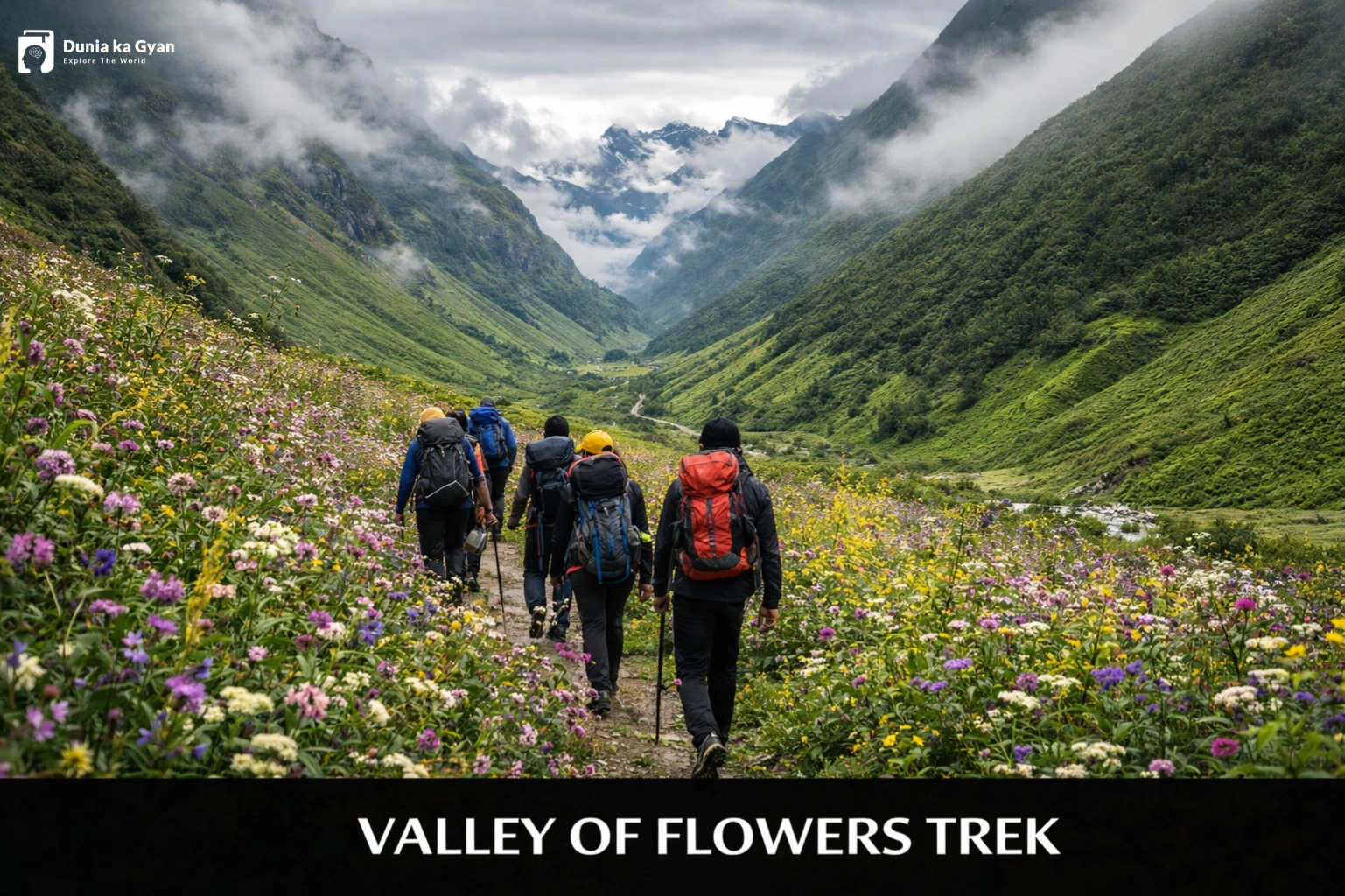
The real surprise came when I entered the valley itself. Instead of a few flowers scattered around, the entire valley looked like a massive natural garden.
Walking slowly along the trail, I could see clusters of pink, yellow, and purple flowers spreading across the green grass. The mountains around the valley were partially hidden by clouds, which made the landscape even more dramatic.
It was one of those places where you naturally slow down, take deep breaths, and simply enjoy the view.
Conclusion
The Valley of Flowers is not just a trekking destination but a remarkable example of nature’s beauty and biodiversity in the Himalayas. From its fascinating history and mythological significance to its rare alpine flowers and breathtaking landscapes, the valley offers an experience that few places in the world can match.
Whether you are a trekker seeking adventure, a photographer searching for stunning landscapes, or a nature lover wanting to witness one of India’s most beautiful natural wonders, the Valley of Flowers provides an unforgettable journey.
The trek through forests, rivers, and mountain trails eventually leads to a valley that looks like a living canvas painted by nature itself. Visiting this place reminds travelers how extraordinary the Himalayan ecosystem truly is.
For anyone planning a trip to Uttarakhand, the Valley of Flowers deserves a special place on the travel list.
Frequently Asked Questions
The Valley of Flowers is located in the Chamoli district of Uttarakhand within the Nanda Devi Biosphere Reserve.
The best time is from July to August when most flowers are in bloom.
The trek is considered moderate, suitable for beginners with reasonable fitness.
Most travelers require 4–6 days to complete the trek and explore nearby places.
Yes, beginners can complete the trek with proper preparation and pacing.
Yes, it is part of Valley of Flowers National Park within the Nanda Devi Biosphere Reserve.
Yes, accommodation is available in Ghangaria, the base village for the trek.
People are also reading: