
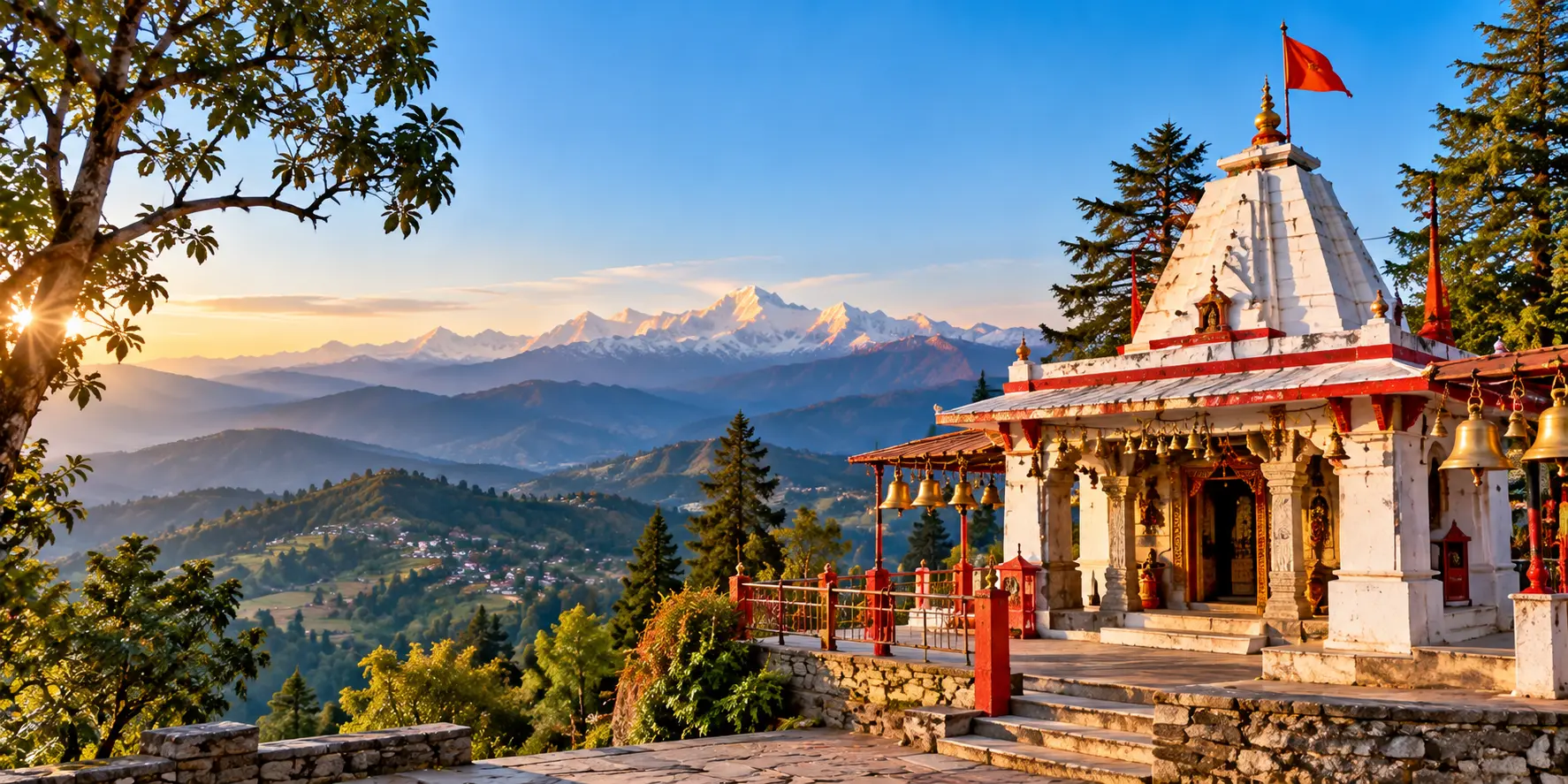
If you are planning a trip to Dwarahat, keep some extra time for Dunagiri Temple. The temple sits on a hill near Dunagiri village, and reaching it means climbing a long flight of stairs. The climb can feel tiring, but the peaceful surroundings, mountain views and religious importance make the visit worthwhile.
Dunagiri Temple is dedicated to Goddess Durga and is one of the well-known religious places around Dwarahat. The temple is also connected with several old stories, including the Ramayana story of Hanuman and the Sanjeevani mountain. If you are planning to visit, here is everything you should know before going.
Where Is Dunagiri Temple?
Dunagiri Temple is located near Dwarahat in Almora district of Uttarakhand. It is around 15 km from Dwarahat and sits at an altitude of about 8,000 feet.
The temple is located on top of Drona Mountain. You cannot drive directly up to the temple. After reaching the base, you have to climb the stairs to reach the shrine.
The place is surrounded by hills and forest, so the journey itself feels quite different from visiting a temple in a town.
What Is Dunagiri Temple Famous For?
Dunagiri Temple is mainly famous for Goddess Durga, its hilltop location and the religious stories connected with Dunagiri.
The temple is also known for a naturally formed group of sacred pindis instead of a traditional idol. An Akhand Jyoti is kept burning inside the temple throughout the year.
According to local belief, a part of the mountain carrying the Sanjeevani herb fell at Dunagiri when Hanuman was taking the mountain to Lanka. This is one of the main reasons the place has a strong connection with the Ramayana.
The temple also attracts visitors during Navratri, when special prayers and other religious activities take place.
What Can You Do at Dunagiri Temple?
A visit to Dunagiri is not only about reaching the temple and coming back. You can take your time and enjoy the place.
1. Have Darshan of Maa Dunagiri
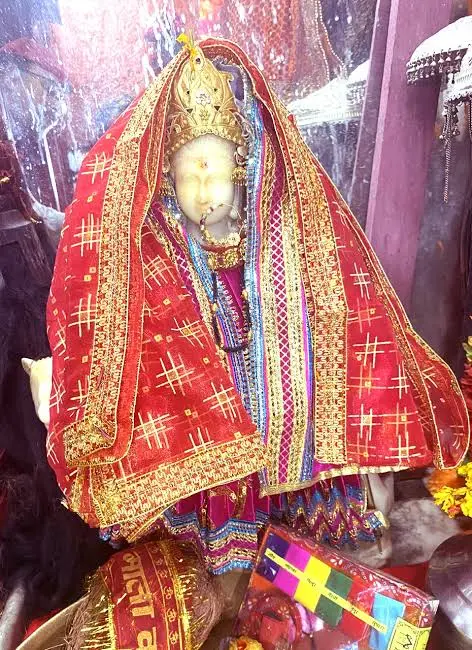
The main reason to visit is to offer prayers to Goddess Durga. The temple does not have a regular idol. Sacred pindis are worshipped inside the shrine.
2. Attend the Aarti
Aarti is performed twice a day, once in the morning and once in the evening. If you want to attend it, plan your visit around the aarti timings.
3. Climb the Temple Stairs
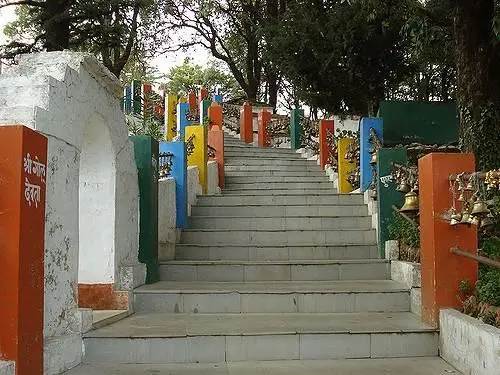
The climb is a part of the Dunagiri experience. There are several hundred stairs leading to the temple, with bells placed along the way.
Take your time instead of trying to reach the top quickly, especially if you are travelling with children or older family members.
4. Enjoy the Mountain Views
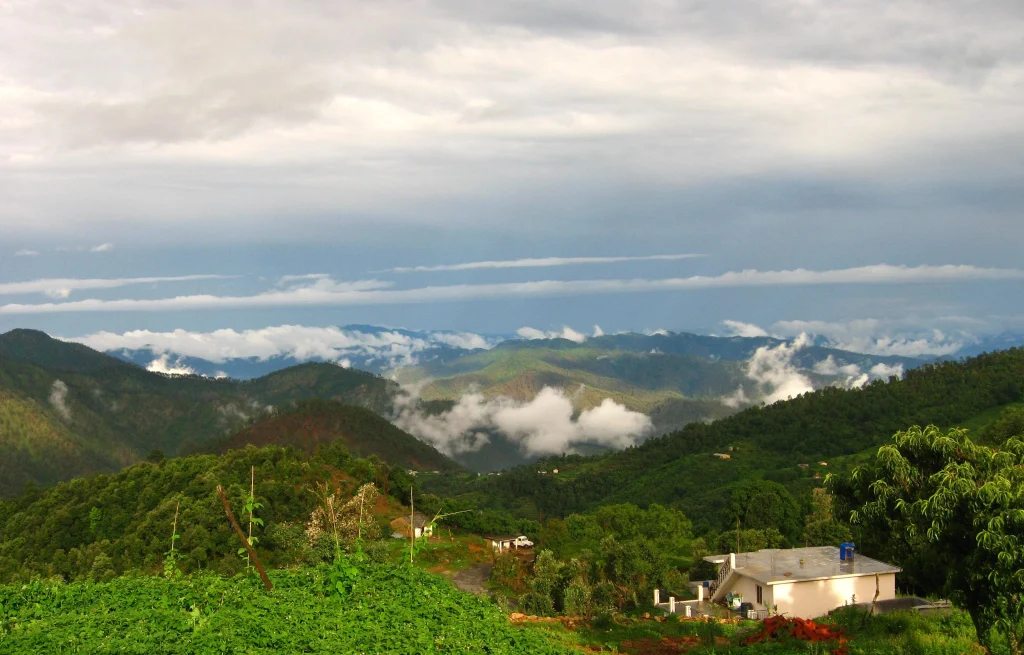
Once you reach the temple, take a little time to look around. The temple sits high above the surrounding area, with hills and greenery all around.
On a clear day, the views are one of the nicest parts of the visit.
5. Sit Quietly for a While
You do not have to rush after darshan. Sit for a few minutes, enjoy the quiet surroundings and take a break after the climb.
6. Visit During Navratri
Dunagiri becomes much busier during Chaitra and Ashwin Navratri. The temple is decorated, special pujas are held and many devotees visit during this period.
The Story Behind Dunagiri Temple
Dunagiri has several religious stories associated with it.
The most popular story comes from the Ramayana. When Lakshman was seriously injured, Hanuman went to bring the Sanjeevani herb. According to local belief, he carried the entire mountain because he could not identify the herb. A part of the mountain is believed to have fallen at Dunagiri.
Another tradition connects Dunagiri with Dronacharya. It is believed that Dronacharya performed penance here, which is why the mountain is also associated with the name Drona.
There are also local traditions connecting the area with the Pandavas and Goddess Durga.
These stories are part of the religious and cultural traditions of the region and are one reason Dunagiri holds such an important place among devotees.
What Is Special Inside Dunagiri Temple?
One of the most interesting things about the temple is that there is no conventional idol of Goddess Durga.
The temple has naturally formed sacred pindis that devotees worship as Maa Bhagwati. An Akhand Jyoti also remains lit inside the temple throughout the year.
This makes the shrine different from many other temples where the main deity is represented by a carved or metal idol.
History of Dunagiri Temple
Dunagiri has a long religious history, although many details come from local traditions and religious texts.
The area is mentioned in connection with the Dronadri Mahatmya and the Manas Khand section of the Skanda Purana. Local traditions also associate the place with Dronacharya and Goddess Durga.
According to temple tradition, Katyuri King Sudhar Dev built a temple here in 1318 CE. A later account from 1847 by Major E. Madden also mentioned the temple.
The present temple structure was built by local villagers around 1920. Since then, the shrine has continued to be an important place of worship in the Dwarahat region.
Dunagiri Temple Entry Fee
There is no entry fee for visiting Dunagiri Temple.
You can visit the temple and offer prayers without paying an entrance charge.
Dunagiri Temple Timings
The temple timings vary between summer and winter.
| Season | Temple Timings | Aarti |
| Summer | 4:00 AM to 7:30 PM | 4:00 AM and 7:00 PM |
| Winter | 5:00 AM to 6:00 PM | 5:00 AM and 6:00 PM |
Timings can change during festivals or special occasions, so it is better to check before planning a visit around aarti.
How Many Steps Are There at Dunagiri Temple?
To reach Dunagiri Temple, you need to climb around 365 to 500 steps. The temple’s own information mentions approximately 503 steps, while 365 steps is another commonly mentioned figure. It is also believed that the 365 steps represent the 365 days of the year.
The climb is manageable if you go at a comfortable pace, but it can feel tiring because the temple is on a hilltop. Wear comfortable shoes, carry water, and take short breaks if needed.
How Much Time Do You Need at Dunagiri Temple?
For a normal visit, keep around 1 to 2 hours.
This gives you enough time to climb the stairs, have darshan, spend some time around the temple and come back down.
If you are visiting during Navratri or want to attend aarti, keep more time because the temple can be crowded.
How to Reach Dunagiri Temple
By Road
Dunagiri is easiest to reach by road.
First reach Dwarahat, then take the road towards Dunagiri. The temple is around 15 km from Dwarahat. After reaching the temple’s base, you have to continue on foot and climb the stairs.
By Train
Kathgodam is the nearest major railway station. From Kathgodam, you can hire a taxi or take a bus towards Dwarahat and continue to Dunagiri by road.
By Air
Pantnagar Airport is the nearest airport. From the airport, you will need to continue by road towards Dwarahat and Dunagiri.
Best Time to Visit Dunagiri Temple
The best time to visit Dunagiri Temple is March to June and September to November. The weather is generally comfortable during these months, making it easier to travel, enjoy the mountain views, and climb the stairs to the temple.
March to June
Spring and summer bring pleasant weather, with daytime temperatures generally around 20°C to 25°C. These months are good for temple visits, sightseeing, and exploring the surrounding hills.
Chaitra Navratri, usually held in March or April, is also a special time to visit. The temple is decorated and attracts a large number of devotees.
September to November
After the monsoon, the skies usually become clearer and the surrounding hills look fresh and green. The weather is comfortable for travelling and the mountain views are often better.
Ashwin Navratri, usually in September or October, is another busy period at the temple, with special prayers and celebrations.
July to August
The monsoon brings heavy rainfall to the region. Roads can become slippery, and rain can make the uphill climb to the temple more difficult. Landslides can also affect mountain routes, so this is not the most convenient time for a visit.
December to February
Winter is cold in Dunagiri, particularly in the early morning and evening. January can sometimes bring snowfall, so if you visit during winter, carry warm clothes and check the weather and road conditions before travelling.
Dunagiri Temple During Navratri
Navratri is one of the busiest times at Dunagiri Temple.
Special pujas are performed during both Chaitra Navratri and Ashwin Navratri. The temple is decorated with flowers and lights, and kirtans and other religious activities are held.
If you enjoy being part of a festive temple atmosphere, Navratri can be a good time to visit. Just remember that the crowd will also be much higher than on a normal day.
Mahavatar Babaji Cave Near Dunagiri
Dunagiri is also known for its connection with Kriya Yoga and Mahavatar Babaji.
A cave in the Dunagiri mountains is traditionally associated with Mahavatar Babaji and Lahiri Mahasaya. According to the Yogoda Satsanga tradition, Babaji initiated Lahiri Mahasaya into Kriya Yoga here in 1861.
The cave is different from Dunagiri Temple, so do not assume that visiting the temple means you have visited the cave as well. The cave requires a separate visit and planning.
Pandukholi Near Dunagiri
If you have more time, you can also plan a visit towards Pandukholi.
The area is associated with trekking and mountain walks, and a trekking route starts near Dunagiri Temple. It can be a good option if you want to add some nature and walking to your temple visit.
Places to Visit Near Dunagiri Temple
If you have extra time, you can add a few nearby temples, ashrams, and trekking spots to your Dunagiri trip. Distances are approximate and may vary depending on the route.
1. Mahavatar Babaji Cave
Distance: Around 3 km from Dunagiri Temple
The cave is associated with Mahavatar Babaji and Lahiri Mahasaya and holds an important place in the Kriya Yoga tradition. It is reached by a forest trail, so keep some extra time for the walk.
2. Pandukholi
Distance: Around 5 km trek from Dunagiri Temple
Pandukholi is known for its forest trails, caves, and beautiful mountain views. The trekking route starts near Dunagiri Temple and is a good option if you enjoy walking in the hills.
3. Yogoda Satsanga Ashram
Distance: Around 15 km from Dunagiri Temple
Located near Dwarahat, this peaceful ashram is surrounded by pine forests and is associated with meditation and spiritual practices. It is a good place to spend some quiet time away from the busy tourist spots.
4. Dwarahat Temples
Distance: Around 15 km from Dunagiri Temple
Dwarahat has several old temples that reflect the religious and architectural heritage of Kumaon. You can easily visit them when returning from Dunagiri.
5. Sukhdev Muni Ashram
Distance: Around 5–10 km from Dunagiri Temple
Sukhdev Muni Ashram is a quiet religious spot surrounded by the hills. It can be added to your trip if you want to visit more peaceful places around Dunagiri.
6. Lakhanpur Temple
Distance: Around 20–25 km from Dunagiri Temple
Lakhanpur Temple is another religious place that you can include in a longer Dwarahat sightseeing plan. It is better to visit when you have enough time rather than rushing through several places in one day.
7. Badrinath Temple, Dwarahat
Distance: Around 15 km from Dunagiri Temple
The Badrinath Temple is located in Dwarahat and is one of the notable temples in the area. Since it is in town, you can easily combine it with your Dwarahat sightseeing.
8. Vimandeshwar Temple
Distance: Around 30 km from Dunagiri Temple
Vimandeshwar Temple is an old Shiva temple in the Kumaon region. It is a little farther away, so it is best included if you are planning a longer day trip around Dwarahat.
Where to Stay
Dwarahat is the best place to stay if you are visiting Dunagiri Temple. It has more hotels, guesthouses, and homestays, with food and other basic facilities nearby. Dunagiri Temple is around 15 km from Dwarahat, so you can easily visit the temple and return to town.
You can also find homestays and retreat-style stays around Dunagiri if you want a quieter mountain setting. These are better for travellers who want to stay close to nature and spend more time in the area.
For a first-time visit, Dwarahat is the more practical choice, especially if Dunagiri is part of a larger Dwarahat trip.
What to Keep in Mind Before Visiting
- Wear comfortable shoes because you have to climb several hundred stairs.
- Carry water, especially if you are visiting during warmer months.
- Start early if you want to avoid strong afternoon sun and crowds.
- Older people may need more time for the climb.
- Keep your surroundings clean and avoid throwing plastic on the route.
- Check the temple timings if you specifically want to attend aarti.
- During Navratri, expect more people and longer waiting times.
- Keep some extra time if you also want to visit nearby places.
A Simple Dunagiri Temple Trip Plan
If you are staying in Dwarahat, you can keep one half of your day for Dunagiri.
Leave Dwarahat in the morning and reach the temple area by road. From there, start the climb slowly. After reaching the top, have darshan and spend some quiet time around the temple.
Once you come down, you can return towards Dwarahat or continue towards another nearby place if you have enough time.
If you want to attend the morning aarti, leave very early. The evening aarti is another option, but remember that mountain travel after dark needs more care.
Conclusion
Dunagiri Temple is a good place to add to a Dwarahat trip if you enjoy temples, mountain views and quiet places. The main thing to remember is the climb. You have to walk up several hundred stairs, so do not plan the visit in a hurry.
Once you reach the top, you can have darshan, attend aarti, sit peacefully for a while and enjoy the views around the temple. If you have more time, you can also combine Dunagiri with Pandukholi, the Mahavatar Babaji Cave and other places around Dwarahat.
Frequently Asked Questions
Yes, children can visit Dunagiri Temple. However, the climb involves several hundred stairs, so younger children may need help during the climb.
Photography may be allowed around the temple, but visitors should follow the temple’s rules inside the shrine. It is better to ask before taking photographs of the main worship area.
Parking is available near the temple approach area, but space can be limited during busy days and festivals. During Navratri, reaching early is a better option.
Yes, Dunagiri Temple can get quite crowded during Chaitra and Ashwin Navratri. Special pujas and celebrations attract more devotees during this period.
Yes, you can visit Dunagiri Temple in winter, but the weather can be very cold and snowfall may occur in January. Carry warm clothes and check road conditions before travelling.
People are also reading:

![Learn How to Draw a Cat Easily: [Cute Cat Drawing]](https://duniakagyan.com/wp-content/uploads/2024/01/How-to-Draw-a-Cat-Easily-696x348-1.jpg)