
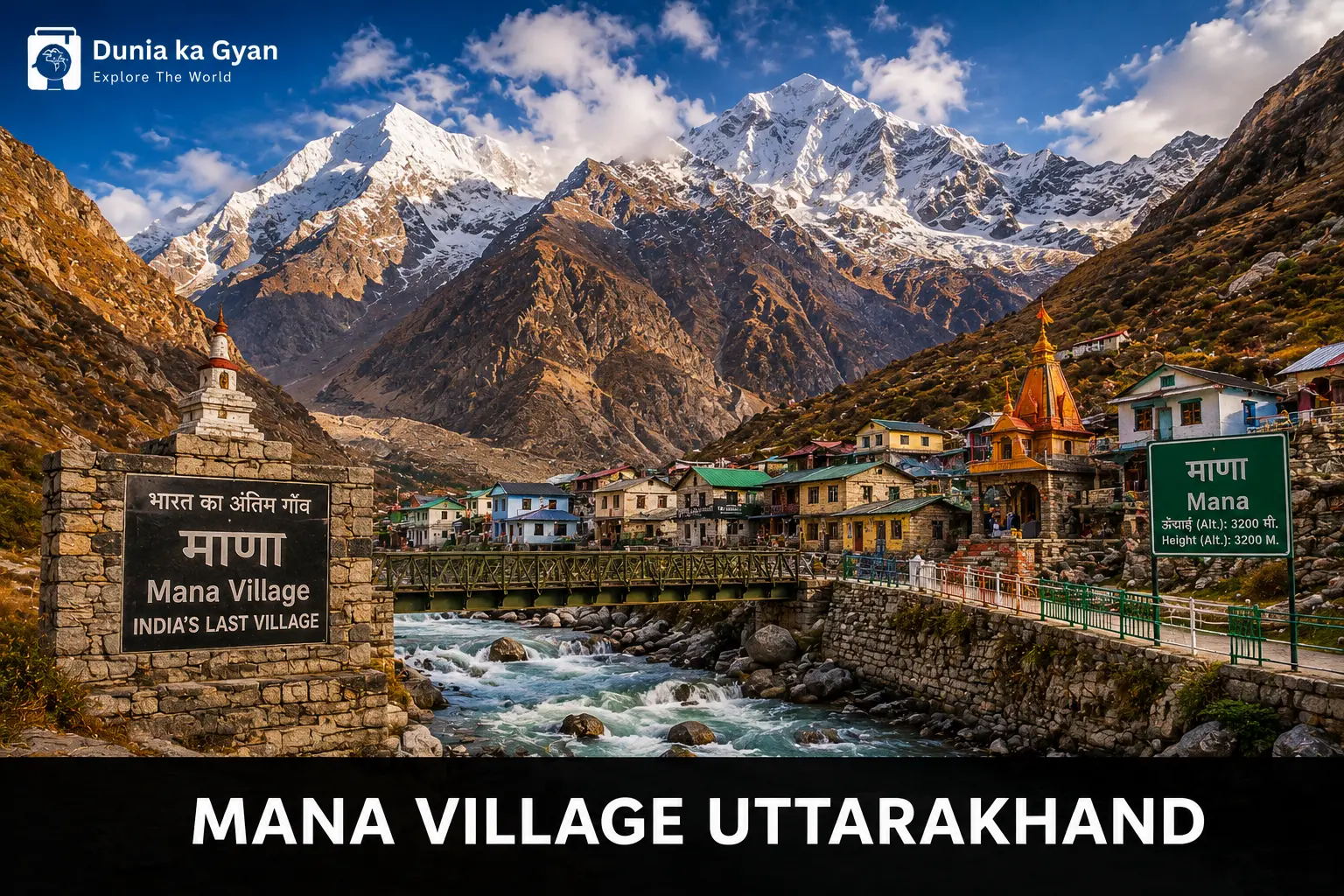
There are some places you visit for sightseeing, and then there are places that quietly leave a mark on your heart. Mana Village in Uttarakhand is one such destination. Nestled amidst the towering Himalayas and resting peacefully on the banks of the sacred Saraswati River, Mana is not just a village, it is a living blend of mythology, spirituality, culture, and natural beauty.
Located just 3 kilometers from Badrinath in the Chamoli district of Uttarakhand, Mana was once popularly known as the “Last Indian Village” because of its proximity to the Indo-Tibetan border. Today, it proudly carries a new identity as the “First Indian Village of India,” symbolizing the beginning of India’s cultural and spiritual heritage.
At an altitude of around 3,200 meters above sea level, Mana offers breathtaking mountain views, ancient caves, roaring rivers, and stories that date back thousands of years. Whether you are a pilgrim, trekker, nature lover, or history enthusiast, this Himalayan village promises an experience unlike any other.
Quick Facts About Mana Village
- State: Uttarakhand
- District: Chamoli
- Distance from Badrinath: 3 km
- Distance from Joshimath: 45 km
- Nearest Airport: Jolly Grant Airport, Dehradun
- Nearest Railway Station: Rishikesh Railway Station
- Best Time to Visit: May to June and September to October
- Winter Status: Closed due to heavy snowfall
- Mobile Network: Limited connectivity, BSNL and Jio work better
- ATM Availability: Withdraw cash in Joshimath or Badrinath
- Average Time Needed: Half day to one full day
- Famous For: First Village of India, Saraswati River, Vyas Gufa, Bheem Pul, trekking routes
Why is Mana Known as the First Village of India?
However, to promote tourism and highlight its cultural and spiritual significance, the Government of India officially declared Mana as the “First Village of India.” Earlier, it was commonly known as the “Last Village of India” because of its location at the edge of the Indo-Tibet border, where the inhabited region ends and the remote Himalayan terrain begins. Today, this change in identity reflects a new perspective that positions Mana as the starting point of India’s Himalayan journey rather than the end.
Best Places to Visit in Mana Village Uttarakhand
Mana Village is not just famous for being the First Village of India. It is a land where mythology meets nature at every step. From ancient caves and sacred rivers to breathtaking waterfalls and legendary bridges, every attraction in Mana has a story to tell.
The best part about exploring Mana is that most attractions are within walking distance of each other, making it easy to experience the village at a relaxed pace while soaking in its spiritual atmosphere.
1. Saraswati River
Among all the attractions in Mana Village, the Saraswati River holds a special place. According to Hindu mythology, the Saraswati is one of the holiest rivers and is often referred to as the goddess of knowledge and wisdom.
Unlike other rivers, the Saraswati remains largely invisible and is therefore called Gupt Gamini, meaning “the hidden river.” It is believed that the river emerges near Mana before disappearing underground.
A local legend says that while Sage Ved Vyas was dictating the Mahabharata to Lord Ganesha, the roaring sound of the river disturbed him. In anger, he cursed the river to disappear from sight. Since then, Saraswati is believed to flow invisibly beneath the earth.
Standing beside the river, one cannot help but be amazed by its sheer force. The sound of the rushing water echoing through the mountains creates an unforgettable experience.
Highlights
- Activity to Do: Photography and sightseeing
- Famous For: Mythological significance
- Best Time to Visit: May to October
- Nearest Bus Stand: Badrinath Bus Stand (3 km)
- Nearest Railway Station: Rishikesh Railway Station (275 km)
- Nearest Airport: Jolly Grant Airport, Dehradun (320 km)
2. Vyas Gufa
One of the most sacred places in Mana Village is Vyas Gufa, an ancient cave associated with Sage Ved Vyas. According to popular belief, this is where Ved Vyas composed the Mahabharata over 5,000 years ago. Lord Ganesha sat nearby and wrote down the verses as Vyas dictated them.
The cave itself is fascinating. Its roof resembles stacked palm-leaf manuscripts, which many believe symbolize ancient scriptures. As you enter the cave, a sense of calmness surrounds you. Whether you are spiritual or simply interested in history, Vyas Gufa leaves a lasting impression.
During my imagined journey through Mana, I often think this must be one of the few places in the world where mythology feels incredibly alive.
Highlights
- Activity to Do: Meditation and spiritual exploration
- Entry Fee: Free
- Timings: Sunrise to Sunset
- Distance from Mana Village: Walking distance
- Photography: Allowed outside the cave
- Nearest Bus Stand: Badrinath Bus Stand (3 km)
- Nearest Railway Station: Rishikesh Railway Station (300 km)
- Nearest Airport: Jolly Grant Airport, Dehradun (320 km)
3. Ganesh Gufa
Located near Vyas Gufa is the revered Ganesh Gufa. Legend says that Lord Ganesha wrote the Mahabharata here while listening to Sage Ved Vyas. The cave is considered sacred by devotees and attracts pilgrims from across India.
Though smaller than Vyas Gufa, Ganesh Gufa holds immense spiritual significance. The peaceful surroundings and ancient stories associated with the cave make it an essential stop for visitors.
Highlights
- Activity to Do: Spiritual visit and photography
- Best Time to Visit: May to October
- Entry Fee: Free
- Distance from Vyas Gufa: A short walk away
- Nearest Bus Stand: Badrinath Bus Stand (3 km)
- Nearest Railway Station: Rishikesh Railway Station (314 km)
- Nearest Airport: Jolly Grant Airport, Dehradun (320 km)
4. Bheem Pul
Among the many attractions in Mana Village, Bheem Pul stands out as one of the most iconic and fascinating landmarks. This massive stone bridge naturally spans the roaring Saraswati River and is deeply connected to the legends of the Mahabharata.
According to local beliefs, when the Pandavas were on their final journey to heaven, Draupadi was unable to cross the turbulent river. To help her, Bhima, known for his immense strength, lifted a giant rock and placed it across the river, creating what is now known as Bheem Pul.
Whether you visit for its mythology or scenic beauty, Bheem Pul offers an unforgettable experience. Standing on the bridge while listening to the thunderous sound of the Saraswati River below is both thrilling and mesmerizing. Surrounded by towering Himalayan peaks and deep valleys, it is also one of the most photographed spots in Mana Village Uttarakhand.
Highlights
- Activity to Do: Photography and sightseeing
- Famous For: Mahabharata connection
- Best Time to Visit: May to October
- Distance from Mana Village: Walking distance
- Nearest Bus Stand: Badrinath Bus Stand (3 km)
- Nearest Railway Station: Rishikesh Railway Station (300 km)
- Nearest Airport: Jolly Grant Airport, Dehradun (310 km)
5. Vasudhara Falls
Located around 6 kilometers from Mana Village, Vasudhara Falls is one of the most beautiful waterfalls in Uttarakhand. The trek to the falls is as rewarding as the destination itself. Snow-covered peaks, alpine meadows, and breathtaking Himalayan views accompany travelers throughout the journey.
According to local beliefs, the water droplets of Vasudhara Falls touch only those who are pure at heart. Whether or not one believes the legend, the sight of water cascading from great heights amidst untouched mountains is truly mesmerizing. For trekking enthusiasts, this route offers one of the finest short hikes in the region.
Highlights
- Activity to Do: Trekking and photography
- Trek Distance: Approximately 6 km one way
- Difficulty Level: Easy to Moderate
- Best Time to Visit: May to October
- Carry: Water, snacks, and warm clothing
- Nearest Bus Stand: Badrinath Bus Stand (9 km)
- Nearest Railway Station: Rishikesh Railway Station (295 km)
6. The Last Indian Tea Shop
No visit to Mana is complete without stopping at the famous tea shop that proudly displays the sign: “Last Tea Shop of India.” Although Mana is now called the First Village of India, this iconic tea shop remains one of the village’s biggest attractions.
Sipping hot tea while surrounded by the Himalayas creates a simple yet unforgettable experience. Sometimes, it is these small moments holding a warm cup of tea in cold mountain air that become the most cherished travel memories.
Highlights
- Activity to Do: Relax and enjoy local tea
- Specialty: Iconic photo spot
- Best Time: Early morning or evening
- Must Try: Local tea and Maggi
7. Keshav Prayag
Near Mana lies Keshav Prayag, where the Saraswati River meets the Alaknanda River. The confluence creates a spectacular view as two powerful streams merge amidst rocky landscapes. For spiritual travelers, this place carries deep religious significance. For photographers, it offers some of the most dramatic landscapes in the region.
Highlights
- Activity to Do: Photography and spiritual exploration
- Best Time to Visit: Sunrise and sunset
- Distance: Near Mana Village
Trekking in Mana Village
Nestled in the heart of the Garhwal Himalayas, Mana Village is a paradise for trekking enthusiasts and adventure seekers. Surrounded by snow-capped peaks, glaciers, and pristine valleys, the village serves as the gateway to some of Uttarakhand’s most scenic and spiritually significant treks.
Whether you are a beginner looking for a short hike or an experienced trekker seeking high-altitude adventures, Mana offers unforgettable trails that combine natural beauty with mythology.
Popular Treks from Mana Village
1. Vasudhara Falls Trek
One of the most popular treks in the region, the Vasudhara Falls Trek takes visitors through breathtaking Himalayan landscapes to a magnificent waterfall cascading from a height of nearly 400 feet. According to local beliefs, the waterfall’s droplets touch only those with a pure heart.
- Distance: 6 km (one way)
- Difficulty Level: Easy to Moderate
- Best Time: May to October
2. Satopanth Lake Trek
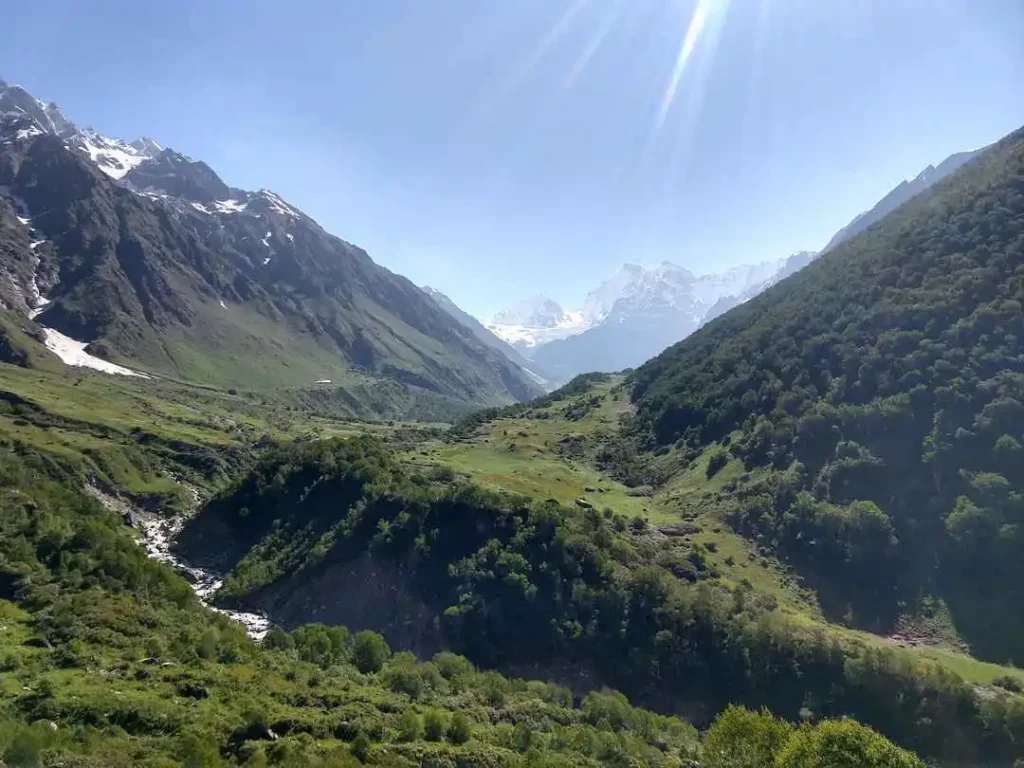
Located amidst towering Himalayan peaks, Satopanth Lake is one of Uttarakhand’s most sacred high-altitude lakes. The triangular lake is believed to be associated with Lord Brahma, Lord Vishnu, and Lord Shiva, making it an important spiritual destination.
- Difficulty Level: Moderate to Difficult
- Suitable For: Experienced trekkers
- Best Time: June to September
3. Swargarohini Trek
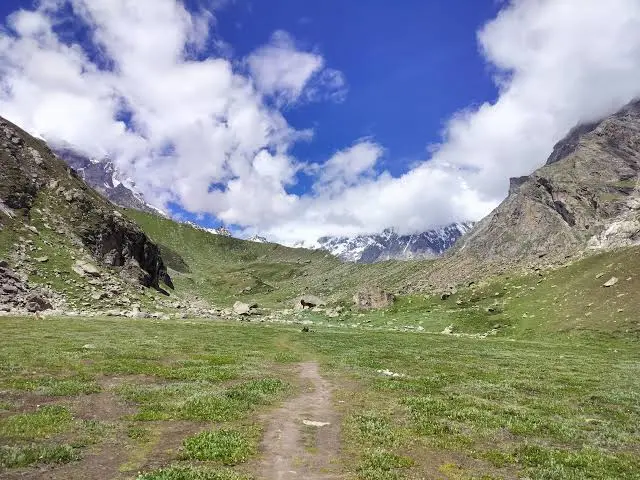
Steeped in mythology, the Swargarohini route is believed to be the path taken by the Pandavas during their final journey to heaven. The trek offers mesmerizing views of glaciers, valleys, and rugged Himalayan terrain.
- Famous For: Mythological significance
- Difficulty Level: Difficult
- Best Time to Visit: May to June and September to October
4. Mana Pass Trek
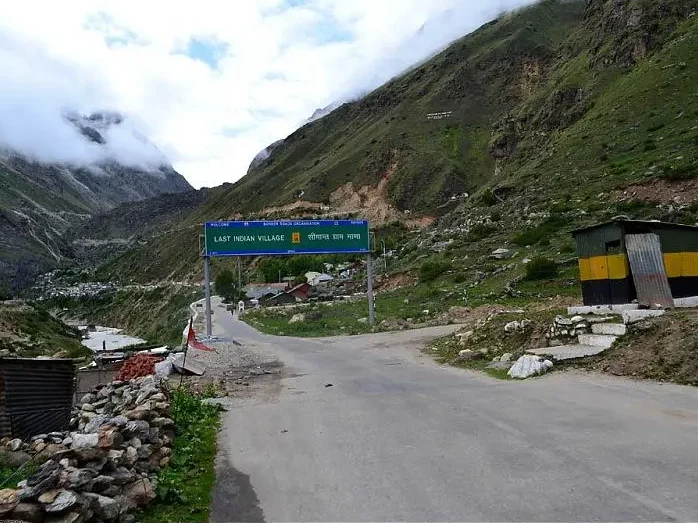
Situated near the Indo-Tibetan border, the Mana Pass Trek is among the highest motorable and trekking routes in India. The journey rewards travelers with spectacular mountain vistas and an unmatched sense of adventure.
- Famous For: Border views and Himalayan landscapes
- Difficulty Level: Moderate to Difficult
- Best Time to Visit: June to September
- Permit Required: Yes, as it lies near the international border.
For adventure lovers, Mana Village is much more than a spiritual destination. It is a gateway to the Himalayas, where every trail leads to breathtaking views, ancient legends, and unforgettable experiences.
The Rich History of Mana Village
Mana Village is one of the oldest inhabited settlements in the Himalayas. For centuries, it served as an important trade route between India and Tibet, with the local Bhotia community trading wool, salt, and herbs across mountain passes.
After the Indo-China War of 1962, border trade declined, and tourism gradually became an important source of livelihood. Despite modern changes, Mana has preserved its traditions, stone houses, and cultural heritage, offering visitors a glimpse into life in the high Himalayas.
Mythological Importance of Mana Village
Mana Village holds a special place in Hindu mythology. According to legends, the Pandavas passed through this region during their final journey to heaven, known as the Mahaprasthan.
The village is also closely associated with the Mahabharata, as Sage Ved Vyas is believed to have composed the epic here. These ancient stories, combined with the spiritual atmosphere of the Himalayas, make Mana one of the most sacred destinations in Uttarakhand.
Sage Ved Vyas and the Creation of the Mahabharata
One of the most fascinating stories associated with Mana Village is its connection to the Mahabharata. According to local beliefs, Sage Ved Vyas composed the epic Mahabharata in the sacred Vyas Gufa, a cave located near the village. It is said that Lord Ganesha served as his scribe, writing down the verses as Vyas dictated them.
Even today, pilgrims and travelers visit Vyas Gufa to experience its spiritual aura and connect with one of India’s greatest literary and cultural legacies. The belief that the world’s longest epic was created in these Himalayan mountains adds a timeless charm and mystical significance to Mana Village.
The Bhotia Community: Guardians of Himalayan Heritage
Mana is home to the Bhotia community, an indigenous Himalayan tribe known for its resilience, craftsmanship, and hospitality.
The Bhotias have adapted to life in extreme weather conditions for centuries. During winter, when heavy snowfall covers the region, many families migrate to lower altitudes and return during summer.
Visitors can witness their traditional lifestyle through:
- Stone-built houses
- Handwoven woolen products
- Local handicrafts
- Traditional clothing
- Organic farming practices
The warmth and simplicity of the local people often become one of the most memorable parts of a visit to Mana.
Local Food and Special Products of Mana
A visit to Mana Village is not just about exploring ancient caves and breathtaking landscapes it is also an opportunity to experience the unique flavors of the Himalayas. The village is known for its fresh produce, traditional foods, and local specialties that reflect the simple yet rich lifestyle of the region.
Himalayan Rajma (Kidney Beans)
Mana’s famous Himalayan rajma is prized for its rich flavor, soft texture, and high nutritional value. Grown in the pure mountain environment, these kidney beans are considered among the finest in Uttarakhand.
Mountain Potatoes
The high-altitude potatoes of Mana are naturally flavorful and are widely appreciated for their unique taste. Many travelers buy them as a local specialty to take home.
Herbal Tea
Nothing feels better than sipping a warm cup of herbal tea amidst the cold Himalayan breeze. Local tea made from mountain herbs offers both warmth and a refreshing taste.
Traditional Garhwali Cuisine
Visitors can also enjoy authentic Garhwali dishes prepared with locally sourced ingredients. The simple yet delicious flavors provide a true taste of Uttarakhand’s rich culinary heritage.
Whether it’s a steaming cup of tea or a traditional mountain meal, the local flavors of Mana add another memorable layer to the village’s unforgettable experience.
Mana: More Than a Tourist Destination
Mana Village is far more than just a tourist destination it is a place where history, mythology, nature, and spirituality come together in perfect harmony. Every corner of this Himalayan village tells a story, making it an experience rather than just a place to visit.
For pilgrims, Mana is a sacred land deeply connected to the Mahabharata and ancient legends. For trekkers, it serves as the gateway to some of Uttarakhand’s most scenic Himalayan trails. Photographers are drawn to its snow-capped peaks, rushing rivers, and postcard-perfect landscapes, while those seeking peace find comfort in the calmness of the mountains.
Unlike many crowded hill stations, Mana has preserved its simplicity and cultural heritage. Despite growing tourism, the village continues to retain its traditional charm, offering travelers a rare glimpse into the timeless beauty of the Himalayas.
Why Exploring Mana Feels Different
Many destinations impress travelers with beautiful landscapes, but Mana Village offers something far deeper a feeling of timelessness. Here, mythology is not confined to books it lives in every cave, river, and mountain.
As you walk through the narrow lanes lined with traditional stone houses, with the mighty Himalayas standing in the background, it becomes easy to understand why visitors often describe Mana as magical. The roar of the Saraswati River, the stories of the Mahabharata, and the peaceful mountain air create an experience that stays with you long after the journey ends.
Unlike many crowded tourist spots, Mana has preserved its authenticity and spiritual charm. It is not just a destination to visit it is a place to feel, explore, and remember.
Nearby Attraction Table:
| Attraction | Distance from Mana |
| Badrinath Temple | 3 km |
| Vasudhara Falls | 6 km |
| Charan Paduka | 5 km |
| Joshimath | 45 km |
| Valley of Flowers | 55 km |
| Auli | 60 km |
Best Time to Visit Mana Village Uttarakhand
Perched in the Garhwal Himalayas, Mana Village experiences cool weather throughout the year. Due to heavy snowfall during winter, the village remains open to visitors only from May to June and September to October. Choosing the right season can make your journey even more memorable.
Summer (May to June): The Peak Tourist Season
Summer is considered the best time to visit Mana Village Uttarakhand. As the snow melts and roads reopen, the village comes alive with pilgrims, trekkers, and nature lovers. The pleasant weather and clear skies make it ideal for sightseeing and outdoor activities.
Weather: 8°C to 18°C
Why Visit?
- Pleasant climate for sightseeing
- Clear views of the Himalayan peaks
- Perfect for photography and trekking
- Ideal time to explore nearby Badrinath
Monsoon (July to September): A Green Himalayan Escape
During the monsoon season, Mana transforms into a lush green paradise. The valleys become vibrant, and the landscapes look even more picturesque. However, travelers should remain cautious as heavy rainfall can occasionally cause landslides in the region.
Weather: 10°C to 16°C
Why Visit?
- Refreshing greenery and scenic beauty
- Fewer crowds and peaceful surroundings
- Great for nature lovers and photographers
Travel Tip: Always check weather forecasts and road conditions before planning your trip.
Autumn (September to Early November): Best for Photography
Autumn is often regarded as the most beautiful season to visit Mana Village. The skies remain crystal clear, offering breathtaking views of snow-covered mountains. The cool weather and fewer tourists create a perfect setting for a peaceful Himalayan getaway.
Weather: 2°C to 12°C
Why Visit?
- Stunning mountain views
- Ideal conditions for photography
- Pleasant weather for trekking and exploration
Winter (November to April): Village Under Snow
Winter brings heavy snowfall to Mana Village, turning it into a white wonderland. However, the village remains inaccessible during this period, and many residents of the Bhotia community migrate to lower regions until spring arrives.
Important Note: Mana Village generally remains closed from November to April due to heavy snowfall and harsh weather conditions.
Is Altitude Sickness Common in Mana Village?
Mana Village is situated at approximately 3,200 meters above sea level. Some travelers may experience mild altitude sickness such as headache, fatigue, or breathlessness.
Precautions:
- Drink enough water
- Avoid heavy physical activity initially
- Take proper rest
- Consult a doctor if symptoms worsen
How to Reach Mana Village
Located just 3 km from Badrinath in the Chamoli district of Uttarakhand, Mana Village is well connected by road and can be reached conveniently by air, rail, and road. The journey to Mana is as memorable as the destination itself, offering breathtaking views of rivers, valleys, and the majestic Himalayas.
By Air
Jolly Grant Airport in Dehradun is the nearest airport to Mana Village, located about 320 km away. From the airport, travelers can hire a taxi or take a bus to Joshimath and then continue towards Badrinath and Mana.
Travel Time: Approximately 10–12 hours by road
Tip: Pre-book taxis during the Char Dham Yatra season to avoid last-minute hassle.
By Train
Nearest Railway Stations:
- Rishikesh Railway Station – Approximately 275 km
- Haridwar Railway Station – Approximately 300 km
Both railway stations are well connected to major Indian cities such as Delhi, Mumbai, and Kolkata. From there, regular buses and taxis are available to Joshimath, Badrinath, and Mana Village.
Travel Time: 9–11 hours by road from Rishikesh or Haridwar.
By Road
Mana Village is easily accessible by road and lies on the route to Badrinath. The drive through the Garhwal Himalayas is considered one of the most scenic journeys in Uttarakhand.
Popular Route: Delhi – Haridwar – Rishikesh – Devprayag – Rudraprayag – Karnaprayag – Joshimath – Badrinath – Mana Village
Regular buses and shared taxis operate from Haridwar, Rishikesh, and Dehradun to Badrinath during the pilgrimage season.
Distance from Major Cities
| City | Distance to Mana Village |
| Badrinath | 3 km |
| Joshimath | 45 km |
| Rishikesh | 275 km |
| Haridwar | 300 km |
| Dehradun | 320 km |
| Delhi | 540 km |
One-Day Mana Village Itinerary
If you have limited time, Mana Village can comfortably be explored in a single day.
8:00 AM – Arrive at Mana Village
8:30 AM – Visit Vyas Gufa and Ganesh Gufa
9:30 AM – Explore Saraswati River and Bheem Pul
11:00 AM – Enjoy tea at the Last Indian Tea Shop
12:00 PM – Begin trek to Vasudhara Falls
4:00 PM – Return to Badrinath
Where to Stay Near Mana Village
Accommodation inside Mana Village is limited but charming. Travelers can choose between local homestays and hotels in nearby Badrinath.
Homestays
Staying in a local homestay offers an authentic Himalayan experience. You can interact with local families and learn about Bhotia culture.
Guesthouses
Basic guesthouses are available during the tourist season.
Hotels Near Mana Village
Most tourists prefer staying in Badrinath due to better hotel facilities.
Accommodation options include:
- Budget hotels
- Mid-range hotels
- Dharamshalas
- Guest houses
Shopping in Mana Village
Mana may be small, but it offers unique souvenirs.
What to Buy?
- Woolen shawls
- Handmade caps
- Traditional handicrafts
- Local herbs
- Himalayan rajma
- Organic potatoes
Shopping here also supports the local community.
Essential Travel Tips for Mana Village
A well-planned trip ensures a comfortable experience.
Carry Warm Clothes
Even during summer, temperatures drop significantly after sunset.
Acclimatize Properly
The high altitude may cause mild discomfort for some visitors.
Carry Cash
Digital payments may not work due to network issues.
Wear Comfortable Shoes
Most attractions involve walking and short hikes.
Start Early
Morning visits offer better weather and fewer crowds.
Mobile Network and Internet Connectivity in Mana Village
Due to its remote Himalayan location, mobile connectivity in Mana Village can be limited. BSNL and Jio generally offer better coverage, though internet speeds may vary.
Tip: Download maps and keep offline navigation ready before reaching Mana.
Photography Spots in Mana Village
Photographers will find endless opportunities in Mana.
Best locations include:
- Bheem Pul
- Saraswati River
- Vyas Gufa
- Last Indian Tea Shop
- Vasudhara Falls trail
- Himalayan viewpoints
Sunrise and sunset create magical lighting conditions.
A Moment Worth Remembering
Imagine sipping a hot cup of tea at the famous Last Indian Tea Shop while snow-covered peaks stand silently in the background. The cold breeze touches your face, prayer flags flutter gently, and the sound of the Saraswati River fills the valley.
In that moment, Mana does not feel like a destination on a map it feels like a story unfolding before your eyes. Perhaps that is the true beauty of Mana Village: it offers experiences that remain in memory long after the journey ends.
Why Mana Village Should Be on Your Travel Bucket List
Mana is not merely India’s First Village.
It is a place where:
- History meets mythology.
- Nature meets spirituality.
- Adventure meets peace.
Whether you seek divine blessings, breathtaking landscapes, or unforgettable experiences, Mana Village welcomes every traveler with open arms.
And as you leave the village behind, one thing becomes certain you may return home, but a part of your heart stays in the Himalayas.
Lesser-Known Facts About Mana Village
- It is one of the northernmost inhabited villages in India.
- The village won recognition under the Swachh Bharat Mission for cleanliness.
- The famous “Last Tea Shop of India” is located here.
- The Pandavas are believed to have passed through Mana during their journey to heaven.
Why Mana Village is Becoming Popular Among Travelers
In recent years, Mana Village has gained immense popularity among travelers, photographers, and spiritual seekers. Social media has introduced more people to its breathtaking landscapes, while improved roads have made access easier.
Yet despite growing tourism, Mana continues to preserve its traditional Himalayan lifestyle and spiritual essence.
Visitors often arrive expecting a simple village and leave with stories of mythology, mountain beauty, and unforgettable experiences.
Conclusion
Mana Village Uttarakhand is more than just India’s First Village it’s a place where mythology, spirituality, and Himalayan beauty come together. From the sacred Saraswati River and Bheem Pul to ancient caves and breathtaking mountain views, every corner of Mana offers a unique experience.
Whether you visit for adventure, faith, or peace, Mana leaves every traveler with memories that last a lifetime. As you leave this charming village behind, you don’t just carry photographs, you carry the timeless magic of the Himalayas in your heart.
Frequently Asked Questions
No, Indian tourists generally do not require a permit to visit Mana Village. However, certain areas near the Indo-Tibetan border, such as Mana Pass, may require special permission from authorities.
Yes, senior citizens can visit Mana Village as most major attractions like Bheem Pul, Vyas Gufa, and Saraswati River are located within walking distance. However, due to the high altitude, visitors should take adequate rest and avoid overexertion.
Mana Village is considered one of the safest destinations in Uttarakhand for solo travelers, families, and pilgrims. The local community is known for its hospitality, though travelers should remain cautious during monsoon and winter seasons.
Yes, Mana Village has basic tourist facilities, including parking areas, small eateries, tea shops, and public restrooms. However, facilities may be limited compared to larger tourist destinations.
Yes, since Mana Village is only about 3 km from Badrinath Temple, both destinations can easily be explored in a single day. Many pilgrims visit Mana after seeking blessings at Badrinath.
People are also reading:

3 thoughts on “Mana Village Uttarakhand: First Village of India”