
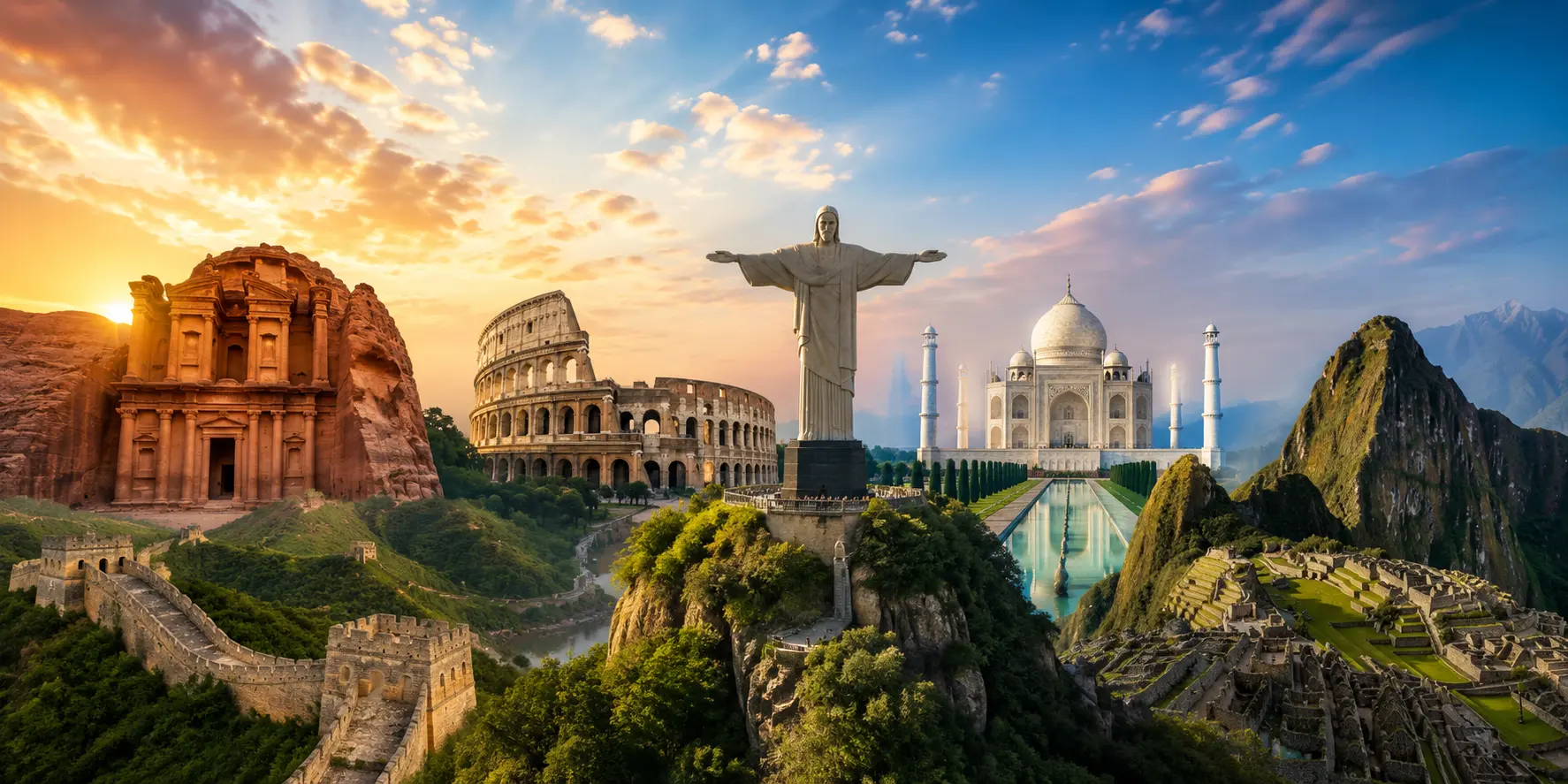
The Seven Wonders of the World represent human creativity, engineering skill, and architectural excellence. These landmarks reflect the cultural heritage and historical achievements of different civilizations. Millions of people visit these sites every year to explore their history and beauty. The New Seven Wonders of the World include the Great Wall of China, Petra, Christ the Redeemer, Machu Picchu, Chichén Itzá, the Colosseum, and the Taj Mahal. The New7Wonders Foundation organized a global voting campaign in 2007, and more than 100 million people participated to select these wonders.
What Are the New Seven Wonders of the World?
The New7Wonders Foundation launched a global initiative in 2001 to identify the most remarkable man-made monuments in history. The organization invited people worldwide to vote for the sites they considered most significant.
After several rounds of voting, the foundation declared the final list in 2007 in Lisbon, Portugal. The selection considered cultural importance, historical value, architectural uniqueness, and global popularity.
Quick Overview of the 7 Wonders of the World
| Wonder | Location | Era Built | Key Historical Context |
| Great Wall of China | Northern China | 7th century BCE – 16th century CE | Built to protect Chinese dynasties from nomadic invasions. |
| Petra | Ma’an, Jordan | Around 312 BCE | Capital city of the Nabataean Kingdom and a major trade center. |
| The Colosseum | Rome, Italy | 80 CE | Largest amphitheatre of the Roman Empire. |
| Chichén Itzá | Yucatan, Mexico | 435-600 CE | Important economic, religious, and political center of the Maya civilization. |
| Machu Picchu | Cusco Region, Peru | Around 1450 CE | Royal estate associated with Inca Emperor Pachacuti. |
| Taj Mahal | Agra, India | 1632-1653 CE | Built by Shah Jahan in memory of Mumtaz Mahal. |
| Christ the Redeemer | Rio de Janeiro, Brazil | 1931 CE | Monument representing Christianity and peace in Brazil. |
1. Great Wall of China
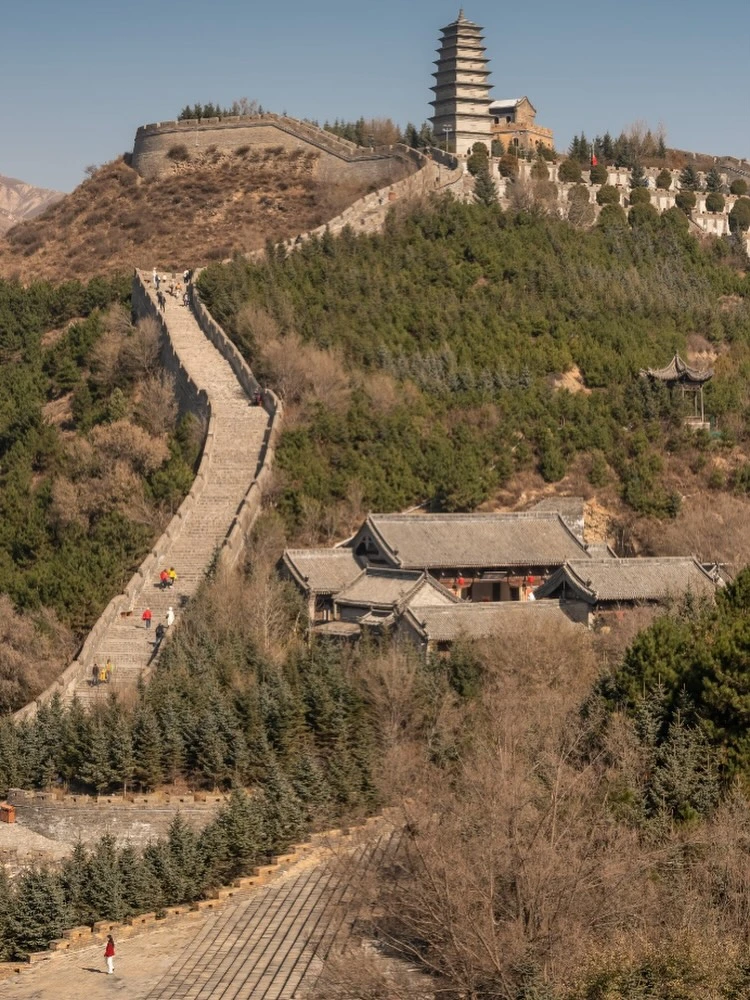
The Great Wall of China developed over many centuries. Early states began building defensive walls in the 7th century BCE. After China unified under Emperor Qin Shi Huang in 221 BCE, he connected several existing walls. Later dynasties, especially the Ming Dynasty (1368–1644), expanded and reinforced the structure.
Architecture
The Great Wall stretches for more than 21,196 kilometers across mountains, deserts, grasslands, and plateaus. Builders used locally available materials such as stone, brick, tamped earth, and wood to construct it.
Key architectural features include:
- Watchtowers for surveillance
- Signal towers for communication
- Fortresses and military garrisons
- Defensive battlements
Interesting Facts
- It is the longest man-made structure in the world.
- Construction continued for over 2,000 years.
- Millions of workers participated in its construction.
- It became a UNESCO World Heritage Site in 1987.
2. Petra, Jordan
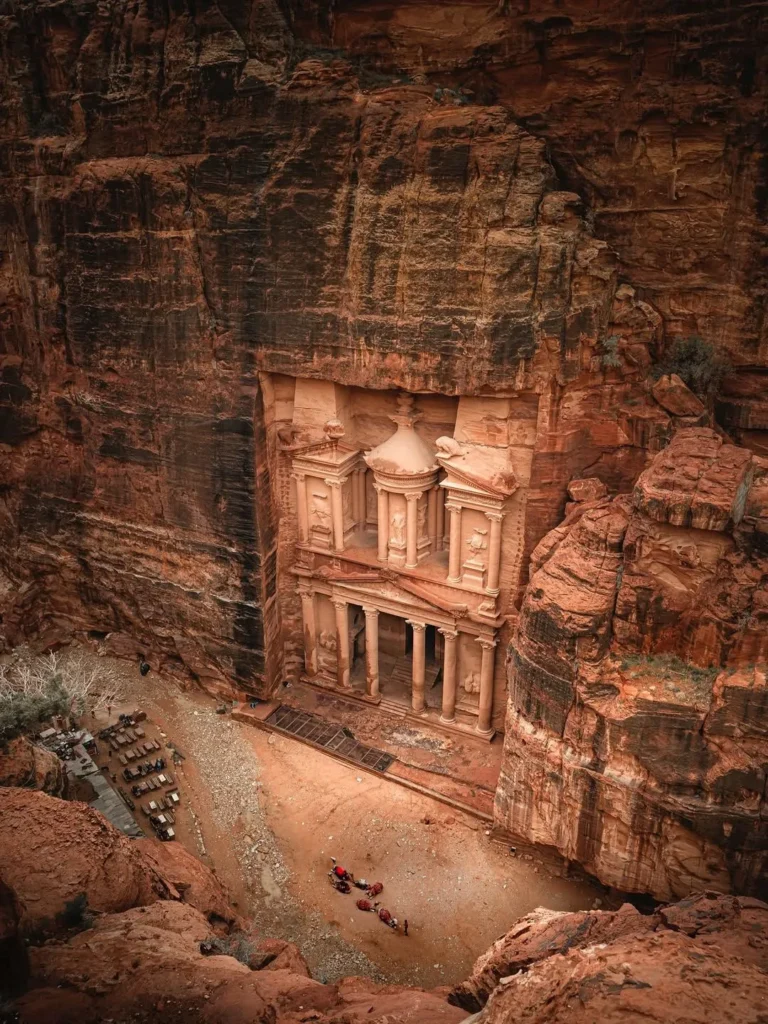
The Nabataeans established Petra as their capital around the 4th century BCE. The Nabataeans became wealthy by controlling trade routes connecting Arabia, Egypt, and the Mediterranean.
The city remained prosperous until changes in trade routes and several earthquakes contributed to its decline. Petra remained largely unknown to the Western world until Swiss explorer Johann Ludwig Burckhardt documented it in 1812.
Architecture
Petra stands out for its structures carved directly into rose-colored sandstone cliffs.
Notable monuments include:
- Al-Khazneh (The Treasury)
- The Monastery (Ad Deir)
- Royal Tombs
- Roman-style theatre
The city’s advanced water management system included dams, reservoirs, and channels that allowed people to thrive in a desert environment.
Interesting Facts
- People often call Petra the “Rose City.”
- It served as a major trade hub for spices and incense.
- It became a UNESCO World Heritage Site in 1985.
- Filmmakers featured parts of the city in Indiana Jones and the Last Crusade.
3. Christ the Redeemer, Brazil

Brazil began building Christ the Redeemer in the 1920s to symbolize peace and Christianity. Construction started in 1922 and finished in 1931. Heitor da Silva Costa designed the structure, and sculptor Paul Landowski created the statue’s detailed head and hands.
Architecture
Standing atop Mount Corcovado, the statue overlooks Rio de Janeiro from an elevation of approximately 710 meters (2,329 feet).
Architectural highlights include:
- Height: 30 meters (98 feet)
- Pedestal height: 8 meters (26 feet)
- Total height: 38 meters (125 feet)
- Arm span: 28 meters (92 feet)
- Constructed from reinforced concrete and soapstone
The Art Deco style contributes significantly to its distinctive appearance.
Interesting Facts
- It is one of the world’s largest Art Deco statues.
- Authorities regularly illuminate the statue during major global events.
- The 2007 global vote named it one of the New Seven Wonders.
- It attracts millions of visitors annually.
4. Machu Picchu, Peru
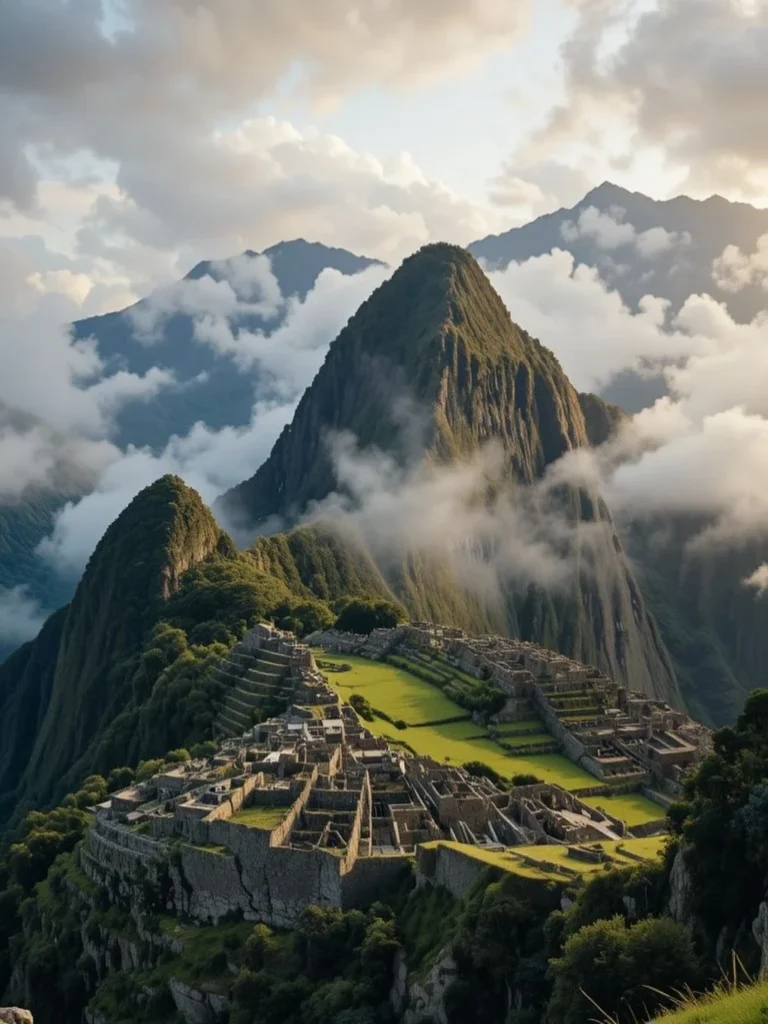
The Inca ruler Pachacuti built Machu Picchu around 1450 CE as a royal estate or ceremonial site. The Spanish never discovered it during their conquest, so it remained hidden for centuries until Hiram Bingham brought global attention in 1911.
Architecture
Located approximately 2,430 meters (7,970 feet) above sea level in the Andes Mountains, Machu Picchu demonstrates exceptional engineering.
Its design includes:
- Agricultural terraces
- Religious temples
- Residential structures
- Water channels and fountains
The Incas used precisely cut stones that fit together without mortar, helping structures withstand earthquakes.
Interesting Facts
- The site contains more than 150 buildings.
- It remained hidden from Spanish conquerors.
- It is one of South America’s most visited archaeological sites.
- UNESCO designated it a World Heritage Site in 1983.
5. Chichén Itzá, Mexico
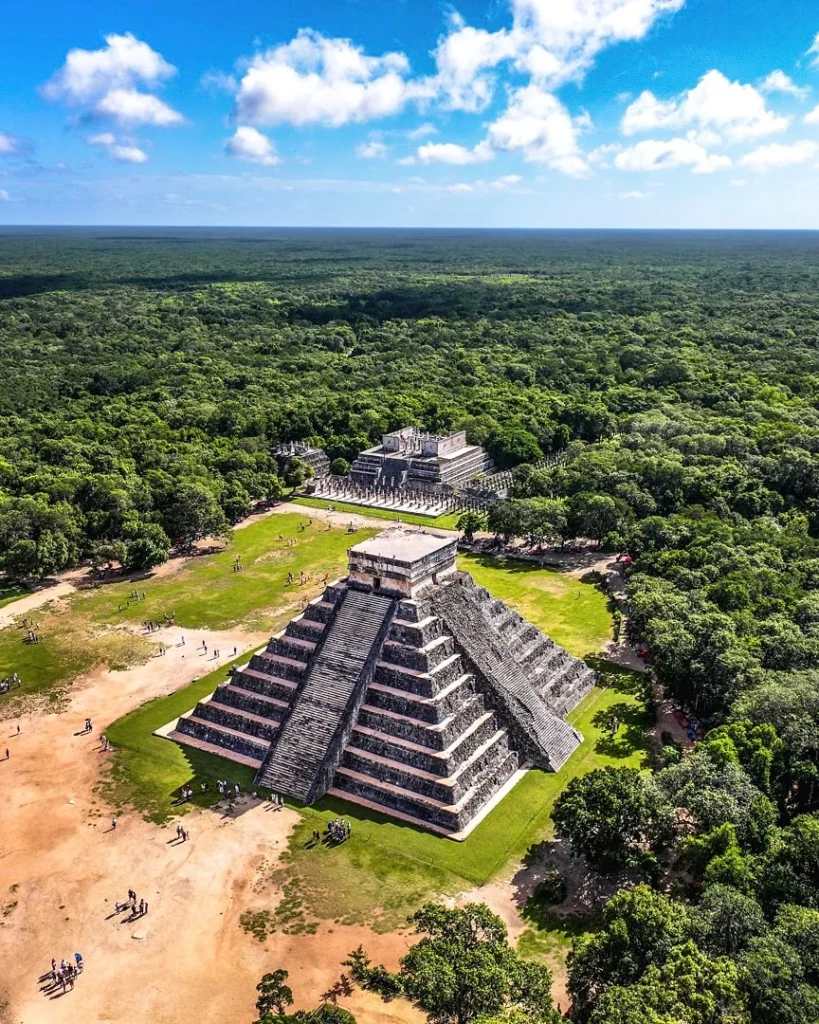
The Maya civilization developed Chichén Itzá between the 7th and 10th centuries CE. It served as a major political, religious, and economic center in the Yucatán Peninsula.
Architecture
The most famous structure is El Castillo, also known as the Temple of Kukulcán.
Important architectural features include:
- 91 steps on each of its four sides
- A total of 365 steps including the platform
- Astronomical alignments linked to the equinoxes
- Advanced geometric precision
Other notable structures include the Great Ball Court, Temple of the Warriors, and Sacred Cenote.
Interesting Facts
- It demonstrates the Maya’s advanced understanding of astronomy.
- During equinoxes, shadows create the appearance of a serpent descending the pyramid.
- It became a UNESCO World Heritage Site in 1988.
- It remains one of Mexico’s most visited archaeological sites.
6. The Colosseum, Italy
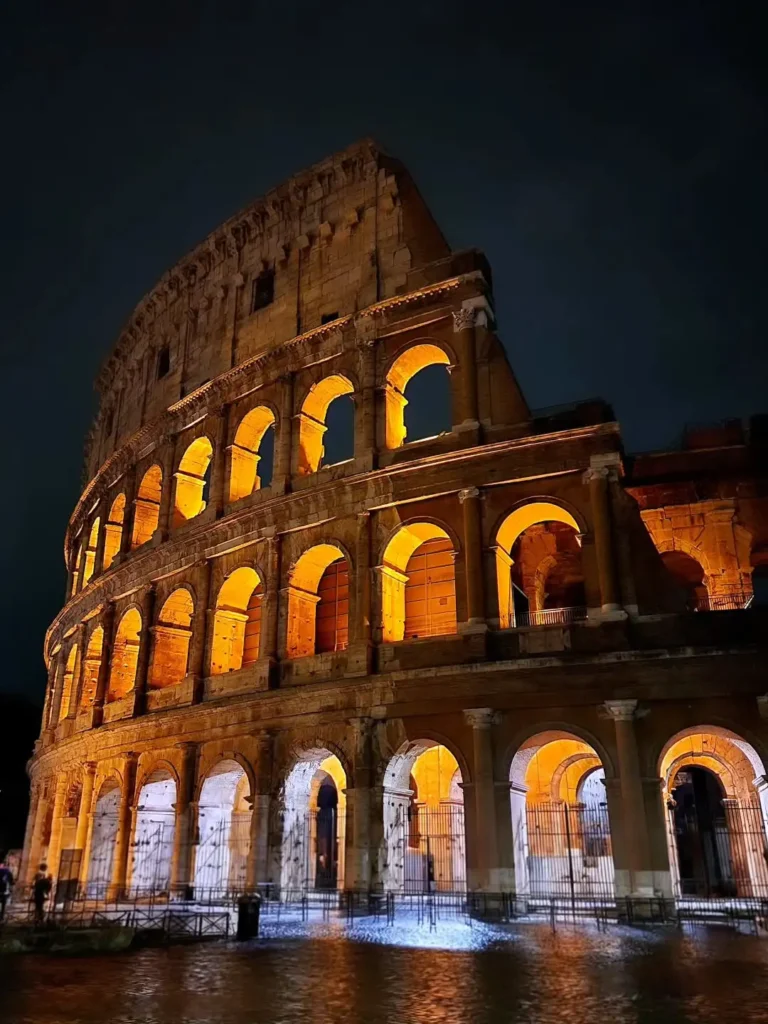
Roman Emperor Vespasian started construction of the Colosseum around 72 CE, and his son Titus completed it in 80 CE. The structure hosted gladiator fights, animal hunts, and public entertainment events.
Architecture
The Colosseum remains the largest ancient amphitheater ever built.
Architectural specifications include:
- Length: 189 meters (620 feet)
- Width: 156 meters (512 feet)
- Height: 48 meters (157 feet)
- Seating capacity of approximately 50,000 spectators
Its sophisticated design featured underground tunnels, elevators, and trapdoors for moving performers and animals.
Interesting Facts
- Historical records suggest that Romans used more than one million animals in these spectacles.
- It is nearly 2,000 years old.
- Earthquakes damaged parts of the structure over time.
- It remains one of Italy’s most recognized landmarks.
7. Taj Mahal, India
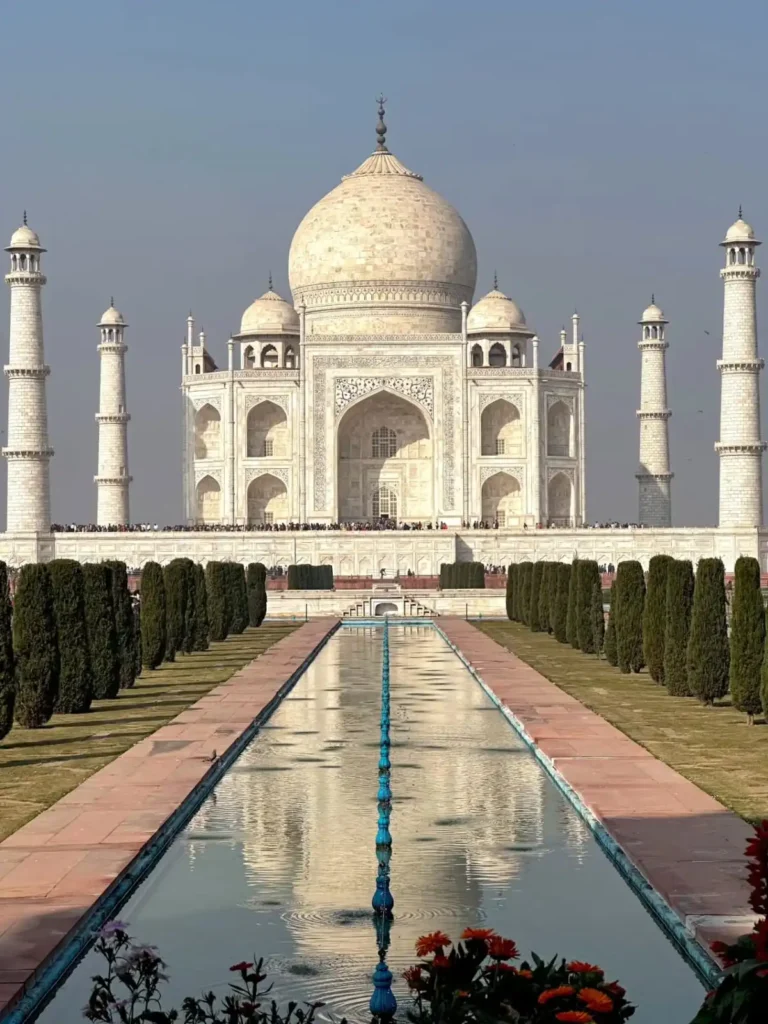
Mughal Emperor Shah Jahan built the Taj Mahal in memory of his wife Mumtaz Mahal. Construction began in 1632 and reached completion around 1653 CE. The monument stands as one of the greatest achievements of Mughal architecture.
Architecture
Built from white marble, the Taj Mahal combines Persian, Islamic, and Indian architectural traditions.
Major architectural elements include:
- Central marble mausoleum
- Four symmetrical minarets
- Reflecting pools and formal gardens
- Intricate calligraphy and gemstone inlay work
People recognize the structure for its perfect symmetry, and its appearance changes throughout the day as sunlight falls on the marble.
Interesting Facts
- More than 20,000 artisans worked on the project.
- It is a UNESCO World Heritage Site.
- People often regard the monument as the finest example of Mughal architecture in the world.
- It receives millions of visitors annually.
The Seven Wonders of the Ancient World
| Ancient Wonder | Location | Date | Current Status |
| Great Pyramid of Giza | Egypt | c. 2560 BCE | Still standing |
| Hanging Gardens of Babylon | Iraq | c. 600 BCE | Existence debated |
| Statue of Zeus at Olympia | Greece | c. 435 BCE | Destroyed |
| Temple of Artemis at Ephesus | Turkey | c. 550 BCE | Destroyed |
| Mausoleum at Halicarnassus | Turkey | c. 351 BCE | Destroyed |
| Colossus of Rhodes | Greece | c. 280 BCE | Destroyed |
| Lighthouse of Alexandria | Egypt | c. 280 BCE | Destroyed |
- Great Pyramid of Giza: Built around 2560 BCE for Pharaoh Khufu, the Great Pyramid is the oldest and only surviving ancient wonder. Originally standing about 146.6 meters tall, it remained the tallest man-made structure in the world for nearly 4,000 years.
- Hanging Gardens of Babylon: Ancient accounts describe magnificent, terraced gardens filled with exotic plants. Historians still debate the existence of the gardens and suggest that ancient writers may have based them on other real landscapes.
- Statue of Zeus at Olympia: Created by the sculptor Phidias, this giant gold-and-ivory statue stood approximately 40 feet tall within the Temple of Zeus in Greece.
- Temple of Artemis at Ephesus: The Greeks built this enormous temple to honor Artemis, the goddess of the hunt. Builders rebuilt it several times, but earthquakes and attacks eventually destroyed it.
- Mausoleum at Halicarnassus: Constructed for Mausolus, a ruler of Caria, this elaborate tomb became so famous that the word “mausoleum” originates from his name.
- Colossus of Rhodes: This giant bronze statue of Helios, the Greek sun god, stood near the harbor of Rhodes before collapsing during an earthquake.
- Lighthouse of Alexandria: Also known as the Pharos of Alexandria, it served as a guiding lighthouse for ships entering Egypt’s busy port and ranked among the tallest structures of the ancient world.
Why Did Organizers Choose These Wonders?
The New Seven Wonders represent exceptional historical significance, architectural brilliance, and cultural importance. They reflect the achievements and creativity of different civilizations across the world. Each wonder shows advanced engineering skills and unique design for its time. Organizers selected these monuments through global voting based on their impact, popularity, and heritage value. Together, they symbolize humanity’s greatest architectural accomplishments.
Architectural Styles of the New Seven Wonders
The New Seven Wonders represent a wide range of architectural traditions developed by different civilizations across the world.
| Wonder | Architectural Style |
| Great Wall of China | Ancient Chinese Military Architecture |
| Petra | Nabataean Rock-Cut Architecture |
| Christ the Redeemer | Art Deco Architecture |
| Machu Picchu | Inca Architecture |
| Chichén Itzá | Maya-Toltec Architecture |
| Colosseum | Ancient Roman Architecture |
| Taj Mahal | Mughal Architecture |
Each wonder reflects the construction techniques, artistic traditions, and cultural values of the civilization that built it.
UNESCO Recognition of the New Seven Wonders
Most of the New Seven Wonders also hold recognition as UNESCO World Heritage Sites because they carry outstanding cultural and historical significance.
| Wonder | UNESCO Status |
| Great Wall of China | World Heritage Site (1987) |
| Petra | World Heritage Site (1985) |
| Machu Picchu | World Heritage Site (1983) |
| Chichén Itzá | World Heritage Site (1988) |
| Taj Mahal | World Heritage Site (1983) |
| Colosseum | Part of the Historic Centre of Rome World Heritage Site (1980) |
| Christ the Redeemer | Located within Rio de Janeiro’s UNESCO-listed Cultural Landscape (2012) |
UNESCO recognition helps preserve these landmarks for future generations while acknowledging their importance to global cultural heritage.
Conclusion
The New Seven Wonders of the World showcase the remarkable achievements of human civilization across different continents and historical periods. From the immense defensive walls of China and the rock-cut city of Petra to the majestic Taj Mahal and the towering Christ the Redeemer statue, these landmarks continue to inspire admiration centuries after their construction.
Together with the Great Pyramid of Giza, the last surviving wonder of the ancient world, they serve as enduring reminders of humanity’s ability to create structures that withstand the test of time and continue to influence culture, architecture, and history around the world.
Frequently Asked Questions
The New Seven Wonders of the World are the Great Wall of China, Petra, Christ the Redeemer, Machu Picchu, Chichén Itzá, the Colosseum, and the Taj Mahal. Organizers selected them through a global vote conducted by the New7Wonders Foundation in 2007.
The Great Wall of China is the oldest among the New Seven Wonders, with some sections dating back to the 7th century BCE.
The Taj Mahal, located in Agra, India, is one of the New Seven Wonders of the World.
The Great Pyramid of Giza was not part of the voting competition because of its unique historical status. Instead, the foundation granted it honorary recognition as the only surviving wonder of the ancient world.
People generally consider the Great Wall of China the most visited wonder, and millions of domestic and international visitors travel there each year.
The New7Wonders Foundation organized a worldwide public voting campaign between 2001 and 2007 to choose the New Seven Wonders.
References
https://en.wikipedia.org/wiki/New_7_Wonders_of_the_World
People are also reading
- Top Places to Visit in Amritsar
- Best Tourist Places to Visit in India
- Top Haunted Temples and Forts
- Mana Village Uttarakhand
- Kartik Swami Temple
- Clock Tower Dehradun

![Kullu Valley [HP] | Location, History, Things To Do & Best Places](https://duniakagyan.com/wp-content/uploads/2024/01/Kullu-Valley-696x348-1.jpg)