Deep inside the Kumaon hills of Uttarakhand, there is a temple where you do not climb a hill to reach the shrine. Instead, you walk down into the earth.
This is Patal Bhuvaneshwar, a natural limestone cave temple in Bhubneshwar village of Pithoragarh district. Located about 14 km from Gangolihat, the cave is dedicated mainly to Lord Shiva and is traditionally believed to be the abode of 33 crore deities.
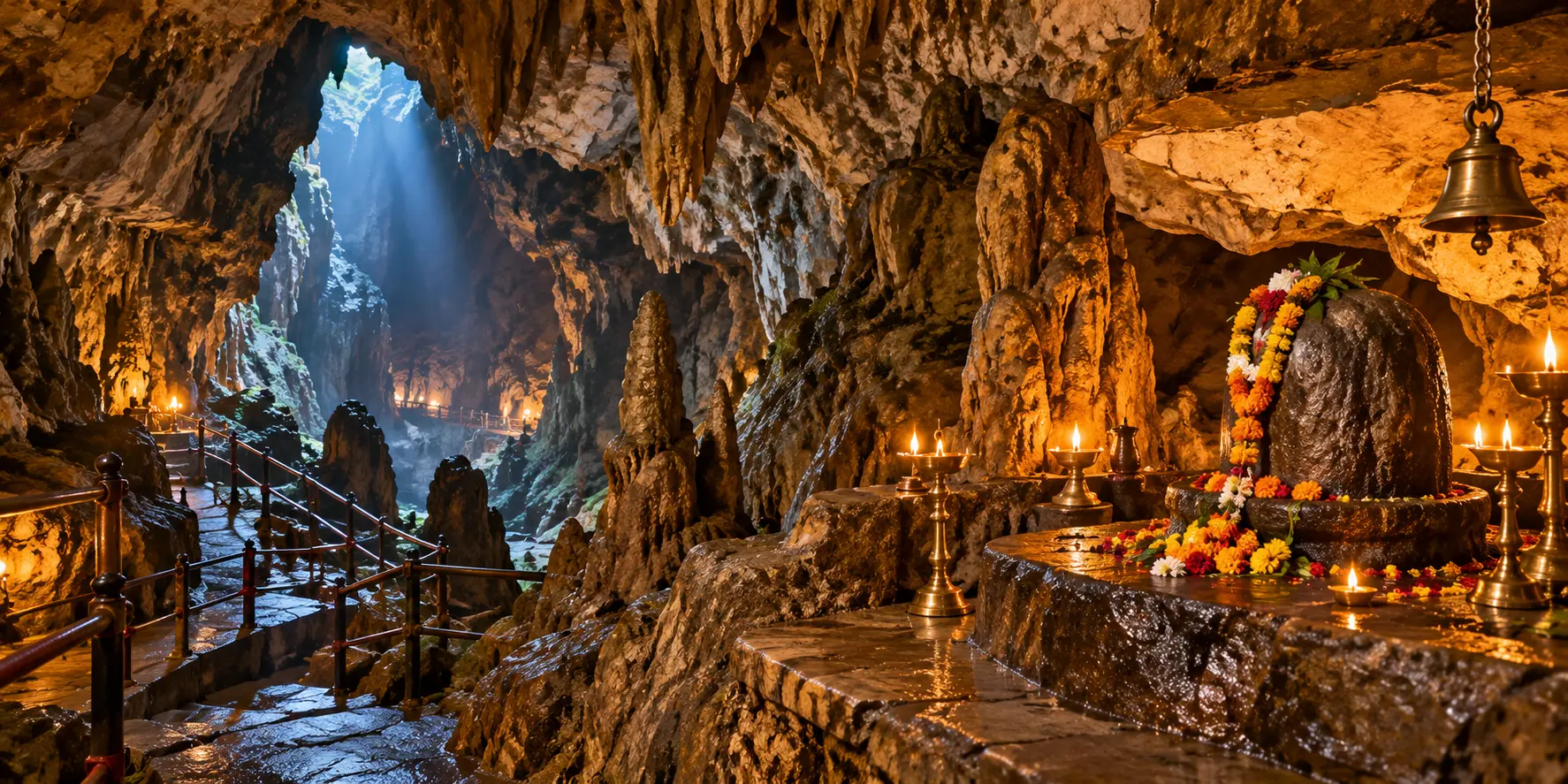
The experience is different from visiting a regular temple. You walk through a narrow entrance, hold onto chains, descend into the cave, and enter a world of natural rock formations, small chambers, and stories connected with Hindu mythology.
If you are planning a visit, here is everything you should know before going.
Where Is Patal Bhuvaneshwar?
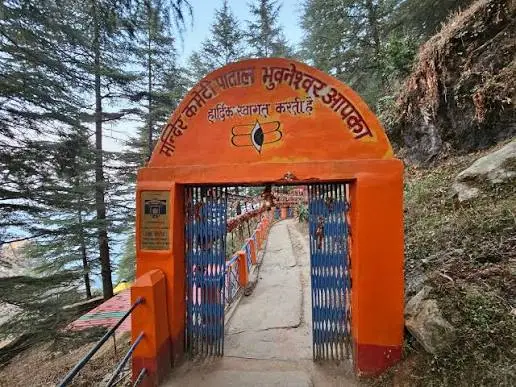
Patal Bhuvaneshwar is located in Bhubneshwar village in Pithoragarh district of Uttarakhand, in the Kumaon region.
The cave is about 14 km from Gangolihat, around 20 km from Berinag and roughly 91 km from Pithoragarh town. It sits at an altitude of approximately 1,350 metres above sea level.
The road to the cave passes through the quiet hills of Kumaon, with forests, small villages and mountain views along the way.
| Detail | Information |
| Location | Bhubneshwar Village, Pithoragarh, Uttarakhand |
| District | Pithoragarh |
| Region | Kumaon |
| Nearest town | Gangolihat |
| Altitude | About 1,350 metres |
| Main deity | Lord Shiva |
| Type | Natural limestone cave temple |
What Is Patal Bhuvaneshwar?
Patal Bhuvaneshwar is an underground limestone cave temple where the main shrine lies inside a natural cave rather than in a traditional temple building.
The entrance is narrow, and the route takes you down into the cave through a series of steep steps. Chains are placed along parts of the passage to help visitors move safely.
The cave is commonly described as around 160 metres long and about 90 feet deep. Inside, there are several passages and chambers where water and limestone have created unusual natural formations.
Over time, many of these formations have become part of the religious traditions surrounding the cave. Devotees associate different shapes with Lord Shiva, Ganesha, Shesh Nag and other figures from Hindu mythology.
That combination of natural geology and faith is what makes Patal Bhuvaneshwar so different from most temples in Uttarakhand.
Why Is Patal Bhuvaneshwar Famous?
Patal Bhuvaneshwar is mainly known for its connection with Lord Shiva and the belief that many Hindu deities reside inside the cave.
A popular religious belief says that 33 crore deities are present here. For devotees, this makes the cave an important pilgrimage site.
Inside the cave, several natural formations are traditionally associated with:
- Lord Shiva
- Shivlings
- Lord Ganesha
- Shesh Nag
- Lord Vishnu
- Brahma
- Garuda
- Other Hindu deities and mythological figures
The formations themselves are natural. Their religious identities come from the traditions and stories associated with the cave.
Patal Bhuvaneshwar History and Legends
Patal Bhuvaneshwar has many stories connected with Hindu mythology, and these traditions are still an important part of the cave’s identity.
According to one popular legend, King Rituparna of the Surya dynasty discovered the cave during the Treta Yuga. The story says that Shesh Nag guided him inside. The cave is also associated with the Skanda Purana, particularly its Manas Khand tradition.
Another belief connects Patal Bhuvaneshwar with the Pandavas and Draupadi, who are said to have visited the cave during their journey through the Himalayas. Adi Shankaracharya is also traditionally associated with the cave.
Inside, several natural rock formations are linked by local tradition with Hindu deities, including Lord Ganesha, Goddess Kali and a Swayambhu Shivalinga. There is also a belief that the cave has an underground connection with Mount Kailash.
These are religious traditions and legends passed down through generations, rather than independently verified historical events, but they remain an important part of the spiritual significance of Patal Bhuvaneshwar.
What Can You See Inside Patal Bhuvaneshwar Cave?
The most interesting part of Patal Bhuvaneshwar begins once you go underground. Inside the cave, you will see natural limestone formations that devotees associate with different Hindu gods and mythological figures.
1. Lord Shiva’s Jatas
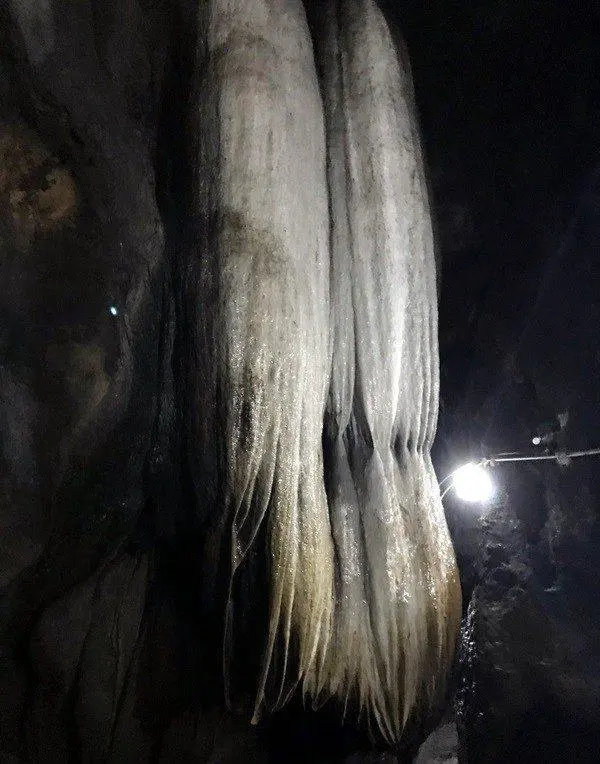
Some large formations hanging from the cave roof are traditionally believed to represent Lord Shiva’s jatas, or matted hair. These are natural formations created over a long period by water and mineral deposits.
2. Shesh Nag
A rock formation inside the cave is associated with Shesh Nag, the mythical serpent linked with Lord Vishnu. Local traditions give this formation an important place in the stories of Patal Bhuvaneshwar.
3. Lord Ganesha
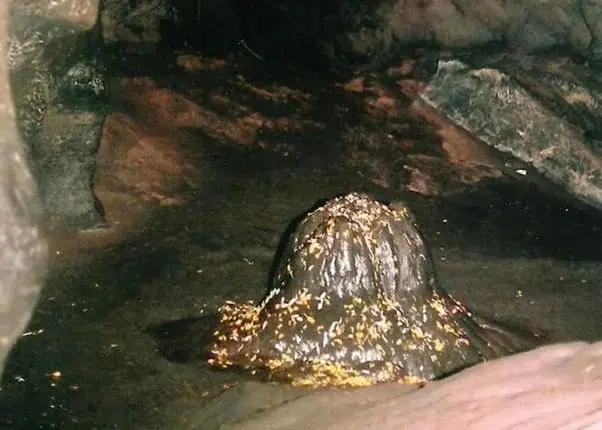
You will also see a natural formation associated with Lord Ganesha. It is traditionally described as his severed head and is one of the formations visitors are often shown inside the cave.
4. Airavat’s Feet
Some formations on the cave roof are traditionally associated with the feet of Airavat, the divine elephant of Lord Indra.
5. Kali’s Tongue
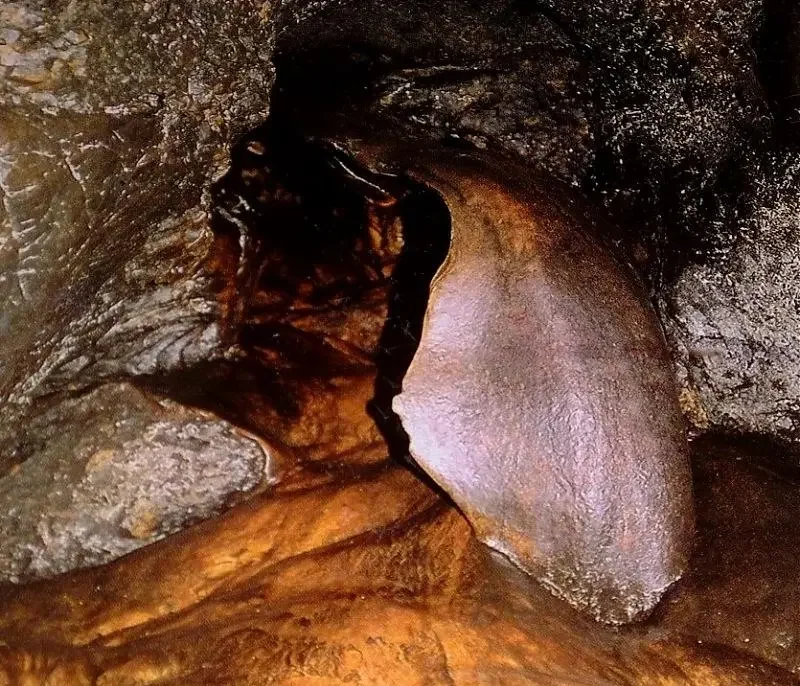
Another formation is believed to represent the tongue of Goddess Kali. Like the other shapes inside the cave, this is a natural rock formation that has a religious interpretation.
6. Swayambhu Shivling
One of the important sights inside the cave is the Swayambhu Shivling. Water continuously drips from the cave roof onto it, making it an important spot for devotees.
7. Char Dham-Related Formations
Some natural formations inside the cave are also associated with important pilgrimage sites, including Kedarnath, Badrinath and Amarnath. These are part of the religious traditions and stories connected with the cave.
What Is the Cave Walk Like?
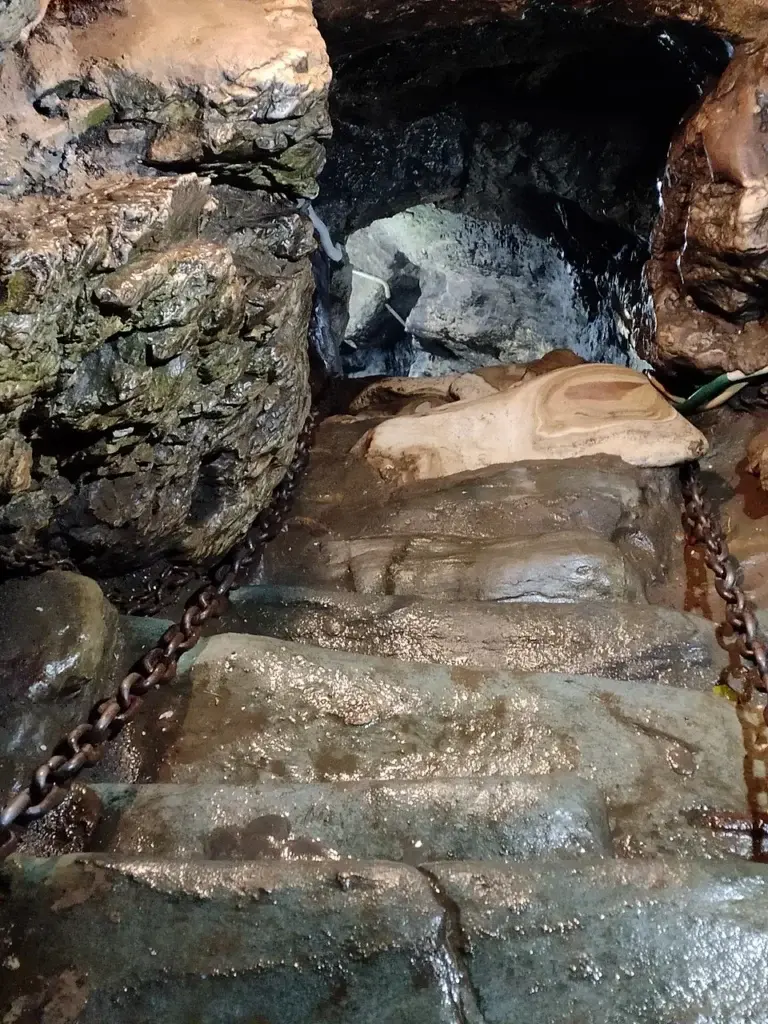
Getting inside the cave is an experience in itself. You descend around 82 steep steps through the narrow passage, with chains fixed along parts of the route to help with support.
The cave is dark, cool and damp, and some sections are quite narrow. Take your time, especially while going down or coming back up.
Photography may be restricted inside the shrine, so follow the instructions given at the entrance.
The Four Doors of Patal Bhuvaneshwar
One of the most interesting legends connected with Patal Bhuvaneshwar is the story of its four doors. They are traditionally known as:
- Paap Dwar: The Door of Sin
- Ran Dwar: The Door of War
- Dharam Dwar: The Door of Righteousness
- Moksha Dwar: The Door of Liberation
According to the traditional belief, Paap Dwar was closed after the death of Ravana, while Ran Dwar was closed after the Mahabharata war. Today, only Dharam Dwar and Moksha Dwar are said to remain open.
These four doors are part of the mythology and religious stories associated with the cave. Local guides may also explain their meaning during the visit.
What Is the Cave Visit Like?
The cave visit is quite different from visiting a normal temple.
You first reach the narrow entrance and then start descending into the cave. The steps can be steep, and you may need to hold the chains placed along the route.
As you go deeper, the outside light gradually disappears and the temperature becomes cooler.
Some sections are narrow enough that you need to move slowly and carefully. There are also uneven surfaces, so rushing is not a good idea.
The cave is not very difficult for a reasonably mobile visitor, but it is also not an easy, flat tourist attraction.
If you are uncomfortable in confined spaces or have difficulty managing steep steps, keep this in mind before entering.
A local guide can make the experience much better because the cave formations and their associated stories are not always easy to understand on your own.
How Long Does a Patal Bhuvaneshwar Visit Take?
Keep around 1 to 1.5 hours for the cave visit. This includes the descent, time inside the cave and the climb back up.
You may need extra time for tickets, waiting for your group and walking from the parking area. During busy days, the wait can be longer.
Wear shoes with a good grip, as the steps are steep and some sections can be slippery
Patal Bhuvaneshwar Timings
The commonly followed timings are:
| Season | Timings |
| April to September | Around 8:00 AM to 6:00 PM |
| October to March | Around 9:00 AM to 5:00 PM |
Timings can change because of weather, local arrangements or other conditions.
It is better to reach well before closing time, especially if you are travelling from another town.
During heavy monsoon weather, check the local situation before leaving because road conditions can change quickly.
Patal Bhuvaneshwar Entry Fee
The entry fee is generally nominal, but the amount can change over time.
Older visitor information has mentioned charges such as ₹20 for adults and ₹10 for children, along with a separate guide fee. However, these figures should not be treated as a guaranteed current price.
It is better to carry cash and confirm the current entry and guide charges at the entrance when you visit.
Is a Guide Available at Patal Bhuvaneshwar?
Yes, local guides are available at Patal Bhuvaneshwar and can accompany visitors inside the cave.
A guide can point out the natural rock formations and explain the stories connected with Shiva, Ganesha, Shesh Nag and other Hindu deities.
Are Phones and Cameras Allowed Inside?
Phones, cameras and bags are not allowed inside the cave. You need to leave them outside before entering.
Photography and videography are also not permitted inside the cave, so it is better to keep your belongings safely outside and enjoy the visit without worrying about taking pictures.
How to Reach Patal Bhuvaneshwar
Patal Bhuvaneshwar is mainly reached by road. Gangolihat is about 14 km away, Berinag around 20 km, and Pithoragarh roughly 91 km away. You can drive your own vehicle or take a taxi from these towns.
By Train
Tanakpur Railway Station is the nearest railhead listed by the Kumaon Mandal website, about 164 km away. Kathgodam is another option, but it is farther at around 270 km. From either station, you need to continue by road.
By Air
Naini Saini Airport in Pithoragarh is around 90 km away, although flight options can be limited. Pantnagar Airport is another option at about 271 km. The rest of the journey has to be completed by road.
The motorable road ends about 500 metres from the cave entrance, so you need to walk the remaining distance before entering the cave.
Best Time to Visit Patal Bhuvaneshwar
The best time to visit Patal Bhuvaneshwar is generally March to June and September to November. The weather is more comfortable and road conditions are usually better for travelling through the hills.
- March to June: Pleasant weather and comfortable daytime temperatures make this a good time for a cave visit and sightseeing around the area.
- September to November: The weather is cooler and the skies are generally clearer after the monsoon.
- July and August: can bring heavy rain, which may make hill roads slippery and increase the risk of landslides. If you plan to visit during the monsoon, check the local weather and road conditions first.
- December to February: can be quite cold, especially in the mornings and evenings. If you are comfortable with the cold, you can still visit during these months.
What to Wear for Patal Bhuvaneshwar?
Comfortable clothing and good footwear are the most important things.
Wear:
- Comfortable walking shoes
- Shoes with good grip
- Clothes that allow easy movement
- A light jacket during cooler months
Avoid smooth-soled slippers or footwear that can become slippery.
You may need to bend, step carefully and hold the chains while moving through parts of the cave.
What Should You Carry?
You do not need a large bag for the cave.
It is useful to carry:
- Drinking water
- Some cash
- A light jacket
- Necessary medicines
- Basic personal items
- Small snacks for the road
Avoid carrying large backpacks or unnecessary luggage into the cave because the passages can be narrow.
Things to Know Before Visiting Patal Bhuvaneshwar
A few simple things can make your visit easier.
Start Early
If you are coming from another town, leave early. Mountain roads can take longer than expected.
Wear Good Shoes
The cave has steep and uneven sections, so proper grip is important.
Keep Your Hands Free
Large bags can become uncomfortable in narrow passages.
Carry Cash
Keep some cash with you for entry, guides, food and local transport.
Follow the Route
Do not try to enter restricted sections or move away from the designated path.
Listen to the Guide
The guide can explain the formations and stories that you may otherwise miss.
Do Not Touch the Cave Formations
Limestone formations take a very long time to develop. Avoid touching, breaking or damaging them.
Respect the Temple
Patal Bhuvaneshwar is a religious place, so maintain cleanliness and follow local customs.
Check the Weather
This is especially important during the monsoon when road conditions can change quickly.
Is Patal Bhuvaneshwar Safe for Visitors?
For visitors who are comfortable with narrow passages and steps, the cave can be visited with normal care.
However, it is important to remember that this is a natural cave, not a modern tourist attraction designed for easy access.
The entrance is narrow, some sections are steep and the floor can be uneven.
Take your time, use the chains where provided and follow the instructions of the people managing the cave visit.
Places to Visit Near Patal Bhuvaneshwar
You can easily combine Patal Bhuvaneshwar with other places in Kumaon.
Gangolihat: 13 km
Gangolihat is the nearest major town and an important religious centre in the region. The Haat Kalika Temple is one of its best-known attractions.
Kotmanya: 25 km
Kotmanya is a quiet area known for its natural surroundings and the Musk Deer Research Centre.
Berinag: 35 km
Berinag is a quiet hill town known for its mountain surroundings, local temples and tea gardens. It is also a convenient stop when travelling towards Chaukori.
Chaukori: 38 km
Chaukori is known for its peaceful surroundings, tea gardens and beautiful Himalayan views. It can be a good place to stay if you want to spend more time in the hills.
Pithoragarh: 91 km
Pithoragarh is an important town in the region and a useful stop if you are exploring other parts of the district.
Jageshwar Dham: 100 km
Jageshwar Dham is a sacred group of ancient Shiva temples surrounded by deodar forests. You can add it to your trip if your route takes you towards Almora.
Where to Stay Near Patal Bhuvaneshwar
Basic stays are available around Patal Bhuvaneshwar and Gangolihat. For more options, you can stay in Berinag or Chaukori.
Gangolihat is convenient for a quick cave visit, while Chaukori works better if you want to spend more time in the hills. During busy seasons, booking ahead is a good idea.
Food Near Patal Bhuvaneshwar
Food options near the cave are limited. You can find basic meals, tea and snacks in nearby towns, but for more choices, Gangolihat, Berinag or your hotel are better options.
If you have specific food preferences, carrying a few snacks is a good idea.
A Simple 2-Day Patal Bhuvaneshwar Itinerary
Day 1
Travel to Gangolihat or Berinag, check in and explore the nearby area if you have time.
Day 2
Visit Patal Bhuvaneshwar Cave in the morning. Keep around 1–1.5 hours for the visit, then have lunch and continue towards Chaukori or your next destination.
Patal Bhuvaneshwar Travel Tips
- Wear shoes with a good grip.
- Carry water and some cash.
- Avoid taking large bags inside the cave.
- Check timings and road conditions before leaving.
- Take your time on the steep sections.
- Follow the instructions given at the temple.
- Respect the religious site and do not touch the natural formations.
- Avoid reaching close to closing time.
Final Thoughts
Patal Bhuvaneshwar is not a usual temple visit. You walk down into a dark, narrow cave filled with natural rock formations and stories connected with Hindu mythology.
The visit can be a special experience for both devotees and travellers, but be prepared for steep steps, narrow passages and uneven surfaces.
If you are travelling around Gangolihat, Berinag or Chaukori, Patal Bhuvaneshwar is worth adding to your trip. Just take your time inside and respect the place and its traditions.
Frequently Asked Questions
Older children who are comfortable with stairs and narrow spaces can visit. With younger children, parents should keep them close, especially around the steep sections.
It depends on their mobility. The cave has steep steps, narrow passages and uneven sections, so it can be difficult for people who have trouble walking or climbing stairs.
The cave may not be comfortable for people who are uncomfortable in dark or enclosed spaces. Some sections are narrow, so consider this before entering.
It is famous for its underground limestone cave temple dedicated to Lord Shiva and the natural rock formations associated with Hindu mythology.
The road does not require a long trek, but the cave has a narrow entrance, steep steps and uneven sections. Visitors need to move carefully.
It can be visited when conditions are suitable, but heavy rain can affect mountain roads and access. Check local weather and road conditions before travelling.
People are also reading: