
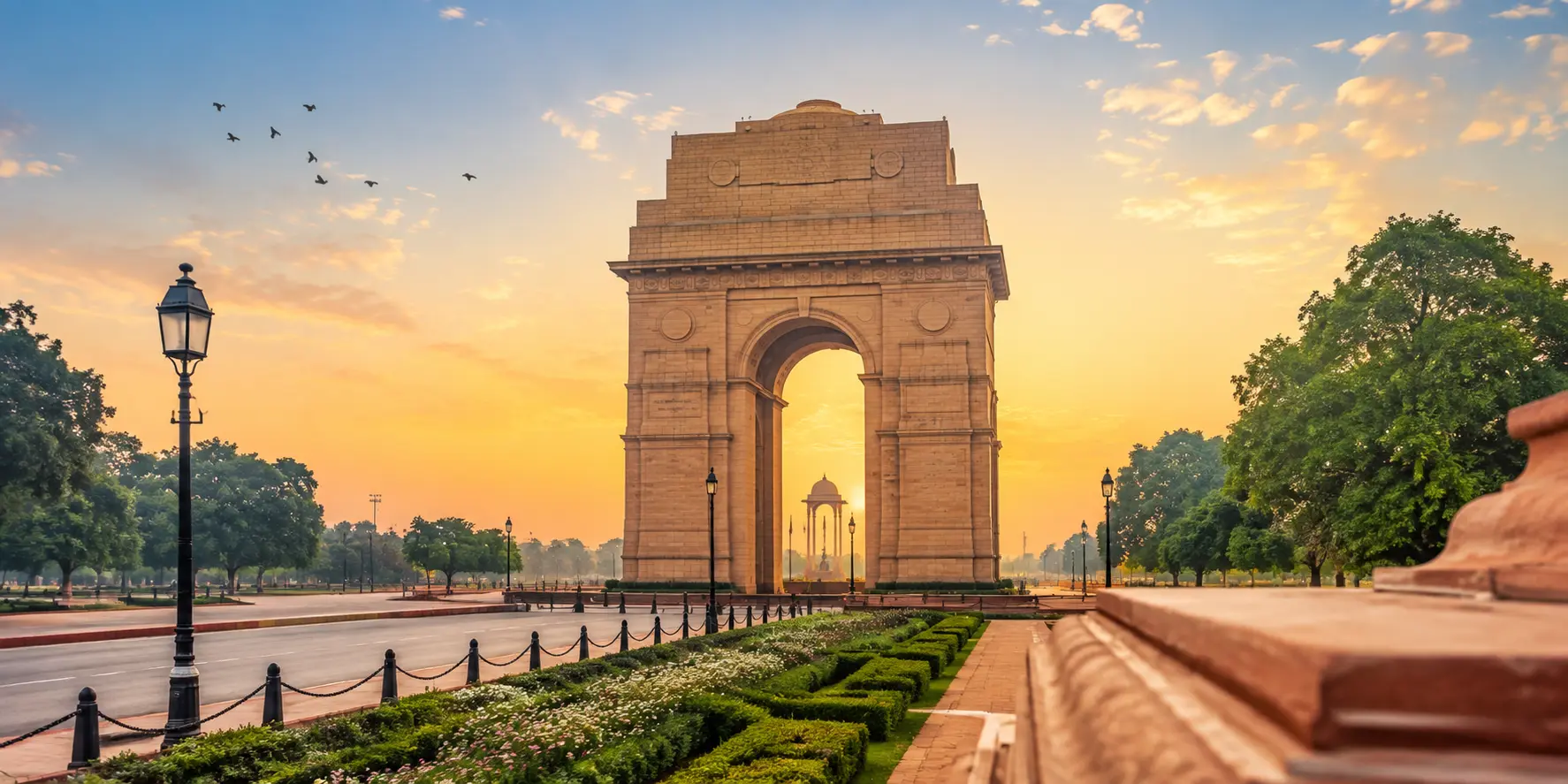
India Gate is one of the most recognizable landmarks in New Delhi and an important symbol of remembrance in India. The 42-metre-high monument stands at the eastern end of Kartavya Path and honors Indian soldiers who lost their lives in conflicts fought under British command, particularly during the First World War and the Third Anglo-Afghan War. Designed by British architect Sir Edwin Lutyens, India Gate combines classical architectural elements with Indian materials and has become an important part of Delhi’s cultural and public landscape.
Today, visitors come here to admire the monument, walk through the surrounding lawns, enjoy the evening atmosphere and visit the nearby National War Memorial. Whether you are planning a short sightseeing stop or a longer Delhi tour, this India Gate guide covers its history, architecture, location, timings, entry fee, transportation options, nearby attractions and practical travel tips.
India Gate Highlights
- Location: Kartavya Path, New Delhi, Delhi
- Type: War memorial
- Height: 42 metres (138 feet)
- Architect: Sir Edwin Lutyens
- Foundation Stone: February 10, 1921
- Completed: 1931
- Original Name: All India War Memorial
- Built For: Soldiers of the British Indian Army who died in the First World War and the Third Anglo Afghan War
- Material: Red and pale sandstone with granite
- Names Inscribed: More than 13,000 servicemen
- Timings: Open 24 hours a day
- Entry Fee: Free
- Nearest Metro: Central Secretariat
- Nearby Landmark: National War Memorial
- Best Time to Visit: October to March and evening hours
What Is India Gate?
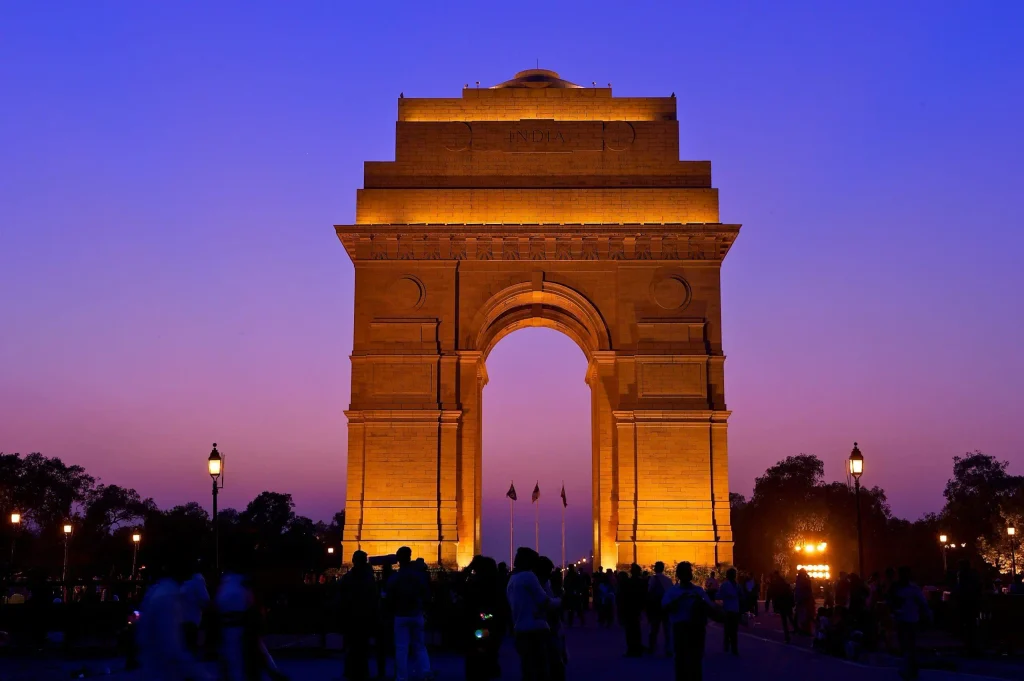
India Gate is a monumental war memorial located in the heart of New Delhi.It was originally called the All India War Memorial, and the British built it to commemorate soldiers of the British Indian Army who died during the First World War and the Third Anglo-Afghan War. The monument forms an important part of New Delhi’s ceremonial landscape and stands at the eastern end of Kartavya Path, the avenue formerly known as Rajpath. Its prominent location and imposing arch have made India Gate one of the most photographed landmarks in the capital.
The monument is about 42 metres tall and features inscriptions commemorating soldiers who lost their lives in the conflicts for which the memorial was commissioned. The names of more than 13,000 servicemen are inscribed on the monument. Today, India Gate is not only a memorial but also a popular public space. Its surrounding lawns attract families, tourists and local visitors, particularly during the cooler months and evening hours.
India Gate History
The history of India Gate dates back to the period when New Delhi was being developed as the capital of British India. The foundation stone of the memorial was laid on February 10, 1921, by the Duke of Connaught. The monument took about a decade to complete and was formally inaugurated on February 12, 1931, by Lord Irwin, who was then Viceroy of India. Originally called the All India War Memorial, the structure was intended to commemorate soldiers of the British Indian Army who died in the First World War and the Third Anglo Afghan War.
Why Was India Gate Built?
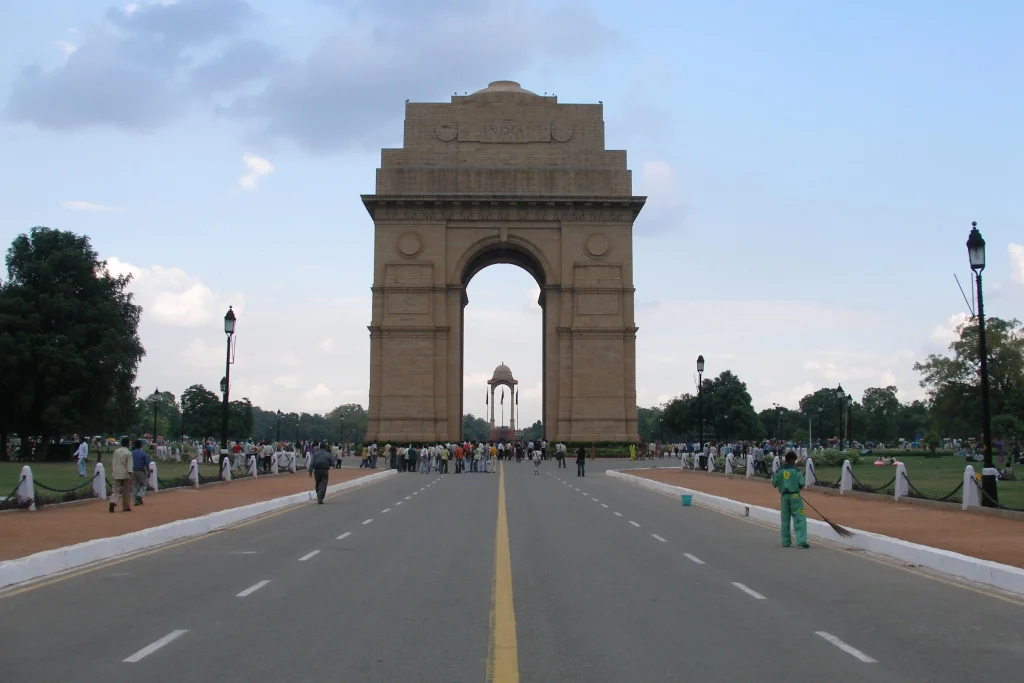
India Gate was built as a memorial to soldiers of the British Indian Army who lost their lives during the the First World War (1914-1918) and the Third Anglo Afghan War (1919). Historical sources commonly associate the memorial with approximately 84,000 Indian soldiers who served and died during the First World War, while the names of more than 13,000 servicemen connected with the commemorated campaigns are inscribed on the monument. The memorial therefore represents a significant chapter in India’s military history and the role played by Indian soldiers in conflicts outside the Indian subcontinent.
Who Designed India Gate?
India Gate was designed by Sir Edwin Lutyens, one of the most influential architects involved in the planning of New Delhi. Lutyens designed several important buildings and elements of the new capital. His design for India Gate drew on the tradition of monumental triumphal arches found in European architecture, with the Arc de Triomphe in Paris often cited as an important influence. At the same time, the monument was constructed using materials and design elements suited to its setting in New Delhi, helping it become an integral part of the city’s architectural identity.
Historical Significance of India Gate
India Gate has remained an important national landmark because of its connection with India’s military history and its prominent position in the capital. The monument also became closely associated with national ceremonies and public events held along the ceremonial avenue. The area around India Gate and Kartavya Path is particularly significant during national celebrations, including Republic Day.
The memorial’s meaning also evolved after India’s independence. In 1972, the Amar Jawan Jyoti, or Flame of the Immortal Soldier, was established beneath the arch in memory of Indian soldiers who died in the 1971 India Pakistan War. In 2022, the Amar Jawan Jyoti was merged with the eternal flame at the newly established National War Memorial nearby. Visitors should therefore not expect the original Amar Jawan Jyoti flame to be burning beneath India Gate today.
Where Is India Gate Located?
India Gate is located at the eastern end of Kartavya Path in New Delhi, Delhi. The monument stands within the central administrative and ceremonial district of the capital. Its location makes it convenient to combine with several other major Delhi attractions, including the National War Memorial, Rashtrapati Bhavan and other landmarks around Central Delhi. The India Gate complex is also surrounded by broad roads and landscaped public areas, making the monument easy to recognize when approaching from central Delhi.
India Gate Architecture
India Gate is an imposing example of monumental architecture and stands approximately 42 metres high. Sir Edwin Lutyens designed the structure with strong classical influences. Its large central arch, symmetrical proportions and monumental scale give it a formal appearance similar to other major war memorials around the world. The structure was built primarily with red and pale sandstone and granite, materials that complement the architectural character of New Delhi.
One of the most important features is the inscription of soldiers’ names on the monument. These inscriptions provide a direct connection between the architectural structure and the people being remembered. The combination of its large arch, stone construction, inscriptions and carefully planned setting gives India Gate its distinctive appearance and makes it an important example of New Delhi’s monumental architecture.
India Gate and National War Memorial
The National War Memorial is located immediately near India Gate within the Central Vista area. Although the two monuments are located close to each other, they commemorate different aspects of India’s military history. India Gate primarily commemorates soldiers associated with the First World War and the Third Anglo Afghan War during the British period. The National War Memorial, on the other hand, honors members of the Indian Armed Forces who died in conflicts and operations after independence. The National War Memorial includes several concentric memorial structures, an obelisk and an eternal flame. The Amar Jawan Jyoti is now part of the National War Memorial instead of remaining as a separate flame beneath India Gate.
Note: If you visit India Gate, allow extra time to visit the National War Memorial, as you can cover both sites in the same trip.
India Gate Timings
India Gate does not operate like a conventional monument with a ticketed entrance gate. The surrounding public area is generally accessible throughout the day, making it possible to visit at different times. For a comfortable sightseeing experience, however, early morning and evening are usually better than the middle of the day, particularly during Delhi’s hotter months. The evening is especially popular because the monument is illuminated and the surrounding area becomes more lively.
Recommended visiting periods:
- Early morning: around 5:00 AM to 7:00 AM for a quieter atmosphere
- Evening: around 5:00 PM to 9:30 PM for cooler weather and illumination
- Winter months: October to March for more comfortable outdoor conditions
Visitors should note that access around the Central Vista area can be affected by security restrictions, national events, ceremonies or temporary traffic arrangements.
India Gate Entry Fee
There is no general entry ticket for India Gate. Visitors can view the monument and use the surrounding public areas without paying an admission fee.
| Visitor Information | Details |
| Entry fee | Free |
| Ticket required | No general entry ticket |
| Photography | No general monument admission charge |
| Best for | Families, tourists, photographers and short sightseeing visits |
Although visiting India Gate itself is free, nearby attractions such as museums or memorial facilities may have their own operating hours, security procedures or entry requirements.
How to Reach India Gate?
India Gate is centrally located in New Delhi and can be reached conveniently by Delhi Metro, taxi, car, auto rickshaw, e rickshaw and bus.
1. By Metro
The Delhi Metro is one of the most convenient ways to reach India Gate, especially when Delhi traffic is heavy. Central Secretariat Metro Station, served by the Yellow Line and Violet Line, is one of the main metro stations for India Gate. From there, India Gate is about a kilometre away and can be reached by walking, e rickshaw or auto rickshaw, depending on the exit and current road access.
2. By Car or Taxi
You can reach India Gate by private car, taxi, auto rickshaw, Ola or Uber via the Central Delhi road network. Vehicles can generally approach the India Gate C Hexagon area, although traffic diversions and security restrictions may apply during national events and public celebrations.
3. From Delhi Airport
Indira Gandhi International Airport (DEL) is approximately 15 km from India Gate. A taxi, Uber or Ola can usually take around 30 to 45 minutes in moderate traffic, although journey times can increase considerably during peak hours. You can also take the Delhi Metro Airport Express Line from the airport and connect to the city metro network for Central Delhi.
4. By Bus
Delhi Transport Corporation (DTC) buses connect different parts of Delhi with Central Delhi. Visitors can look for buses serving areas such as Central Secretariat, Kartavya Path and India Gate. Since bus routes and stops may change, check the latest DTC route information before travelling.
Best Time to Visit India Gate
| Time | Best For | Why Visit |
| Early Morning (6:00 AM – 8:00 AM) | Quiet visits, jogging and photography | Fewer crowds, peaceful surroundings and better conditions for outdoor activities. |
| Evening (7:00 PM – 9:30 PM) | Illuminated views and sightseeing | The monument looks attractive after sunset, with a lively evening atmosphere. |
Note: Avoid visiting during summer afternoons (April to June), as high temperatures can make walking and outdoor activities uncomfortable.
Places to Visit Near India Gate
India Gate is surrounded by several important attractions, making it easy to include multiple landmarks in one Delhi sightseeing itinerary.
1. National War Memorial
The National War Memorial is immediately adjacent to the India Gate area and is one of the most relevant places to visit after seeing the monument. It honors Indian Armed Forces personnel who died in post independence conflicts and military operations. The memorial’s design includes concentric structures, an obelisk and an eternal flame.
2. Rashtrapati Bhavan
Rashtrapati Bhavan, the official residence of the President of India, stands at the opposite end of Kartavya Path. The grand building and surrounding Central Vista area are important parts of New Delhi’s architectural and political heritage. Visitors should check current access and visiting arrangements before planning an interior visit.
3. Lodhi Garden
Lodhi Garden is another popular destination within Central Delhi. The landscaped park combines greenery with historic tombs and architectural remains from the Lodhi period. It is a good option if you want to combine monument sightseeing with a peaceful walk in a historic garden.
India Gate Travel Tips
A little planning can make your visit more comfortable, particularly if you are travelling with children or visiting several attractions in the same day.
- Wear comfortable walking shoes because the India Gate area and nearby memorials involve walking.
- Carry drinking water, particularly during warmer months.
- Visit early morning or evening if you want to avoid the strongest daytime heat.
- Use the Delhi Metro when possible to reduce the difficulty of travelling through Central Delhi traffic.
- Check for temporary road closures or security restrictions during national events and major ceremonies.
- Keep an eye on children around roads and crowded public areas.
- If you plan to visit the National War Memorial, check its latest visiting hours separately because it operates differently from the open public area around India Gate.
- Avoid littering and follow security instructions around the memorials.
Conclusion
India Gate is one of Delhi’s most iconic landmarks and an important symbol of remembrance and military history. Its impressive architecture, central location, and free entry make it a popular attraction for visitors. A visit during the cooler months or in the evening offers a more comfortable and enjoyable experience. You can also combine your visit with the nearby National War Memorial and other major attractions in Central Delhi.
Frequently Asked Questions
Yes, India Gate is generally accessible at night and is beautifully illuminated after sunset.
Around 30 to 60 minutes is enough to see India Gate and take photographs
Parking options are available nearby, but availability can vary due to traffic and security restrictions.
Yes. India Gate is a popular family friendly attraction with open lawns and plenty of space to walk around.
Central Secretariat is one of the main metro stations for reaching India Gate.
People are also reading
- Top Places to Visit in Amritsar
- Best Tourist Places to Visit in India
- Top Haunted Temples and Forts
- Mana Village Uttarakhand
- Kartik Swami Temple
- Clock Tower Dehradun

One thought on “India Gate: History, Timings, Entry Fee & Location Guide”