
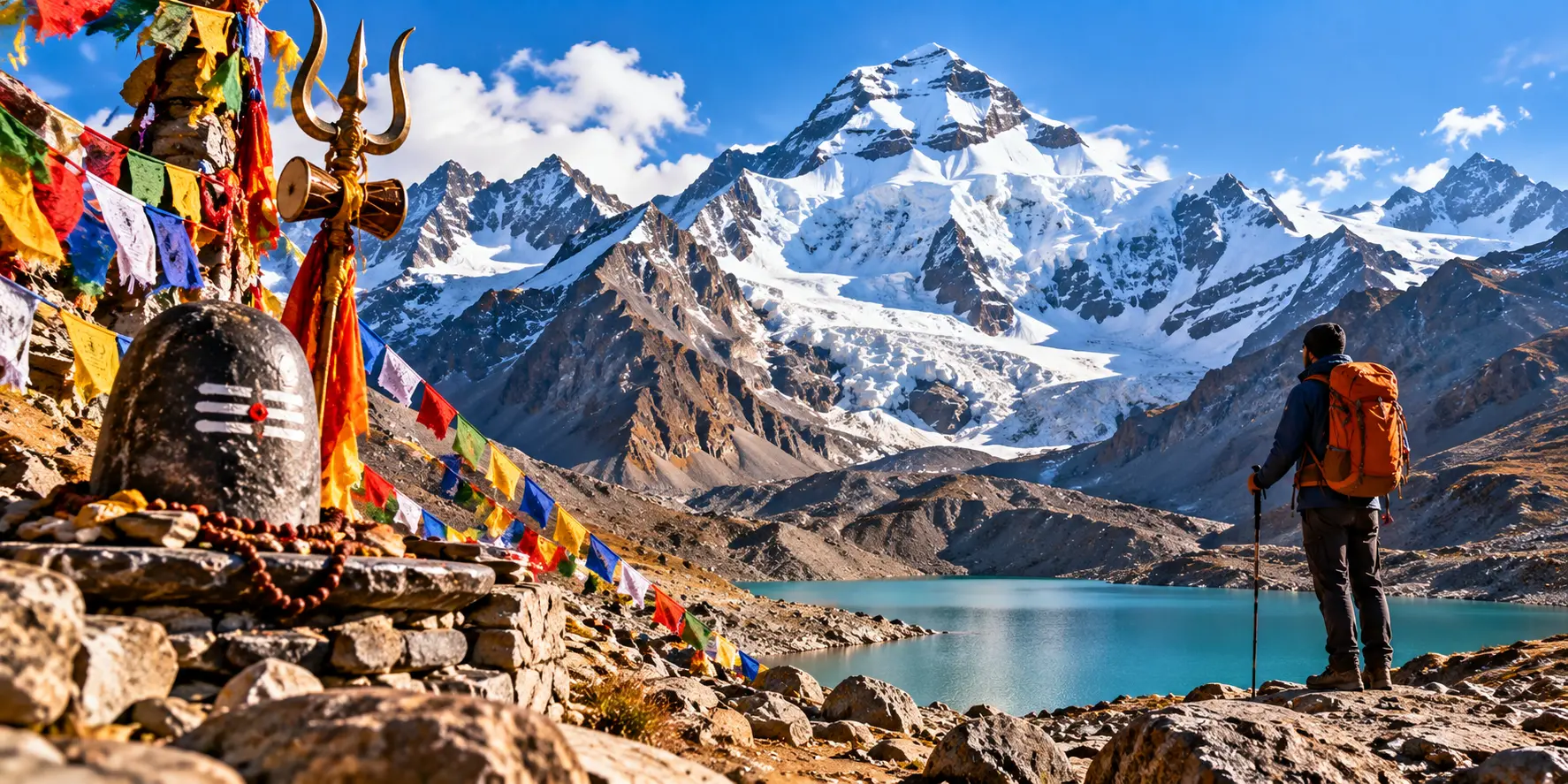
Adi Kailash is a sacred mountain in the Byas Valley of Uttarakhand’s Pithoragarh district, close to the India-China border. Also known as Chhota Kailash or Jonglingkong, it is associated with Lord Shiva and Goddess Parvati and attracts pilgrims seeking a spiritual journey in the Kumaon Himalayas.
Unlike the Kailash Mansarovar pilgrimage, which takes place in Tibet, the Adi Kailash Yatra remains within India. The journey includes remote Himalayan villages, high-altitude roads, mountain views and religious sites such as Parvati Sarovar.
The pilgrimage has grown in popularity. According to The New Indian Express’s September 2026 report, more than 52,000 pilgrims visited Adi Kailash and Om Parvat during the first phase of the 2026 season. However, the route remains sensitive to weather, road closures and permit restrictions.
This guide explains the Adi Kailash location, route, best time to visit, permit requirements, accommodation, preparation and other details to help you plan the journey.
Adi Kailash Yatra: Quick Facts
| Detail | Information |
| Location | Byas Valley, Pithoragarh district, Uttarakhand |
| Other names | Chhota Kailash, Jonglingkong |
| Main darshan area | Jolingkong |
| Mountain Height | Around 5,945 meters published figures vary |
| Jolingkong elevation | 4,300 to 4,600 meters (14,200 to 15,000 feet) |
| Nearby religious site | Parvati Sarovar |
| Other major destination | Om Parvat, near Nabhidhang |
| Main access town | Dharchula |
| Typical trip duration | Around 7–9 days from Kathgodam, depending on the itinerary |
| Common travel periods | May–June and September–October, subject to conditions |
| Permit | Inner Line Permit (ILP) |
The Pithoragarh district administration’s Adi Kailash information page provides official background on the mountain and nearby religious sites. Elevation figures differ between published sources, so the mountain’s summit height should not be confused with the elevation of the darshan area.
Spiritual Significance of Adi Kailash

Adi Kailash is revered in Hindu tradition and is commonly associated with Lord Shiva and Goddess Parvati. Many pilgrims regard it as a sacred counterpart to Mount Kailash in Tibet. It is also often described as one of the Panch Kailash, a group of sacred mountains associated with Shiva worship.
The official district tourism page describes Adi Kailash as an ancient holy place in the Kumaon Himalayas near the Indo-Tibetan border.
Parvati Sarovar
Parvati Sarovar is a sacred lake near the Adi Kailash temple area at Jolingkong. It is associated with Goddess Parvati and forms an important part of the pilgrimage for many visitors.
The lake’s appearance changes with the weather and season. Snow and ice can affect access, so visitors should follow local guidance rather than assume the lake will always be easy to reach.
Gauri Kund
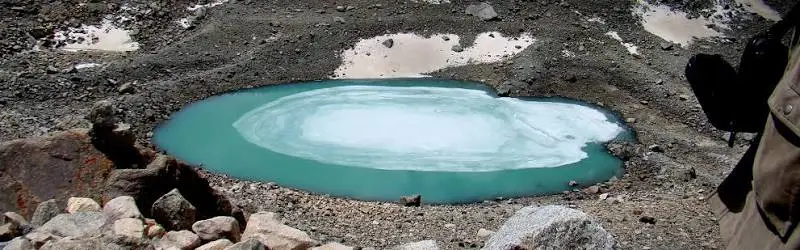
Gauri Kund is another religious site associated with Goddess Parvati. Its accessibility depends on the condition of the route and local arrangements.
Adi Kailash and Om Parvat Are Different Places
Adi Kailash and Om Parvat are often included in the same pilgrimage package, but they are separate destinations.
Adi Kailash is viewed from the Jolingkong area. Om Parvat is viewed from Nabhidhang and is known for a snow formation that resembles the sacred symbol ॐ when conditions allow a clear view.
The Pithoragarh district’s Chhota Kailash page provides route information for the region. When booking a trip, confirm that your itinerary includes both locations if you want to visit them.
Best Time to Visit Adi Kailash
May to June and September to October are common periods for the yatra. Actual travel conditions vary each year, and no month guarantees clear roads or uninterrupted access.
May and June
These months are popular for the pilgrimage. Snow may remain at higher elevations, while daytime conditions can be more manageable than during winter.
Carry warm clothing because temperatures can fall sharply after sunset, especially around Jolingkong and other high-altitude stops.
July and August
The monsoon brings a higher risk of landslides, heavy rain and road closures. In 2026, the pilgrimage was interrupted by monsoon conditions and damage to a bridge on the approach route, as reported by The New Indian Express.
Travellers should avoid relying on a fixed itinerary during this period and check whether permits are being issued before leaving home.
September and October
Post-monsoon travel can offer clear mountain views, but cold weather and fresh snowfall may affect access at higher elevations.
Permit restrictions can also occur for administrative or safety reasons. For example, a Jagran report published on October 8, 2026 reported that regular pilgrim permits would not be issued from October 19 to 26 because of an event in the region.
How to Reach Adi Kailash
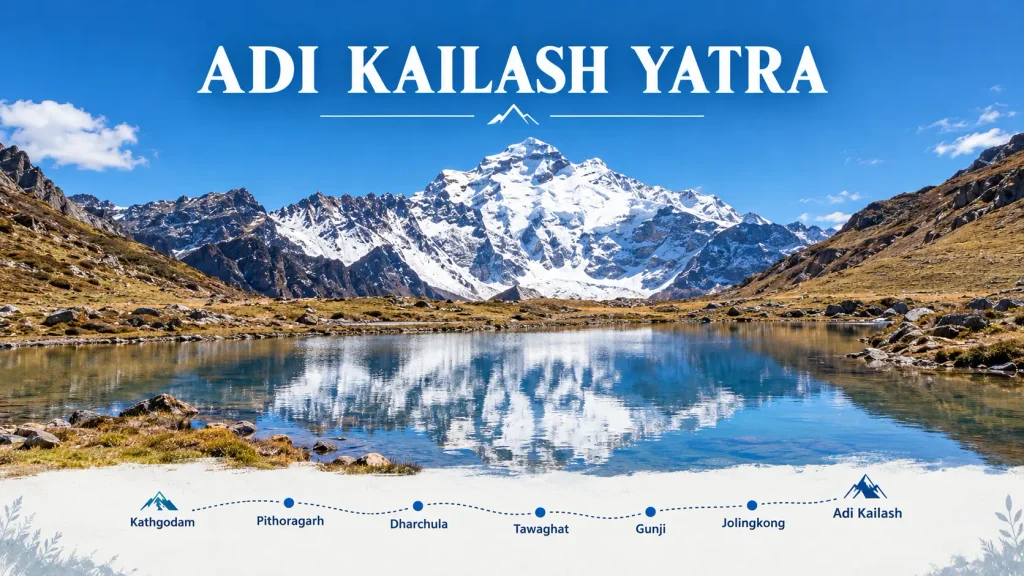
Dharchula is the main access town for the pilgrimage. From there, travellers continue into the Byas Valley using authorised transport and the permits required for the restricted border area.
Step 1: Reach Kathgodam or Tanakpur
Kathgodam and Tanakpur are railway access points for travellers coming from other parts of India. Choose your arrival station based on available trains and the route offered by your travel operator.
Pantnagar is another regional airport option, but you will still need to travel by road towards Pithoragarh and Dharchula.
Step 2: Travel to Dharchula
Dharchula is a common starting point for permit checks, transport arrangements and the journey into the upper valley.
Road travel times depend on your starting location, traffic, weather and road conditions. Allow sufficient time for the mountain journey rather than arranging a tight same-day connection.
Step 3: Enter the Byas Valley
After the required checks, the journey generally continues through the Tawaghat area towards settlements such as Gunji and Nabi. The precise route and overnight stops depend on road access and the itinerary.
The main destinations include:
- Gunji: An important stop for rest and acclimatisation.
- Nabhidhang: The viewing area for Om Parvat.
- Jolingkong: The main area for Adi Kailash darshan.
- Parvati Sarovar: A sacred lake near the Adi Kailash temple area.
The order of visits can change according to weather, road conditions and administrative restrictions.
Should You Book a Tour Package?
A tour package can simplify transport, accommodation, permit assistance and local coordination. It may be helpful for first-time visitors who are unfamiliar with the route.
Independent travel requires more preparation. Confirm transport availability, accommodation, permit rules and checkpoint requirements in advance. Do not assume an ordinary taxi or private vehicle can proceed through every restricted area without the necessary authorization.
Permits Required for Adi Kailash Yatra
The Adi Kailash Yatra passes through a restricted border region in Pithoragarh district, Uttarakhand. Travellers need an Inner Line Permit (ILP) before entering the designated area.
Documents Required
Keep the following documents ready before applying:
- A valid government-issued photo ID.
- Recent passport-size photographs.
- A medical fitness certificate from a registered doctor.
- An application form and any additional documents required by the local administration.
An affidavit or police verification may also be required, depending on the current instructions. Confirm the exact checklist before submitting your application.
Where to Apply for the Permit
Contact the local administration in Dharchula or Pithoragarh to confirm the current permit-issuing office, application procedure and medical examination requirements. Permit facilities and procedures may change during the pilgrimage season.
Apply well before your planned departure and allow time for document verification. Keep your original ID, permit and copies available for checks along the route.
For current information, visit the Pithoragarh district administration website and the official Yatra status page.
Permit approval does not guarantee that the route will remain open. Weather conditions, road closures and administrative restrictions may delay or suspend the yatra. Confirm your travel dates and permit validity before leaving.
Fitness and Acclimatisation
Although many itineraries use vehicles for much of the journey, the Adi Kailash Yatra can still be physically demanding. Long drives on rough roads, cold conditions, short walks and high altitude can affect travellers who are not accustomed to the mountains.
Jolingkong is 4,300 to 4,600 meters above sea level, according to the Pithoragarh district’s Chhota Kailash page. At this elevation, altitude illness is a genuine concern.
Prepare Before Travelling
Build up your stamina with regular walking, stair climbing and moderate cardiovascular exercise in the weeks before the trip. Increase your activity gradually.
If you have a heart or lung condition, high blood pressure or another significant medical concern, consult a doctor before travelling to high altitude.
Take Acclimatisation Seriously
Follow the planned rest periods, particularly around Gunji and other upper-valley stops. Do not rush to higher elevations to save time.
Headache, nausea, dizziness and unusual fatigue can be signs of altitude illness. Tell your guide or travel companion if symptoms develop.
Confusion, difficulty walking or breathlessness at rest requires urgent medical attention. Follow local medical advice and descend when safe. Do not self-prescribe altitude medication.
What to Pack for Adi Kailash Yatra
Weather can change quickly in the upper Himalayas. Pack for cold, wind and rain even if conditions are mild at the start of your trip.
Clothing
- Thermal base layers.
- Fleece or woollen mid-layers.
- A warm insulated jacket.
- Waterproof and windproof outerwear.
- Comfortable trekking trousers.
- Warm socks, gloves and a woollen cap.
- Sturdy shoes with good grip that you have already worn in.
Personal Essentials
- Sunglasses and high-SPF sunscreen.
- Lip balm and moisturiser.
- A small daypack and rain cover.
- Reusable water bottle.
- Personal medicines and a basic first-aid kit.
- Snacks that travel well.
- Headlamp or torch.
- Power bank and charging cables.
- Cash for places where digital payments may not work.
- Copies of identity documents, permits and emergency contacts.
Keep important medicines, documents and warm clothing in your daypack. Ask your operator about bedding before deciding whether to carry a sleeping bag.
Sample 7-Day Adi Kailash Yatra Itinerary
This 7-day itinerary focuses only on Adi Kailash and its nearby religious sites. The actual schedule may vary depending on road conditions, permits, weather and local arrangements.
Day 1: Kathgodam to Dharchula
Begin your journey from Kathgodam and travel towards Dharchula, with an overnight stop depending on your transport schedule.
Day 2: Dharchula and Permit Verification
Complete the required permit checks, confirm your transport arrangements and prepare for the journey into the Byas Valley.
Day 3: Dharchula to Gunji
Travel towards Gunji through the mountain roads of the Byas Valley. Rest after arrival and follow your guide’s advice on acclimatisation.
Day 4: Acclimatisation at Gunji
Spend the day resting and adjusting to the altitude. Follow local guidance before undertaking any additional walks.
Day 5: Gunji to Jolingkong
Travel towards Jolingkong, the main area for Adi Kailash darshan. The journey depends on road access and current local conditions.
Day 6: Adi Kailash Darshan and Parvati Sarovar
Visit the Adi Kailash viewing area and Parvati Sarovar if accessible. Follow local instructions and allow enough time for the return to your overnight accommodation.
Day 7: Return Journey
Begin your return towards Dharchula and continue to your onward destination according to your transport schedule.
Important: This is a sample itinerary, not a guaranteed schedule. Confirm the current route, overnight stops and accessibility of Jolingkong before travelling. Keep an extra day available in case weather or road conditions cause delays.
Accommodation and Food Along the Route
Accommodation becomes more basic as you travel farther into the Byas Valley. Dharchula generally offers more options than the remote settlements along the pilgrimage route.
Where to Stay
Dharchula: A practical place to stay before or after the yatra, with hotels and guesthouses offering varying levels of comfort.
Gunji, Nabi and nearby villages: Local homestays and basic guesthouses may be available, depending on the season and current operations.
Jolingkong and Nabhidhang areas: Facilities are limited. Do not assume that standard hotel services, hot showers or reliable electricity will be available.
Reserve accommodation in advance during busy periods and confirm which nights are included in your package.
What Food Is Available?
Meals are generally simple, with options such as dal, rice, roti, vegetables, and tea depending on the accommodation.
Tell your operator about dietary restrictions before departure. Carry a few familiar snacks, and avoid relying on shops or restaurants being available at every stop.
Safety Tips for Adi Kailash Yatra
The route’s remoteness makes preparation important. Follow these precautions:
- Check current conditions: Confirm weather, road access and permit status before leaving.
- Keep buffer days: Avoid planning a tight connection immediately after your expected return.
- Follow local instructions: Security checks and route restrictions apply in the border region.
- Stay with your group: Follow your guide’s directions and use authorised routes.
- Carry cash: Network coverage and digital payments may be unreliable in remote areas.
- Keep your phone charged: Download offline maps and save emergency contacts in advance.
- Drink safe water: Carry drinking water and follow sensible food and water hygiene practices.
- Take altitude symptoms seriously: Tell your guide if you feel unwell.
- Protect the environment: Carry back your waste and follow local rules around lakes, temples and mountain trails.
- Avoid risky photographs: Snow, ice and uneven ground can make short walks dangerous.
For weather-related changes, use official notices and reliable news reports rather than relying on old itineraries.
Final Thoughts
The Adi Kailash Yatra combines religious significance with the practical challenges of travelling through a remote, high-altitude part of Uttarakhand. Arranging the required permit, preparing for cold weather and allowing time to acclimatise can make the journey more manageable.
If you also want to visit Om Parvat, confirm that it is included in your itinerary. Most importantly, check the latest official travel updates before departure because weather and road conditions can change quickly.
Frequently Asked Questions
Adi Kailash is famous for its religious significance, Himalayan scenery, and association with Lord Shiva and Goddess Parvati.
Yes. Adi Kailash and Om Parvat are two separate destinations in Uttarakhand. Many pilgrimage itineraries include both.
Yes. An Inner Line Permit (ILP) is required for the restricted route. Check the latest requirements before travelling.
May to June and September to October are common travel periods. Weather, road conditions and permit restrictions can affect access.
Plan around 7–9 days from Kathgodam, depending on your itinerary. Keep extra time for possible weather and road delays.
People are also reading: