
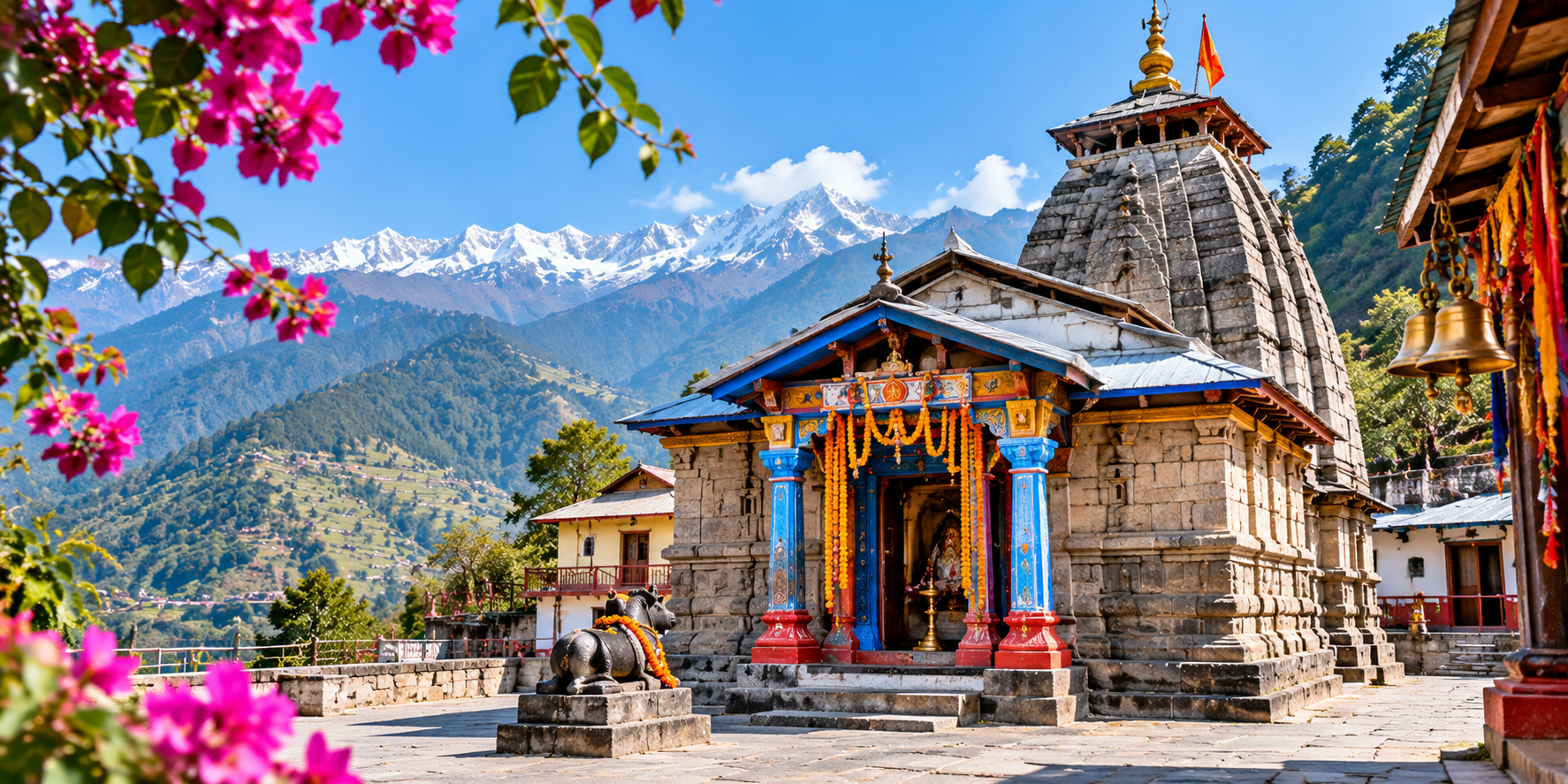
Ukhimath is a small town in Uttarakhand’s Rudraprayag district, around 41 km from Rudraprayag and 13 km from Guptkashi. It is best known for Omkareshwar Temple, where Lord Kedarnath and Lord Madhyamaheshwar are worshipped during winter.
When heavy snowfall closes the Kedarnath and Madhyamaheshwar temples, their ceremonial idols are brought to Omkareshwar Temple in Ukhimath. Devotees visit throughout the winter to offer prayers. During the 2025–26 Winter Char Dham Yatra, 20,338 pilgrims visited Ukhimath by January 31, 2026.
Source: Pioneer Edge
Apart from its religious importance, Ukhimath is also a good base for visiting nearby places like Chopta, Deoria Tal, and Guptkashi. This guide covers the temple’s history, darshan timings, how to reach, nearby attractions, and useful travel tips.
Omkareshwar Temple Ukhimath: Quick Information
| Details | Information |
| Location | Ukhimath, Rudraprayag, Uttarakhand |
| Main Deity | Lord Shiva |
| Altitude | Approximately 1,311 metres |
| Famous For | Winter seat of Lord Kedarnath |
| Distance from Rudraprayag | 41 km |
| Distance from Guptkashi | 13 km |
| Distance from Chopta | Around 30 km, depending on route |
| Nearest Railway Station | Rishikesh |
| Nearest Airport | Jolly Grant Airport, Dehradun |
| Best Time to Visit | October to April for winter worship |
| Suggested Visit Duration | 1–2 hours |
Why Is Omkareshwar Temple Famous?
Omkareshwar Temple is best known as the winter seat of Lord Kedarnath. Every year, when Kedarnath Temple closes because of heavy snowfall, the ceremonial deity is brought to Ukhimath in a traditional procession.
The deity is carried in a decorated palanquin, known as a Doli, and worship continues at Omkareshwar Temple until the Kedarnath shrine reopens. This allows devotees to offer prayers to Lord Kedarnath even when the high-altitude temple is closed.
Ukhimath is also associated with the winter worship of Lord Madhyamaheshwar, one of the Panch Kedar temples. The religious importance of the town is not limited to these traditions. The area also has temples connected with Usha, Aniruddha, Lord Shiva, and Goddess Parvati.
For anyone interested in the religious traditions of the Garhwal Himalayas, Omkareshwar Temple is an important stop.
Things to Do at Omkareshwar Temple, Ukhimath
A visit to Ukhimath can include more than offering prayers at the main shrine. You can spend time understanding its winter worship traditions, exploring the temple complex, and visiting nearby attractions.
1. Attend Darshan at Omkareshwar Temple
Begin your visit with darshan at the main shrine dedicated to Lord Shiva. Take some time to explore the temple complex and its smaller shrines. The temple’s importance as the winter seat of Kedarnath makes it a meaningful place for devotees.
2. Learn About the Winter Worship of Lord Kedarnath
One of the most important traditions associated with Omkareshwar Temple is the winter worship of Lord Kedarnath.
When the main Kedarnath shrine closes, its ceremonial deity is brought to Ukhimath. The winter rituals continue here for several months. If you are visiting during this season, you can learn about a significant part of Uttarakhand’s Char Dham traditions.
3. Attend the Temple Aarti
If your visit coincides with the morning or evening aarti, you can attend the prayers and observe the temple rituals. Aarti timings may change depending on the season and religious ceremonies, so check with the temple before planning your visit around them.
4. Explore the Temple Architecture
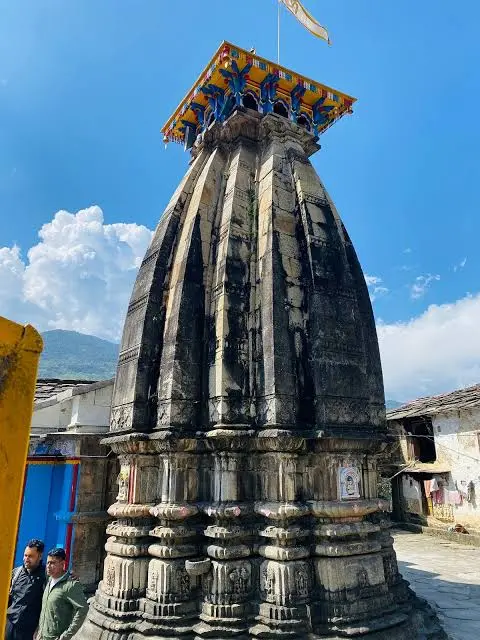
Spend some time looking at the traditional stone structures, wooden details, and smaller shrines within the complex. The temple reflects the religious and architectural traditions of the Garhwal region.
5. Learn About the Story of Usha and Aniruddha
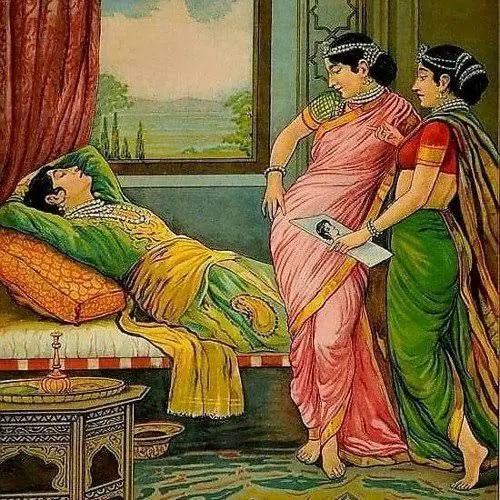
Ukhimath is closely connected with the mythological story of Usha and Aniruddha. Usha was the daughter of King Banasura, while Aniruddha was the grandson of Lord Krishna.
According to local tradition, their wedding took place in this region. The story is also associated with the earlier name of Ukhimath, Ushamath.
Winter Seat of Kedarnath and Madhyamaheshwar
The winter worship tradition is the most important reason why Ukhimath holds a special place in Uttarakhand’s religious landscape.
Winter Seat of Lord Kedarnath
Kedarnath Temple remains inaccessible during the harsh Himalayan winter because of heavy snowfall. Before the shrine closes, the ceremonial deity of Lord Kedarnath is brought down to Omkareshwar Temple in Ukhimath.
The procession takes place in a decorated Doli and follows traditional stops along the route. Once the deity reaches Ukhimath, winter worship begins at Omkareshwar Temple.
Devotees who cannot visit Kedarnath during the winter season can therefore offer prayers at its winter seat. The deity returns to Kedarnath when the main shrine reopens in summer.
Winter Worship of Lord Madhyamaheshwar
Ukhimath is also associated with the winter worship of Lord Madhyamaheshwar, the second temple in the Panch Kedar group.
Madhyamaheshwar is located in the high-altitude Garhwal Himalayas and requires a trek to reach. During winter, when the main shrine closes, its ceremonial deity is brought down for worship at Ukhimath.
This tradition makes the town important for devotees following the Panch Kedar pilgrimage.
Omkareshwar Temple Ukhimath Timings and Darshan
Omkareshwar Temple in Ukhimath generally follows a daily schedule of morning and evening darshan, with short breaks for bhog, aarti, and shringar rituals. Visitors can plan their visit between 5:00 AM and 9:30 PM, keeping the ritual timings in mind.
| Darshan and Ritual | Timings |
| Mangal Aarti and Bhog | 4:30 AM – 5:00 AM |
| Morning Darshan | 5:00 AM – 12:20 PM |
| Madhyan Bhog | 12:20 PM – 1:15 PM |
| Afternoon Darshan | 1:15 PM – 4:00 PM |
| Evening Shringar | 4:00 PM – 4:30 PM |
| Evening Darshan | 4:30 PM – 8:30 PM |
| Shayan Aarti | 8:30 PM – 9:00 PM |
| Night Darshan | 9:00 PM – 9:30 PM |
Note: Darshan may pause during bhog, aarti, and shringar. Confirm the current timings locally before travelling, as schedules can change during special ceremonies and winter worship.
Tips for Visiting the Temple
- Reach early if you prefer a quieter darshan.
- Keep some time to explore the smaller shrines in the complex.
- Check the current ritual schedule before planning your visit.
- Ask about parking near Ukhimath market, as roads around the temple can be narrow.
- If you want to witness the winter Doli procession, confirm its announced date in advance.
History and Mythological Stories of Omkareshwar Temple
Ukhimath has a rich religious history, with local traditions connecting the town to Lord Shiva, King Mandhata, Usha, and Aniruddha.
Two popular stories are particularly associated with the temple and the town.
King Mandhata’s Penance
According to local belief, King Mandhata, an ancestor of Lord Rama, performed severe penance here to please Lord Shiva.
It is believed that he meditated while standing on one leg for twelve years. Pleased with his devotion, Lord Shiva appeared before him in the form of Omkar.
This legend is associated with the name Omkareshwar and explains the temple’s connection with Lord Shiva.
The Wedding of Usha and Aniruddha
Another important legend connects Ukhimath with the marriage of Usha and Aniruddha.
Usha was the daughter of King Banasura, while Aniruddha was the grandson of Lord Krishna. According to Hindu mythology, Usha fell in love with Aniruddha after seeing him in a dream.
Her friend Chitralekha helped bring Aniruddha to her. This eventually led to a conflict between Banasura and Lord Krishna, which ended with their marriage.
Local tradition associates their wedding with this region. The name Ushamath, believed to be the earlier name of Ukhimath, is also connected with Usha.
Architecture and Temples Inside the Complex
The Omkareshwar Temple complex reflects the traditional religious architecture of the Garhwal region. Its stone structures, wooden details, and smaller shrines give visitors an opportunity to explore more than the main place of worship.
The complex and its surrounding temple area are associated with:
- Lord Shiva and Goddess Parvati
- Usha and Aniruddha
- King Mandhata
- Other deities connected with local religious traditions
Take some time to explore the complex rather than limiting your visit to the main shrine. The smaller temples and local traditions help explain why Ukhimath is an important pilgrimage destination.
Best Time to Visit Omkareshwar Temple Ukhimath
Omkareshwar Temple is an important place of worship throughout the year, but the experience of visiting Ukhimath changes with the seasons.
| Season | Months | What to Expect |
| Winter | November–February | Winter worship of Kedarnath and cold weather |
| Spring | March–April | Pleasant sightseeing conditions and the end of the winter worship period |
| Summer | May–June | Comfortable weather for temple visits and nearby sightseeing |
| Monsoon | July–September | Green surroundings, but possible landslides and road disruptions |
| Autumn | October–November | Pleasant travel conditions and the beginning of winter ceremonies |
My recommendation: If your main purpose is to learn about the winter worship of Lord Kedarnath, plan your visit between November and April. For exploring nearby places such as Chopta and Deoria Tal, March to June is generally more comfortable.
Keep in mind that mountain weather can change quickly. Check the forecast and road conditions before travelling.
How to Reach Omkareshwar Temple Ukhimath
Omkareshwar Temple is located in the main town of Ukhimath and is accessible by road. You can reach Ukhimath from Rishikesh, Haridwar, Rudraprayag, or Guptkashi by bus, shared taxi, or private vehicle.
By Road
The most common route from Rishikesh is via Devprayag, Srinagar, Rudraprayag, Tilwara, Agastyamuni, Chandrapuri, Bhiri, and Kund before reaching Ukhimath.
Approximate distances from major locations:
- Rudraprayag to Ukhimath: 41 km
- Guptkashi to Ukhimath: 13 km
- Rishikesh to Ukhimath: 175–180 km
- Haridwar to Ukhimath: Approximately 195–200 km
State buses, shared jeeps, and private taxis operate on different stretches of these routes. A private taxi is convenient if you are travelling with family or planning to visit nearby places.
Once you reach Ukhimath market, the temple is a short walk away. The final stretch is approximately 300 metres, and the road can be narrow. If you are travelling in a larger vehicle, parking near the market and walking to the temple is a practical option.
By Train
Rishikesh Railway Station is approximately 175–180 km from Ukhimath, while Haridwar Railway Station is around 195 km away.
After reaching either station, you can continue towards Rudraprayag and Ukhimath by bus or taxi. If you are travelling during the pilgrimage season, booking a taxi in advance can make the journey easier.
By Air
Jolly Grant Airport in Dehradun is the nearest airport, approximately 198–200 km from Ukhimath.
Taxis are available from the airport for the onward journey. You can also travel to Rishikesh first and arrange road transport to Ukhimath from there.
Travel tip: Mountain roads can take longer than expected, especially during monsoon and winter. Start early and check road conditions before leaving.
Places to Visit Near Omkareshwar Temple, Ukhimath
Ukhimath is a useful base for exploring religious sites, mountain destinations, and natural attractions in Rudraprayag district. If you have an extra day or two, consider adding these places to your itinerary.
1. Deoria Tal
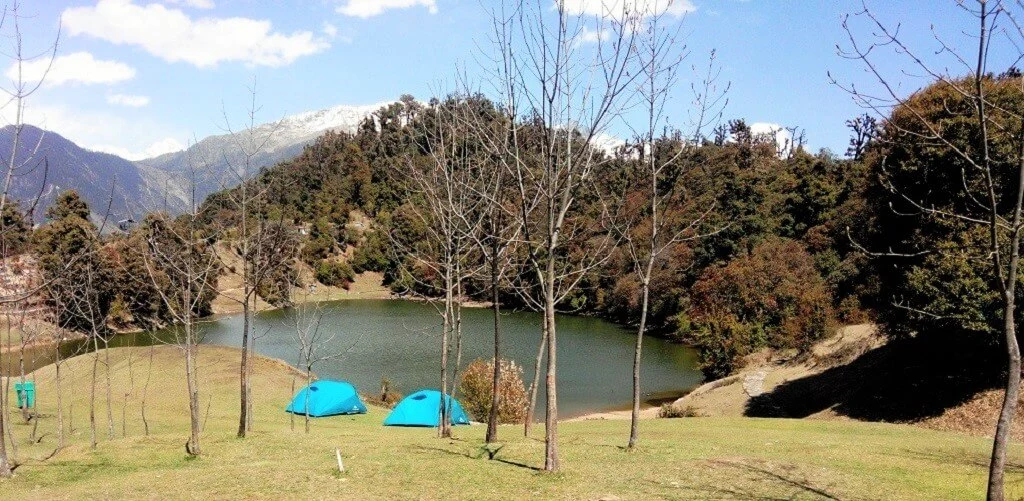
Deoria Tal is a beautiful high-altitude lake surrounded by forests and Himalayan peaks. You can reach Sari village by road and then follow an uphill trek of approximately 2 km to the lake.
On clear days, the surrounding peaks reflect in the lake’s water, making it a popular place for photography and nature walks. You can also spend time exploring the forest trail around the area.
2. Chopta
Chopta is a scenic destination known for its green meadows, forest trails, and views of snow-covered Himalayan peaks. It is also a popular starting point for the Tungnath and Chandrashila treks.
You can visit Chopta for a short nature break, enjoy the mountain scenery, or plan an overnight stay before trekking. Birdwatching is another activity visitors can enjoy in the region.
3. Tungnath Temple
Tungnath is one of the five Panch Kedar temples and is widely regarded as the highest Shiva temple in the world. Located at an altitude of approximately 3,680 metres, it is reached by a trek of around 3.5 km from Chopta.
The temple is dedicated to Lord Shiva and is an important pilgrimage destination. During winter, when the shrine closes due to snowfall, the ceremonial deity is worshipped at Makkumath.
Check the temple’s opening dates and weather conditions before beginning the trek.
4. Chandrashila
Chandrashila is a mountain summit above Tungnath and is a popular extension of the Tungnath trek. From the temple, you need to walk approximately another 1.5 km uphill to reach the summit.
The top offers wide views of Himalayan peaks, including Chaukhamba and Nanda Devi, on clear days. Start early and avoid the trail during poor weather or heavy snowfall.
5. Guptkashi
Guptkashi is an important pilgrimage town around 13 km from Ukhimath. It is known for the ancient Vishwanath Temple, dedicated to Lord Shiva, and the Ardhanarishwar Temple, representing the combined form of Shiva and Parvati.
You can also visit Manikarnik Kund near the temple complex. Guptkashi is an easy addition to an Ukhimath trip and is often included in journeys towards Kedarnath.
6. Kalimath
Kalimath is an important religious destination in the Rudraprayag region and is associated with Goddess Kali.
Unlike many temples, the main shrine does not have a conventional idol of Goddess Kali. Devotees worship a sacred Sri Yantra placed inside the temple.
If you are interested in the religious traditions of Uttarakhand, Kalimath is worth including in your itinerary.
Where to Stay and Eat in Ukhimath
Ukhimath is a small pilgrimage town, so accommodation options are relatively simple. You can find budget hotels, guesthouses, homestays, and GMVN accommodation. If you prefer a wider choice of hotels and restaurants, Guptkashi is another option.
Food options in Ukhimath generally include simple North Indian meals such as dal, rice, roti, and seasonal vegetables. Some local eateries may also serve traditional Pahadi dishes such as Mandua ki Roti, Pahadi Dal, and Jhangora ki Kheer, depending on availability.
If you are visiting during winter, book your accommodation in advance. Before confirming a stay, ask about hot water, room heating, and meal availability, as facilities can be limited during colder months.
Travel Tips for Visiting Omkareshwar Temple
- Carry warm clothes if visiting between November and February.
- Check the latest temple timings before planning darshan.
- Confirm Doli procession dates if you want to witness the winter ceremonies.
- Park near Ukhimath market if the road towards the temple is congested.
- Keep cash for local transport and small shops.
- Check weather and road conditions during the monsoon.
- Carry suitable footwear if you plan to visit nearby trekking destinations.
- Keep an extra day if you also plan to explore Chopta or Deoria Tal.
Conclusion
Omkareshwar Temple in Ukhimath holds a special place in Uttarakhand’s religious and cultural heritage. Its connection with the winter worship of Lord Kedarnath and Madhyamaheshwar makes it an important destination for devotees, especially when the high-altitude shrines close for winter.
Beyond the temple, Ukhimath also offers access to beautiful places such as Chopta, Deoria Tal, Tungnath, and Guptkashi. Whether you are planning a spiritual visit or exploring the Garhwal Himalayas, you can include Omkareshwar Temple in your itinerary for a meaningful experience. Check the temple timings, weather, and road conditions before travelling to make your visit smoother.
Frequently Asked Questions
The temple is primarily dedicated to Lord Shiva. Its complex is also associated with Goddess Parvati, Usha, Aniruddha, and other deities.
The Kedarnath Doli reaches Omkareshwar Temple after the annual closing ceremony of Kedarnath Temple, usually around November. The exact date changes every year.
Around 1–2 hours is generally sufficient to attend darshan and explore the temple complex. You may need additional time during festivals and special ceremonies.
Yes. Winter is a particularly meaningful time to visit because the ceremonial deity of Lord Kedarnath is worshipped here after the main shrine closes.
Yes. The temple is located in Ukhimath town and is accessible by road. Senior citizens should check the walking distance from the parking area and local accessibility before travelling.
Yes. Ukhimath has budget hotels, guesthouses, homestays, and GMVN accommodation. Guptkashi is another option if you need more accommodation choices.
People are also reading: