

Mother Teresa was one of the most respected humanitarian figures in the world, known for her deep compassion and lifelong dedication to serving the poor and needy. She devoted her entire life to helping the “poorest of the poor” in Kolkata, India, where she built a strong foundation of charity and care. Born on August 26, 1910, and passing away on September 5, 1997, her journey continues to inspire millions even today.
She was not only a religious figure but also a global symbol of love, kindness, and selfless service. This article covers important facts, life events, achievements, and lesser-known details about her life.
Key Facts About Mother Teresa
- Born as Anjeze (Agnes) Gonxha Bojaxhiu on August 26, 1910
- Birthplace: Skopje (Albanian family background)
- Joined Sisters of Loreto at age 18
- Arrived in India in 1929 to begin missionary work
- Experienced “call within a call” in 1946
- Founded Missionaries of Charity in 1950
- Opened first hospice Nirmal Hriday in 1952
- Worked for the poorest communities in Kolkata
- Won the Nobel Peace Prize in 1979 for her humanitarian work
- Received Bharat Ratna in 1980
- Passed away on September 5, 1997
- Canonized as Saint Teresa of Calcutta in 2016
Birth and Early Life
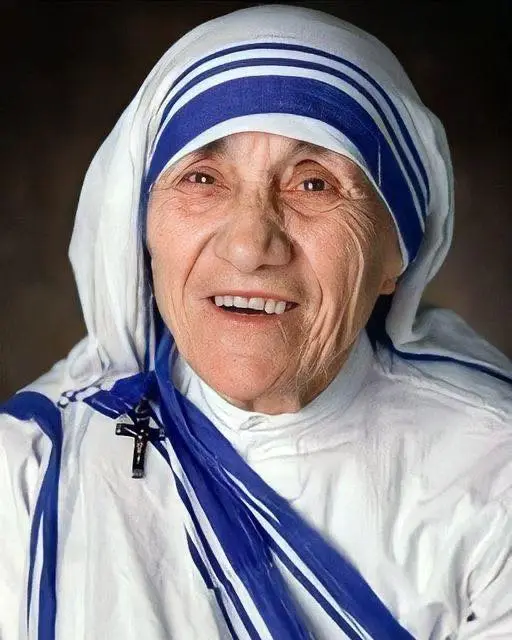
Mother Teresa was born on August 26, 1910, in Skopje, into a deeply religious Albanian family. From a young age, she showed a strong interest in faith and helping others in need. Her parents raised her with values of kindness, charity, and discipline, which shaped her personality. After the death of her father, her mother played an important role in guiding her spiritual journey. These early experiences inspired her to dedicate her life to serving humanity.
Early Education and Teaching Career
Mother Teresa began her career in India as a teacher after joining the Sisters of Loreto. She taught geography and religion at a convent school in Kolkata. During this period, she lived a disciplined and simple life focused on teaching young girls. She later became the headmistress, showing her leadership abilities. However, she felt a growing desire to help the poor outside the classroom.
Journey to Becoming a Missionary
At the age of 18, she left her home and joined the Sisters of Loreto in Ireland to become a missionary. After completing her training, she arrived in India in 1929 and began teaching at a convent school in Kolkata. During this time, she lived a simple and disciplined life as a teacher and nun. However, she became deeply aware of the poverty and suffering around her. This realization gradually pushed her toward a greater purpose beyond teaching.
The “Call Within a Call”
In 1946, Mother Teresa experienced a life-changing moment known as the “call within a call” while traveling by train. She believed it was a divine message asking her to leave the convent and serve the poor directly. This decision required courage, as it meant stepping into an uncertain life outside the convent. She chose to live among the poorest people and dedicate herself fully to their care. This turning point marked the true beginning of her humanitarian mission.
Founding of Missionaries of Charity
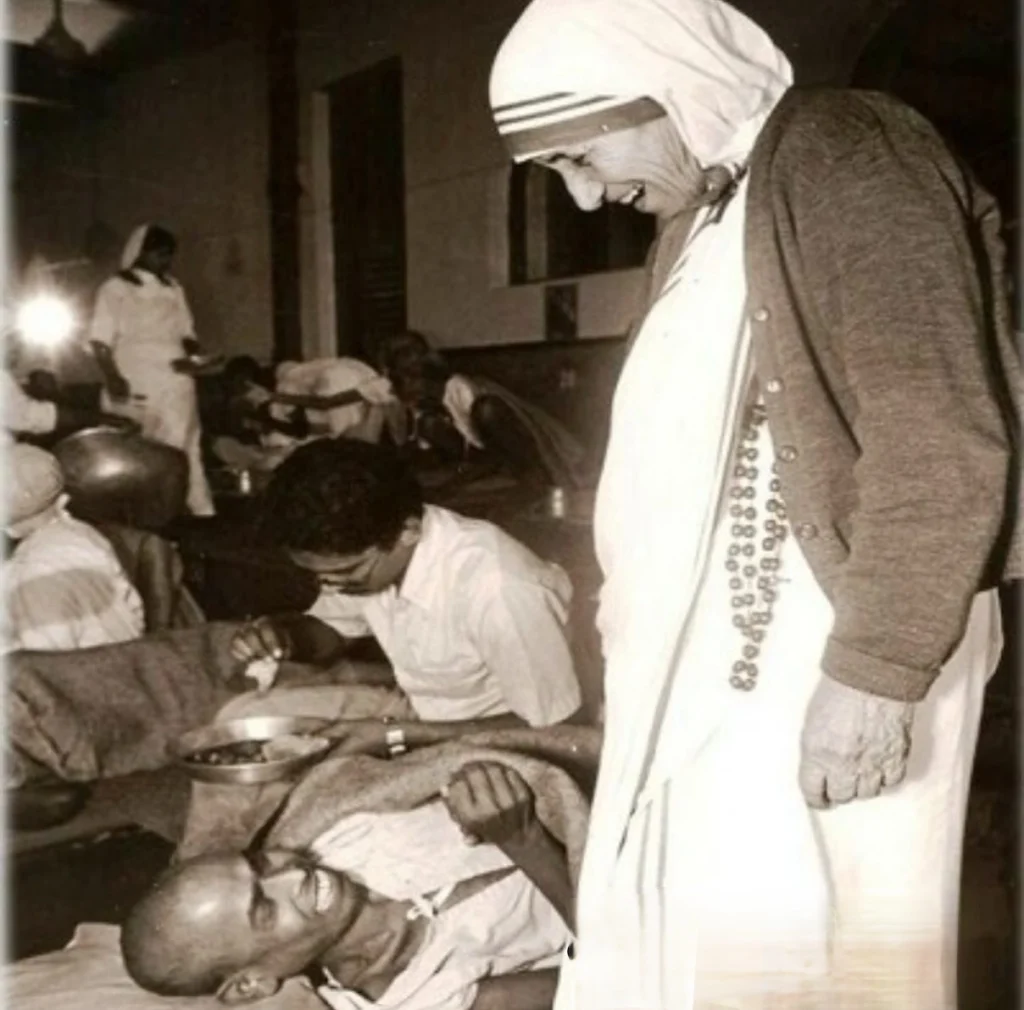
In 1950, she founded the Missionaries of Charity with the aim of helping the sick, homeless, and dying. What started as a small group later grew into a global organization with thousands of nuns. At the time of her death, the organization was active in more than 90 countries. They operated orphanages, hospices, and centers for people suffering from diseases like leprosy. This organization became the foundation of her lifelong service.
Expansion of Missionaries of Charity
The Missionaries of Charity expanded rapidly across the world after its foundation. It reached many countries and served millions of people in need. The organization focused on helping those suffering from hunger, illness, and homelessness. Today, it continues to operate in over 130 countries, reflecting its massive global impact. Its global presence made it one of the most recognized charity organizations. This expansion reflected Mother Teresa’s vision of serving humanity everywhere.
Nirmal Hriday and Service to the Poor
In 1952, she established Nirmal Hriday, which means “Pure Heart,” for the dying and destitute people. This hospice provided care, dignity, and love to those who had been abandoned on the streets. Her mission was not only to treat illness but also to offer emotional and spiritual comfort. She believed every person deserves to die with dignity and respect. This initiative became one of her most powerful contributions to society.
Personal Life and Lifestyle
Mother Teresa lived a simple and humble life, wearing a white sari with a blue border. She believed in living like the poor to understand their struggles. Her daily routine included prayer, service, and helping the needy. She avoided luxury and focused entirely on her mission. Her lifestyle reflected her belief in simplicity and selfless service.
Awards and Honors
- Nobel Peace Prize for humanitarian work (1979)
- Bharat Ratna in 1980
- Ramon Magsaysay Award (1962)
- Padma Shri (1962)
- Received over 120 international awards recognizing her humanitarian work
Nobel Prize and Special Facts
- Refused the Nobel banquet and donated $192,000 to the poor
- Focused on helping the poorest people of India
- Inspired by Therese of Lisieux
- Known for her simple white sari with blue border
- Her feast day is celebrated on September 5
Death and Canonization
Mother Teresa passed away on September 5, 1997, in Kolkata, leaving behind a powerful legacy. Her sainthood process was supported and fast-tracked by Pope John Paul II. She was beatified in 2003 and later canonized by Pope Francis on September 4, 2016. After canonization, she became officially known as Saint Teresa of Calcutta. Her life and work are recognized worldwide as a model of faith and service.
Why Mother Teresa is Famous
Mother Teresa is famous for her selfless service to the poor and sick people. She dedicated her life to helping those who were neglected by society. Her work in Kolkata gained global recognition and respect. She became a symbol of compassion and humanity. Her efforts showed that small acts of kindness can create a big impact.
Interesting Facts About Mother Teresa
- She became an Indian citizen in 1951
- She spoke multiple languages, including English and Bengali
- She traveled worldwide to spread her mission
- Her work inspired millions of volunteers
Famous Quotes by Mother Teresa
- “Not all of us can do great things. But we can do small things with great love.”
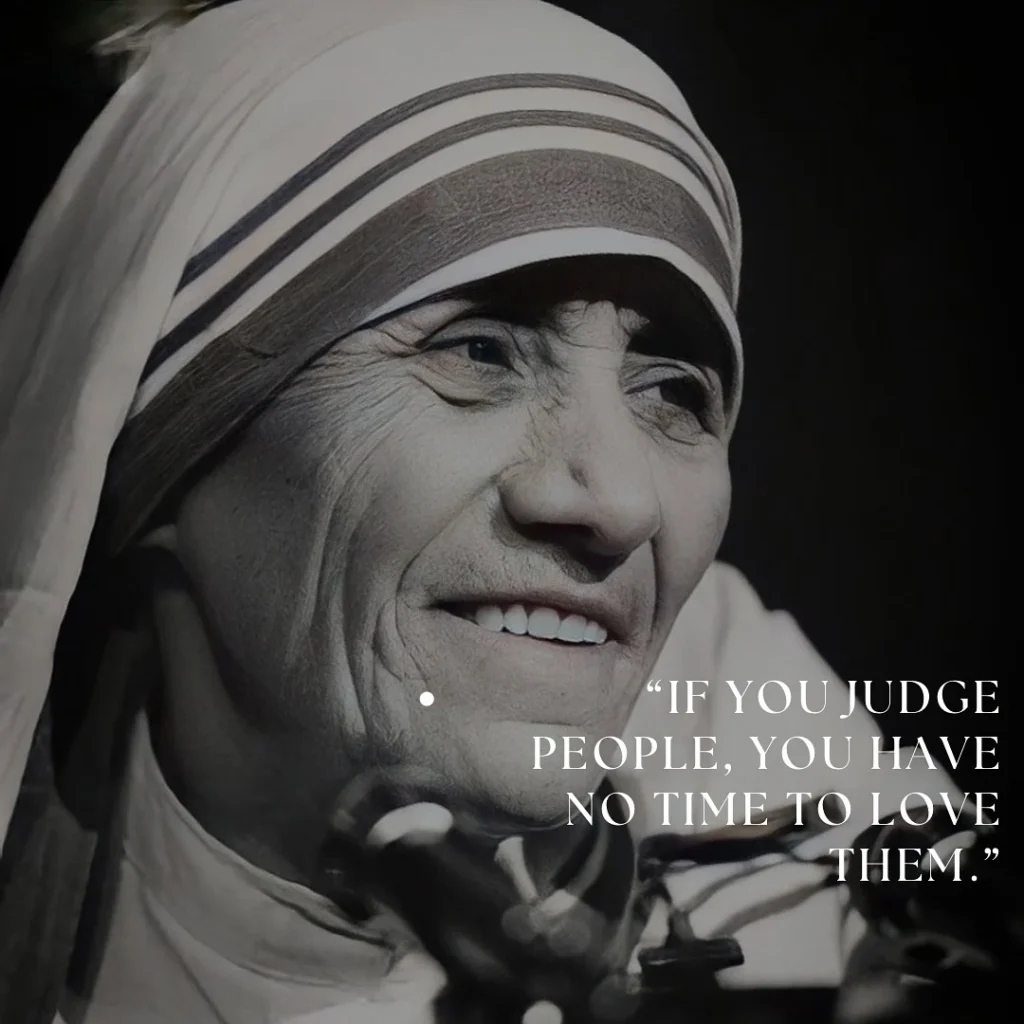
- “If you judge people, you have no time to love them.”
- “Peace begins with a smile.”
- “Spread love everywhere you go.”
Criticism and Controversies
- Criticized for limited medical facilities in her centers
- Accused of focusing more on spiritual care than treatment
- Questions raised about funding transparency
- Some believed she accepted controversial donations
Despite these criticisms, many people continue to admire her dedication and impact on humanity.
Legacy and Global Impact
Mother Teresa’s legacy continues to inspire millions of people across the world. The Missionaries of Charity still operates globally, serving the poor and needy. She is remembered as a symbol of selfless service, compassion, and humanity. Her work proved that small acts of kindness can make a big difference. Even today, her life encourages people to help others without expecting anything in return.
Conclusion
Mother Teresa’s life is a powerful example of love, sacrifice, and dedication to humanity. From her early life to becoming a global icon, her journey is deeply inspiring. She served the poorest with dignity and gave hope to countless people. While her work has faced criticism, her contributions remain unforgettable. Her story continues to motivate people to live a life of kindness and service.
Frequently Asked Questions
Mother Teresa was born as Anjeze Gonxha Bojaxhiu. She later took the name Teresa when she became a nun. Her name was inspired by a Catholic saint. This is the name by which she became famous worldwide.
She came to India to work as a missionary teacher. After seeing the poverty in Kolkata, she decided to dedicate her life to helping the poor. This decision changed her life completely.
She helped by providing food, shelter, and care to the needy. She also started an organization to support poor and sick people. Her work focused on giving dignity and compassion to everyone.
She spoke several languages, including English, Hindi, Bengali, and Albanian. This helped her communicate with people from different backgrounds. It also supported her mission worldwide.
Her work continues through the organization she founded. It still helps poor and needy people across the world. She is remembered as a symbol of kindness and selfless service.
Reference
https://en.wikipedia.org/wiki/Mother_Teresa
People are also reading
- Fun Indoor Games for Kids
- Survival Thriller Web Series
- Trending Romantic Movies
- Bollywood Comedy Movies
- Best Anime Shows
- Top Korean Shows
- Top Wrist Tattoo