
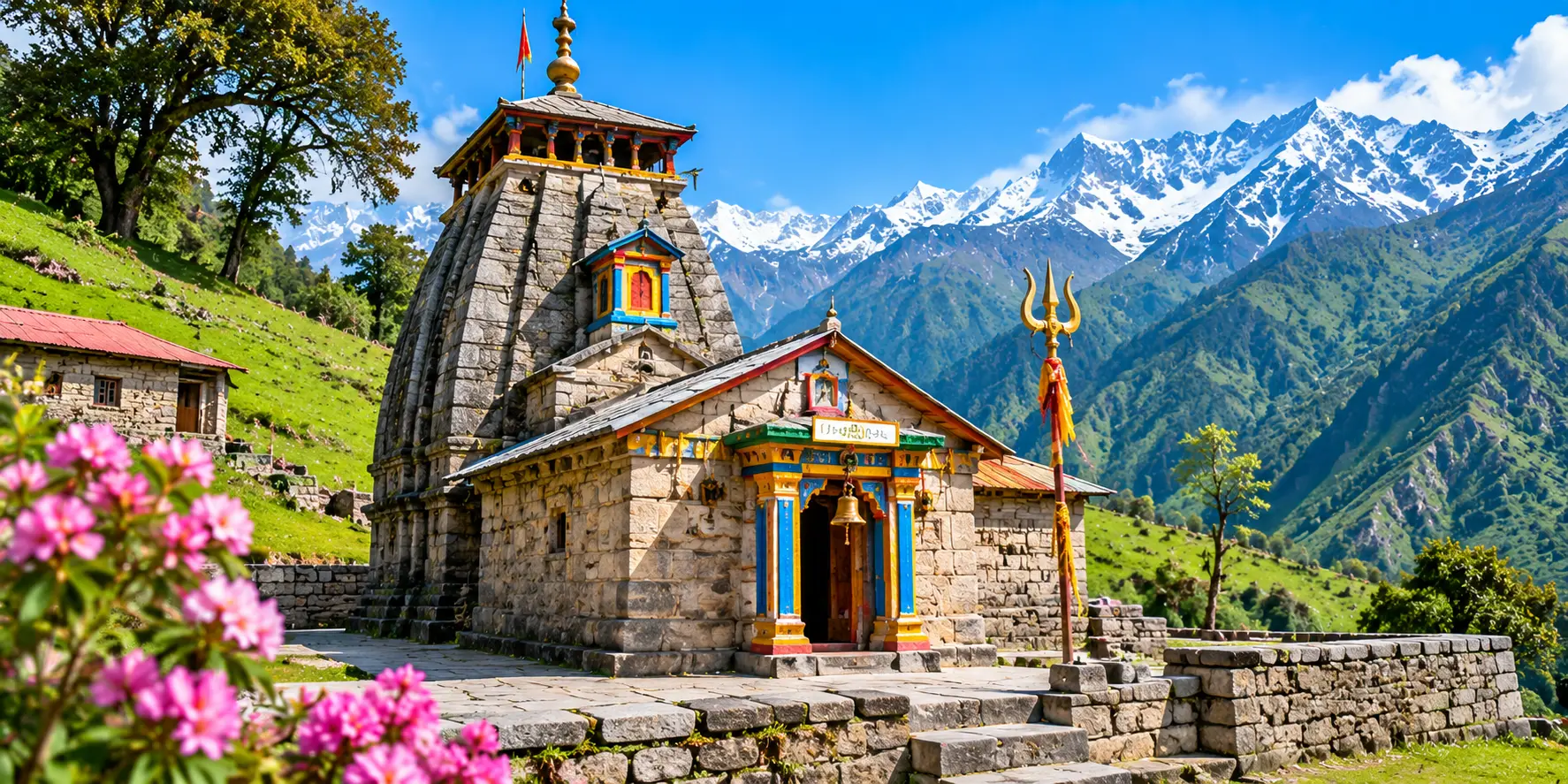
Madhyamaheshwar Temple, also known as Madmaheshwar, is a sacred Shiva shrine in the Garhwal Himalayas of Uttarakhand. Located in Rudraprayag district, it is traditionally regarded as the second temple in the Panch Kedar pilgrimage circuit.
According to Hindu belief, the middle or navel portion of Lord Shiva appeared at this place. Surrounded by green mountain slopes and Himalayan peaks, the shrine attracts both pilgrims and trekkers.
Unlike many other temples, Madhyamaheshwar has no direct road access. Visitors must trek through mountain villages, forests and uneven trails to reach the shrine. While Uniana is identified as the trek starting point by Uttarakhand Tourism, Ransi serves as a practical base for most trekkers.
Although the journey requires effort, peaceful surroundings and views of the Chaukhamba range make it memorable. The main temple remains open during the warmer months. Meanwhile, devotees can worship at Omkareshwar Temple in Ukhimath during winter.
Madhyamaheshwar Quick Facts
| Detail | Information |
|---|---|
| Known as | Madmaheshwar |
| Deity | Lord Shiva |
| Religious significance | Second of the Panch Kedar temples |
| Location | Rudraprayag district, Uttarakhand |
| Elevation | Approximately 3,289 metres (10,791 feet) |
| Trek starting point | Uniana |
| Common trek base | Ransi village |
| Winter worship | Omkareshwar Temple, Ukhimath |
| Nearby sacred site | Budha Madhyamaheshwar |
| Best time to visit | May–June and September–October |
Where Is Madhyamaheshwar Temple Located?
Madhyamaheshwar Temple is located in the Garhwal Himalayas of Uttarakhand, in the Rudraprayag district. It stands at an elevation of approximately 3,289 metres above sea level, surrounded by mountain slopes and Himalayan peaks.
The temple is situated near the Kedarnath Wildlife Sanctuary region and can be reached through a trekking route from Ransi village. Ukhimath is one of the nearest major towns and serves as an important base for pilgrims travelling to Madhyamaheshwar.
There is no direct road access to the temple. Visitors must complete the remaining journey on foot from the trek starting area.
Madhyamaheshwar Opening and Closing Dates 2026
Madhyamaheshwar Temple generally opens in May and closes in November. Temple authorities announce the exact dates each year according to the temple’s religious calendar.
For the 2026 pilgrimage season, the temple opened on 21 May 2026 and closed for winter on 16 November 2026.
After the closing ceremony, the ceremonial doli carrying the deity’s movable idol begins its journey towards the winter seat at Omkareshwar Temple in Ukhimath. In 2026, the doli reached Ukhimath on 19 November.
| 2026 Season | Date |
| Temple opening | 21 May 2026 |
| Temple closing | 16 November 2026 |
| Doli reached Ukhimath | 19 November 2026 |
| Winter worship location | Omkareshwar Temple, Ukhimath |
Current status: Madhyamaheshwar Temple is closed for the 2026 winter season. Devotees can visit Omkareshwar Temple in Ukhimath for winter worship associated with Madhyamaheshwar.
The 2027 opening date has not yet been announced. Check the official announcement before making travel bookings.
Madhyamaheshwar Temple Darshan Timings, Aarti, VIP Darshan and Entry Fee
Madhyamaheshwar Temple offers free general darshan and aarti to all devotees. Pilgrims must complete free online registration through the Uttarakhand Tourist Care Portal before starting the yatra.
The main shrine closes during winter, and devotees worship the deity at its winter seat, Omkareshwar Temple in Ukhimath, until the temple reopens in May.
Madhyamaheshwar Darshan and Aarti Timings
During the summer pilgrimage season, from May to November, daily rituals follow the schedule managed by the Badrinath–Kedarnath Temple Committee (BKTC). Timings may vary slightly depending on weather and sunrise.
| Temple Activity | Timings |
| Morning aarti | 6:00 AM to 6:30 AM |
| Morning darshan | 6:00 AM or 7:00 AM to 11:00 AM or 12:00 PM |
| Midday break | After morning darshan |
| Evening aarti | Around 6:00 PM to 6:30 PM |
| Evening darshan | 5:00 PM to 7:30 PM or 8:00 PM |
| Winter darshan | Omkareshwar Temple, Ukhimath |
The morning and evening aarti timings may change according to local temple arrangements and weather conditions. During winter, devotees can attend darshan and aarti at Omkareshwar Temple in Ukhimath.
Madhyamaheshwar Temple Entry Fee
General darshan and participation in the morning and evening aarti are free for all devotees. There is no regular entry ticket required to visit Madhyamaheshwar Temple.
VIP Darshan and Special Puja
Madhyamaheshwar is a peaceful trekking shrine without a formal online VIP express darshan pass system.
Devotees who wish to perform Abhishek or special pujas inside the sanctum can arrange them directly at the temple counter or with an authorised priest upon arrival. A nominal dakshina or puja fee may apply.
Mandatory Madhyamaheshwar Yatra Registration
All pilgrims trekking to Madhyamaheshwar must complete free government registration before starting the journey.
- Online Registration: Register through the Uttarakhand Tourist Care Portal or the Tourist Care Uttarakhand mobile app. After registration, pilgrims can generate a QR-coded Yatra Registration Letter.
- Offline Registration: Physical registration counters are available at Haridwar, Rishikesh, Guptkashi and Ukhimath. Carry a valid government ID, such as Aadhaar, for registration.
- Forest Entry Permit: Since the trek passes through the Kedarnath Wildlife Sanctuary region, local forest check-posts near Ransi or Gaundar may record visitor details or charge a nominal eco-trekking or forest fee.
History and Religious Significance
Madhyamaheshwar is one of the five ancient Shiva shrines that form the Panch Kedar pilgrimage. The other four temples are Kedarnath, Tungnath, Rudranath, and Kalpeshwar.
According to Hindu tradition, the Pandavas visited the Garhwal Himalayas after the Mahabharata war to seek forgiveness from Lord Shiva. Shiva avoided them by taking the form of a bull. When the Pandavas recognised him, he disappeared into the ground, and different parts of his body are believed to have appeared at five locations.
At Madhyamaheshwar, devotees worship the middle or navel portion of Lord Shiva. This belief gives the temple its name and its special place in the Panch Kedar circuit.
The shrine is also valued for its peaceful Himalayan setting. For many devotees, visiting Madhyamaheshwar is not just about reaching a temple but also about completing a traditional pilgrimage through the mountains.
Temple Architecture
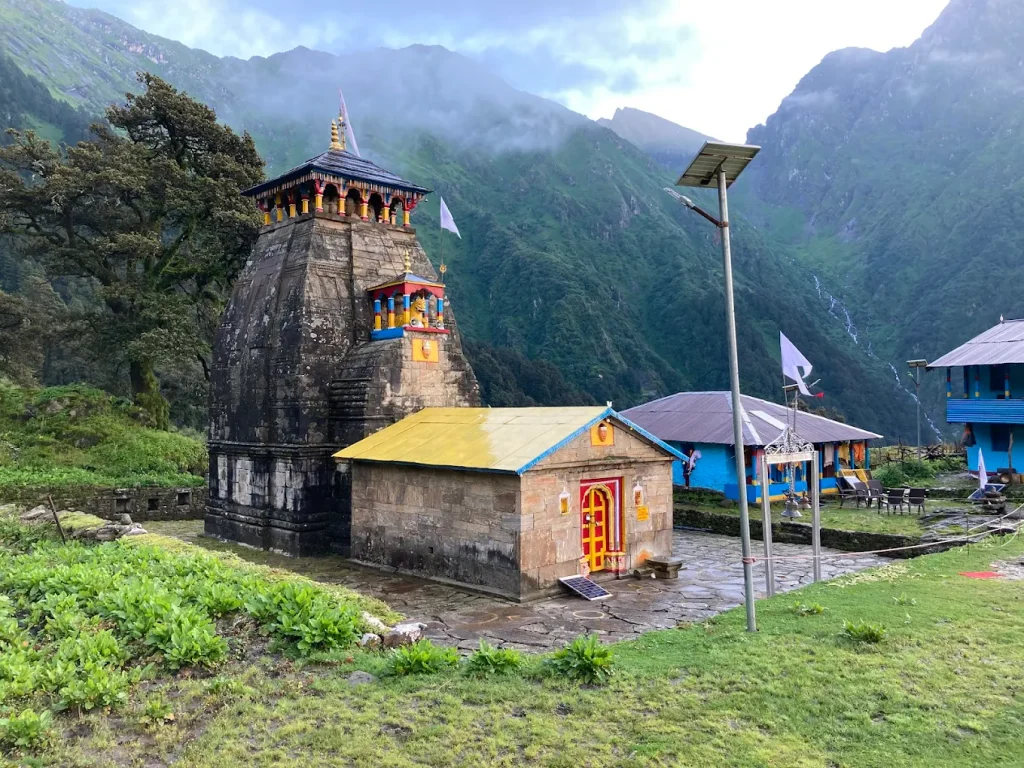
Madhyamaheshwar Temple is a traditional stone shrine set against the backdrop of the Garhwal Himalayas. Its simple structure reflects the traditional temple-building style found in the region.
The main sanctum houses a navel-shaped Shiva lingam worshipped by devotees. Smaller shrines dedicated to other forms of Shiva and Parvati are also associated with the temple complex.
The temple’s surroundings are an important part of its appeal. Green slopes, open meadows and distant snow-covered peaks create a peaceful atmosphere, especially during the pilgrimage season.
Visitors should follow local temple customs regarding footwear, photography and access to the inner worship area.
How to Reach Madhyamaheshwar Temple
Most travellers approach Madhyamaheshwar through Rishikesh or Haridwar. From there, the road journey continues through Devprayag, Srinagar, Rudraprayag and Ukhimath towards Uniana and Ransi.
| Mode | Travel Information |
| By Air | Jolly Grant Airport in Dehradun is the nearest major airport commonly used for this journey. |
| By Train | Rishikesh is the nearest commonly used railway station. |
| By Road | Uniana can be reached from Haridwar, Rishikesh, Devprayag, Srinagar and Rudraprayag. |
| Trek | The remaining journey to the temple is completed on foot. |
Madhyamaheshwar Trek Route and Distance
The Madhyamaheshwar trek starts from Ransi village and passes through mountain villages, forests and steep uphill trails before reaching the temple.
The trek is approximately 16–18 km one way (32–36 km round trip).
Madhyamaheshwar Trek Distance
| Route | Approximate Distance |
| Ransi to Madhyamaheshwar | 16–18 km |
| Round-trip trek | 32–36 km |
| Madhyamaheshwar to Budha Madhyamaheshwar | 2 km one way |
| Rishikesh to Ransi by road | 180–236 km |
Main Trek Route
Ransi → Gaundar → Bantoli → Madhyamaheshwar
The trail passes through forest sections, mountain villages and steep uphill stretches. The climb becomes more challenging as you approach the temple.
Trek Difficulty and Duration
The trek is generally considered moderate to challenging due to its uphill sections, walking distance and high altitude. Most trekkers divide the journey into multiple days, with overnight stays along the route.
Budha Madhyamaheshwar Trek
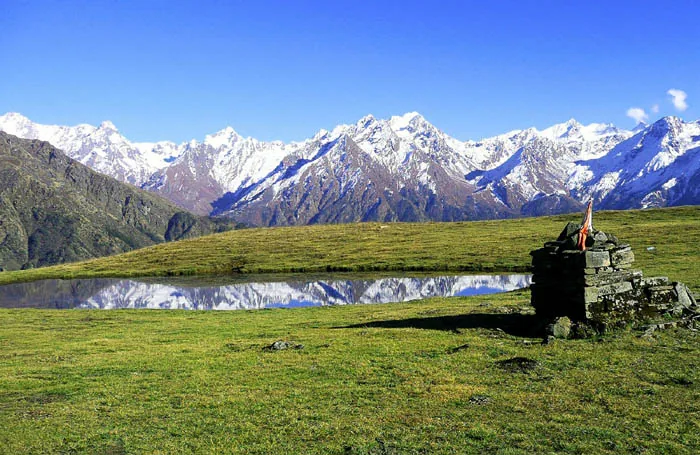
Budha Madhyamaheshwar is a separate sacred site located approximately 2 km above the main temple. It is known for its rocky shrine, open mountain setting and views of the surrounding Himalayan peaks.
The additional walk involves an uphill climb. Visit only if you have enough time, suitable weather and the energy to complete the extra section. Start early and avoid attempting the climb in poor visibility or unsafe conditions.
Note: Budha Madhyamaheshwar is not the winter seat of the main temple. Winter worship takes place at Omkareshwar Temple in Ukhimath.
Pony, Palki and Porter Facilities
Pony, palki and porter services may be available on parts of the Madhyamaheshwar trek, depending on the season and local arrangements.
Pony and Mule Services
Pony or mule services can help cover suitable sections of the trail. Check availability, fare and route coverage at Ransi before starting.
Palki Services
Palki services may be available for elderly pilgrims and those unable to walk long distances. Confirm availability, distance and charges with local operators.
Porter Services
Porters can carry backpacks and luggage during the trek. Keep medicines, valuables, identification and essential items in your daypack.
Travel Tip: Do not depend on these services without prior confirmation. Carry manageable luggage and allow enough time to complete the trek.
Best Time to Visit Madhyamaheshwar
The best time to visit Madhyamaheshwar is generally May to June and September to October. These periods are more suitable for trekking and pilgrimage travel, although mountain weather can change quickly.
May and June
These months mark the beginning of the pilgrimage season. The surrounding slopes become green, and the weather is generally suitable for walking. May can still be cold at higher elevations, so carry warm clothing.
July and August
Moreover, season is not ideal for the Madhyamaheshwar trek. Heavy rainfall can cause slippery trails, landslides and road disruptions. Avoid travelling during periods of heavy rain.
September and October
The post-monsoon period is another good time to plan the journey. The skies are often clearer, making it easier to enjoy the surrounding mountain views. However, temperatures begin to fall as winter approaches.
November to April
The main temple remains closed during winter. Snowfall and harsh weather make the high-altitude route difficult to access. Devotees can visit Omkareshwar Temple in Ukhimath for winter worship.
Things to Carry for the Madhyamaheshwar Trek
The trek passes through remote mountain areas where facilities are limited. Carry the essentials you may need during the journey.
- Trekking shoes: Choose comfortable shoes with a good grip for steep and uneven paths.
- Warm clothing: Carry thermal wear, a jacket and extra layers for cold mornings and evenings.
- Rain protection: A waterproof jacket or raincoat is useful during changing weather.
- Water bottle: Carry drinking water and refill only at suitable sources.
- Snacks: Keep dry fruits, energy bars or other light snacks for the walking sections.
- First-aid kit: Carry personal medicines and basic first-aid supplies.
- Torch: A headlamp or torch is useful if your trek takes longer than expected.
- Cash: Keep enough cash because digital payment facilities may be unreliable in remote areas.
- Identification: Carry a valid photo ID and check whether any local registration is required.
Pack according to the season and the number of days planned for your trek.
Food Available on the Route
Food options become limited as you move away from the main road-connected areas. Ukhimath and Ransi are better places to arrange meals before starting the trek.
Along the route, small eateries, homestays and seasonal food stalls may provide simple meals. Availability depends on the season and the number of visitors.
Basic food may include dal, rice, roti, vegetables and tea. However, do not expect restaurants or a wide variety of meals near the temple.
Carry some snacks and make arrangements for your overnight halt in advance. If you have specific dietary requirements, plan your meals before beginning the trek.
Weather at Madhyamaheshwar
Madhyamaheshwar experiences high-altitude Himalayan weather. Days can be pleasant during the main trekking season, but mornings and evenings are usually colder.
During the monsoon, rainfall can affect visibility, walking conditions and road travel. September and October generally offer better chances of clear views, although the weather remains unpredictable.
Winter brings very low temperatures and snowfall. This is why the main temple closes and worship shifts to Ukhimath.
Check the latest weather forecast before travelling. Conditions at Ransi may differ from those near the temple because of the difference in altitude.
Where to Stay Near Madhyamaheshwar
Accommodation along the Madhyamaheshwar route is basic. Ukhimath offers more choices, while Ransi and Gaundar mainly have simple guesthouses and homestays.
Ukhimath
Ukhimath is a convenient place to stay before starting the trek. It has more accommodation options than the smaller villages along the route.
Ransi
Ransi is a popular base for trekkers. You may find basic guesthouses and homestays where you can rest before beginning the uphill journey.
Gaundar
Gaundar is a small settlement along the trekking route. Local accommodation may be available, but facilities are simple and seasonal.
Camps Along the Trek
Temporary camps and tented accommodation may be available at selected points along the trekking route. These provide a simple overnight stay closer to nature. Facilities are usually basic, and availability depends on the trekking season and local operators.
Near the Temple
Accommodation close to Madhyamaheshwar is limited. Do not expect regular hotel facilities at this altitude. Confirm availability before starting the trek, particularly during busy pilgrimage periods.
Nearby Places to Visit
If you have extra time, you can include a few nearby religious and natural attractions in your Madhyamaheshwar trip.
1. Budha Madhyamaheshwar
Budha Madhyamaheshwar is a separate sacred site approximately 2 km above the main temple. It is known for its rocky shrine and open views of the surrounding Himalayan peaks.
The additional climb can be tiring, so plan the visit according to your fitness, available daylight and weather conditions.
2. Omkareshwar Temple, Ukhimath
Omkareshwar Temple is an important religious site in Ukhimath. It serves as the winter worship location for the ceremonial idols associated with Kedarnath and Madhyamaheshwar.
If you visit the region during the winter closure, this is the place to visit for worship associated with Madhyamaheshwar.
3. Deoria Tal
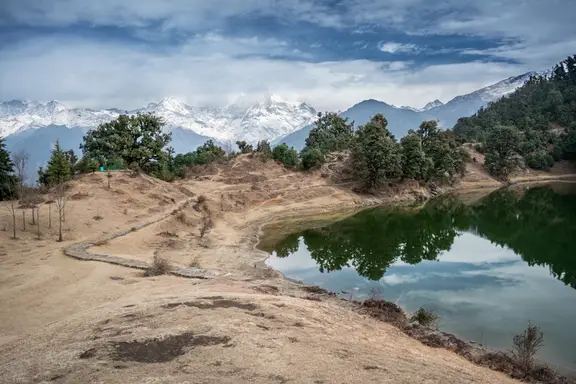
Deoria Tal is a beautiful high-altitude lake near Sari village. It is surrounded by forests and mountain scenery and is known for reflections of the Himalayan peaks on clear days.
Visitors can reach the lake through an uphill walk from Sari. It can be added to your itinerary if you have enough time before or after the Madhyamaheshwar trek.
4. Ukhimath
Ukhimath is a small town in Rudraprayag district and an important stop for pilgrims visiting Madhyamaheshwar. It is also the winter seat associated with the temple.
You can visit Omkareshwar Temple and use Ukhimath as a base for exploring nearby parts of the Garhwal region.
Travel Tips for Madhyamaheshwar
Keep these practical tips in mind before starting your journey:
- Start Early: Begin the trek in the morning to get enough daylight for the uphill sections.
- Prepare Physically: Build your walking stamina with regular walks and stair climbing before the trek.
- Check the Weather: Avoid trekking during heavy rainfall or unsafe trail conditions.
- Book Accommodation Early: Basic stays may be limited during the busy pilgrimage season.
- Carry Cash: ATM facilities may be limited in remote areas, and digital payments may not always work.
- Check Mobile Network: Network coverage can be unreliable along the trekking route. Download offline maps and inform your family about your travel plans.
- Carry a Power Bank: Charging facilities may be limited at some guesthouses and homestays.
- Respect Local Customs: Follow temple rules and respect local religious practices.
- Keep the Trail Clean: Carry your waste back and avoid littering.
- Carry Essentials: Pack warm clothes, trekking shoes, rain protection, personal medicines, a torch and a valid photo ID.
- Check Local Updates: Confirm road access, registration requirements, accommodation and trekking conditions before departure.
Conclusion
Madhyamaheshwar Temple is a special destination for pilgrims and trekkers seeking a peaceful Himalayan experience. The journey involves a challenging uphill trek, but the ancient shrine, beautiful mountain scenery and spiritual atmosphere make the effort worthwhile. Plan your visit during the temple’s open season, check local travel conditions and prepare well before starting the trek.
Frequently Asked Questions
The name Madhyamaheshwar is associated with the belief that the middle portion of Lord Shiva appeared here during the Pandavas’ search for him.
According to local tradition, the Pandavas built Madhyamaheshwar Temple to seek forgiveness for their sins after the Kurukshetra war. Some accounts specifically associate its construction with Bhima. However, its exact historical builder and founding date remain unknown.
A small water tank near the temple is considered sacred. Its water is traditionally associated with religious rituals and worship.
Yes. Pilgrims can visit Madhyamaheshwar independently. Completing all five Panch Kedar temples is not compulsory.
Ukhimath is one of the nearest major towns and an important base for reaching the Madhyamaheshwar trek starting points.
Photography rules may vary depending on temple regulations. Visitors should ask temple authorities before taking photographs inside the shrine.
People are also reading: